
What Hairstyle Looks Best for a Professional Headshot? Preview It
Choose a professional headshot hairstyle by testing face framing, flyaways, crop safety, and maintenance on your own portrait before photo day.
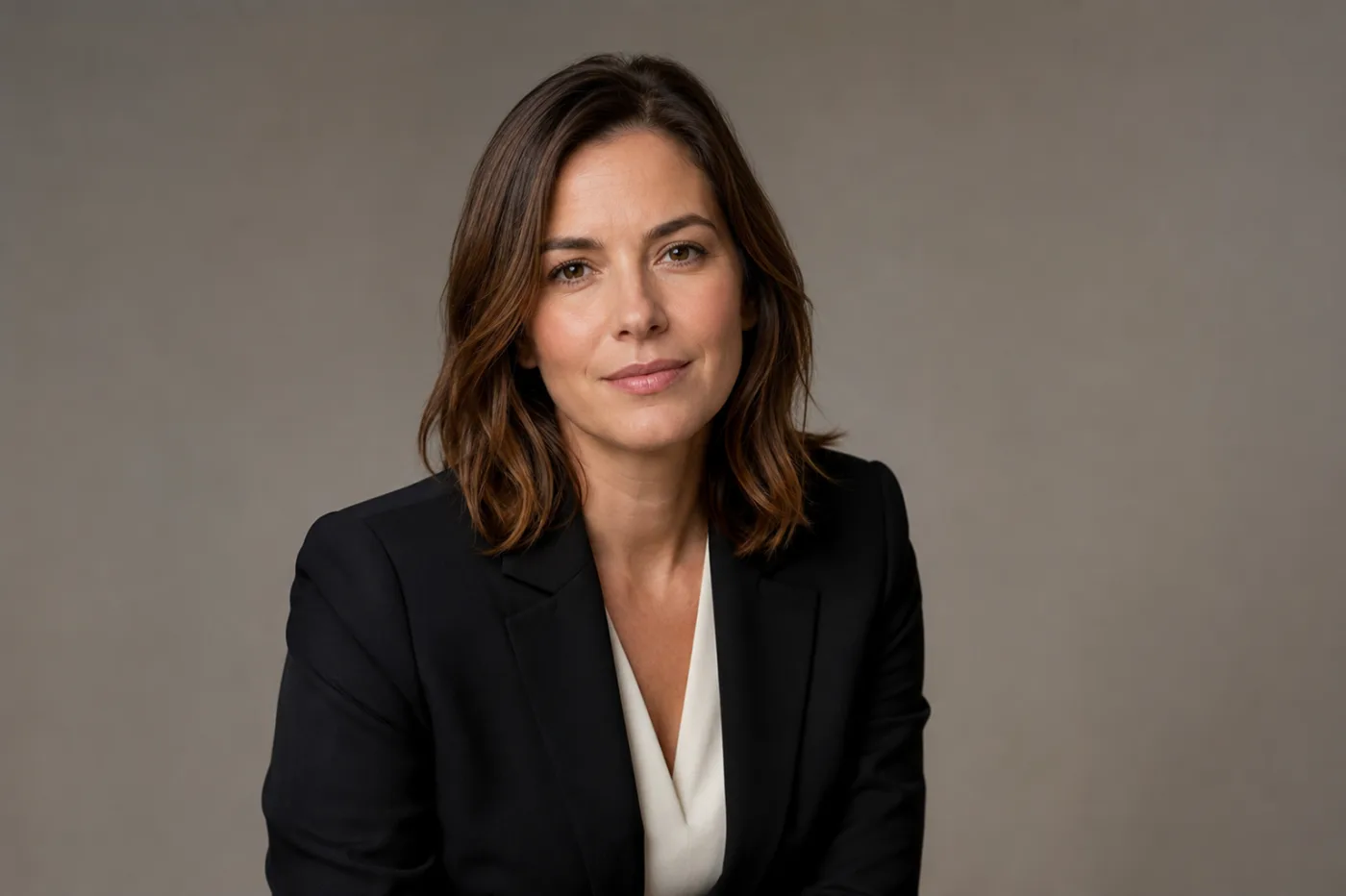
The best professional headshot hairstyle is the one that keeps your face readable, feels like you, and can still look intentional after a normal morning rather than a full editorial styling session. A hairstyle try-on can help you compare face framing, parting, length, and polish on your own portrait before photo day. It is a planning aid, not a rule that a face shape must wear one “correct” cut. Start a controlled hairstyle try-on when you want to make the choice less abstract.
Last updated: July 17, 2026 - about 10 min read
Professional portraits are strange little pieces of communication. A headshot may be used in a profile, a company site, a speaker page, an application, or a press kit. It needs to look current enough to represent you and simple enough that attention does not get stuck on one styling detail. That does not mean everyone needs the same smooth blowout, side part, bun, or short crop. It means the image needs a deliberate frame around the face.
Choosing a haircut or styling direction immediately before a photo can feel risky. A controlled preview gives you a low-stakes way to compare two or three realistic directions on the same source image. It can reveal that you prefer a little more softness at the jaw, less fringe over the eyebrows, or a calmer part. It cannot predict how your own texture, humidity, hairline, products, or photographer’s lighting will behave. Keep that boundary in place and it becomes a useful rehearsal.
Start with the job of the portrait
Before you choose a hairstyle, decide where the image will appear. A relaxed founder bio, a clinical directory, a creative portfolio, and a corporate team page have different visual contexts. None requires you to hide your personality, but each rewards a clear read of your face at a small size.
Open the current page where the photo will live if you can. Notice the crop. Is the image circular, square, vertical, or a very tight face crop? Is there a dark background, a light background, or a brand color? A fringe that looks excellent in a full portrait can become a shadow across the eyes in a small circular avatar. Loose texture that feels effortless in a wide crop can become visual noise in a small staff grid.
Write a one-line goal before you test: “approachable and polished for a consulting profile,” “creative but readable for a portfolio,” or “natural and current for an internal directory.” The preview can then answer whether a particular part, layer, or finish supports that goal.
Compare the details that survive a small crop
The viewer of a headshot usually notices the outline around the face before they notice the complexity of the haircut. Focus on the elements that remain visible when the portrait is reduced.
| Hair decision | What to look for in a preview | What a preview cannot settle | Practical photo-day question |
|---|---|---|---|
| Part | Does a center, side, or soft off-center part make the face feel open? | Whether your natural growth pattern will hold it | Can you recreate it quickly without fighting a cowlick? |
| Fringe or bangs | Do the eyebrows and eyes remain easy to see? | How fringe moves in wind, heat, or flash | Can it be trimmed or pinned back if needed? |
| Length around the jaw | Does the line frame the face or crowd the collar? | Exact shape after a cut or blow-dry | Does it work with the neckline you plan to wear? |
| Volume | Does the silhouette feel balanced in the crop? | Humidity, density, and product performance | What amount of styling time is realistic that morning? |
| Texture and finish | Does natural texture look intentional rather than hidden? | How the camera and retouching will render fine flyaways | Can your photographer preserve the texture you like? |
The table is not a beauty scorecard. It is a way to choose a look you can explain. “I like the off-center part because it keeps my eyebrows visible and the side volume feels balanced” is useful direction for your own styling or a stylist. “This is supposed to be better for my face shape” is much less helpful.
Use a stable portrait for the comparison
Choose a clear, front-facing or slight-angle photo in even light. Keep your expression, clothing, background, and camera position unchanged while you test. You want to react to the hair change, not a more flattering angle or a more dramatic background.
Ask for one variation at a time. A strong instruction might be: “Keep my face, expression, skin tone, clothing, lighting, and background unchanged. Style my hair in a polished shoulder-length look with a soft off-center part, visible eyebrows, and natural texture. Do not change facial features.” For the next version, preserve every instruction except the part or length.
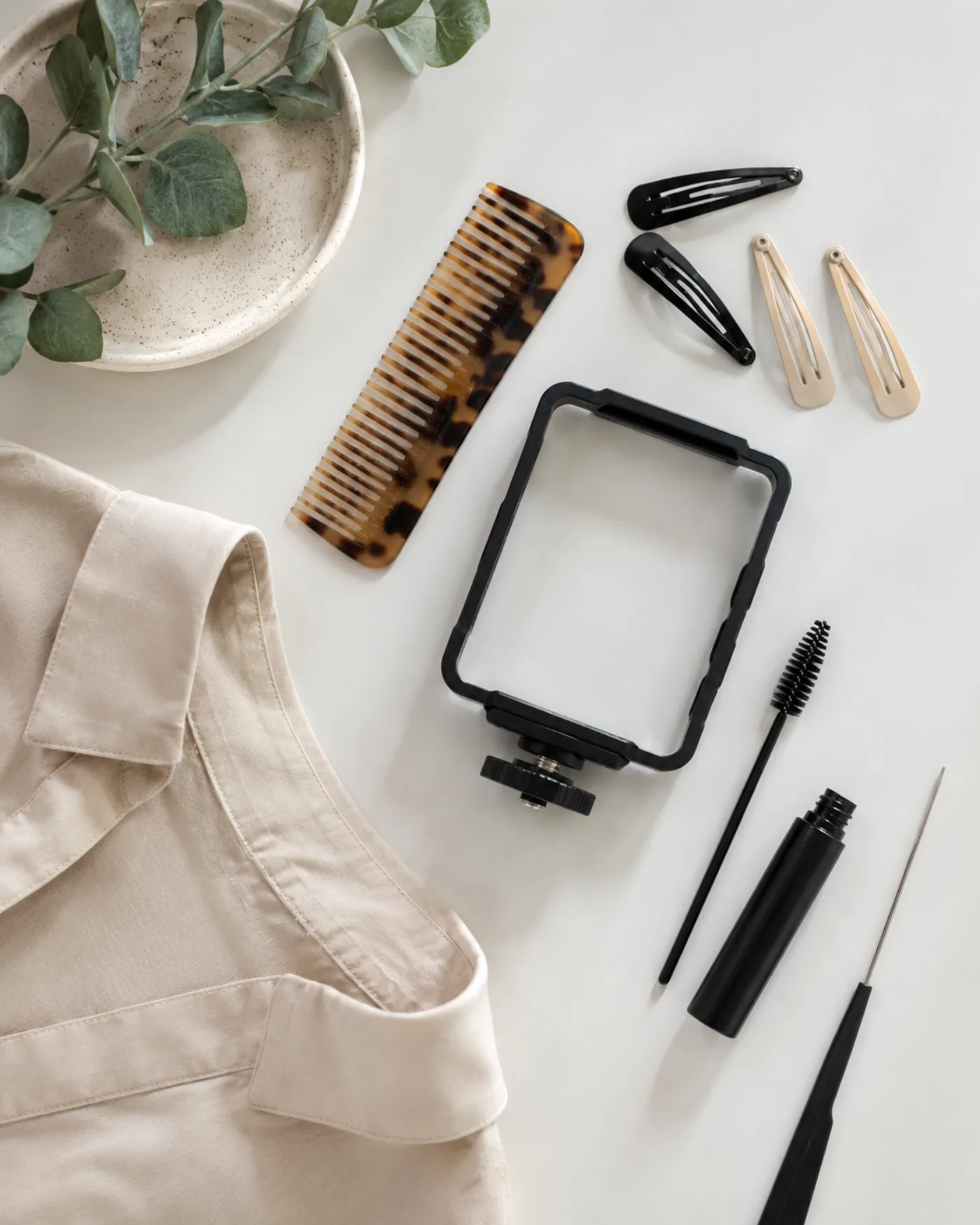
The second image should support the preparation workflow rather than repeat the hero portrait.
Avoid asking for a dramatic new haircut, color, makeup, pose, and office at once. That can create a striking image while hiding the decision you actually came to make. The final look needs to remain believable with the hair you have, the time you have, and the person who will see you after the photo is taken.
Choose two safe options and one stretch option
For most people, three versions are enough. The safe option is close to your existing routine: your current length with cleaner parting, a little more shape, or controlled natural texture. The second is the direction you are already considering, such as a shorter line, a different fringe, or more movement around the face. The stretch option changes one larger feature while remaining plausible for your hair and schedule.
This structure keeps the conversation practical. If the stretch option looks great but would require a major cut or high-maintenance styling, you can borrow one feature from it without committing to the whole look. Perhaps you like the lifted crown but not the heavy fringe, or the shorter face framing but not the full new length.
When you use the tool this way, the output becomes a set of preferences rather than a demand for an exact generated image. That is more useful at a salon and more likely to result in a photo that still feels like you.
Make styling choices that respect your routine
A headshot is not a reason to adopt a hairstyle you cannot maintain. If you normally wear your curls natural, a bone-straight preview may be a helpful contrast but not the best photo-day choice. If you never wear a deep side part, do not make your professional identity depend on keeping one in place for a full shoot.
Tell a stylist or photographer what your normal hair does. Mention whether it expands in humidity, falls flat after an hour, needs glasses-friendly face framing, or is sensitive around the hairline. Bring the original photo and the two or three controlled previews. Point to the features you prefer, not to a claim that the generated cut is a technical instruction.
For a major color change, do not treat the preview as a dye promise. It can help you decide whether a warmer or cooler direction works with the portrait. A colorist still needs to evaluate your history, condition, and the actual lighting. A hairstyle try-on should stay focused on shape; the AI hair color changer is useful for a separate color comparison so the haircut decision does not get tangled with it.
Plan the photo day around the crop
Bring a small, realistic touch-up kit: a comb or brush, clips, the product you normally use, and a way to manage flyaways without making the hair look rigid. Ask the photographer to show you the first few frames at the intended crop. A small adjustment to the part, the hair near one ear, or the shoulder placement can matter more than a complete restyle.
Coordinate the hairstyle with the neckline and any glasses. High collars, statement earrings, and dark jackets can all change how much room the hair needs around the face. If you wear glasses, make sure the frame and hair do not create one crowded shadowed area. If you plan a tight crop, keep the final shape close enough to the face that it still reads when the shoulders are barely visible.
What a generated preview cannot promise
An image tool cannot diagnose hair health, prescribe a cut for a face shape, guarantee a stylist can reproduce a look, or predict how hair will react to weather. It does not know your curl pattern when dry, the strength of a cowlick, the result of previous chemical work, or the photographer’s exact setup.
That is not a reason to avoid the preview. It is a reason to use it for the right job: identify visual preferences early, communicate them clearly, and leave physical and technical feasibility to real people and real hair.
FAQ
What hairstyle looks best for a professional headshot?
There is no single best haircut. The strongest choice keeps your face readable in the intended crop, suits the setting, and can be maintained comfortably. Compare a few realistic part, length, and texture directions on your own photo, then choose the version that still feels like you.
Should I cut my hair right before a headshot?
Avoid a major first-time cut immediately before an important shoot. If you are making a change, leave enough time to live with it and adjust. A visual test can help you decide the direction before you schedule a cut.
Are bangs good for a headshot?
They can be, as long as the eyes and eyebrows remain readable in the crop and the fringe can be styled reliably. Test a controlled version, then see how the real fringe behaves in normal lighting and movement.
Can a preview show exactly how I will look in the final photo?
No. It can show a visual direction. It cannot recreate your exact texture, styling technique, camera lens, lighting, or retouching. Use it to choose features you like, not as a final production promise.
Choose a look you can recognize tomorrow
The best headshot hair direction does not need to be a makeover. It needs to frame your face, match the purpose of the portrait, and feel manageable in real life. Use a controlled comparison, take the preference rather than the pixels into photo day, and keep the final image recognizably yours.