
Blunt Bangs vs Curtain Bangs: Preview Both on Your Face
Compare blunt bangs and curtain bangs by face framing, texture, styling time, grow-out, and a simple preview-first decision before you cut.
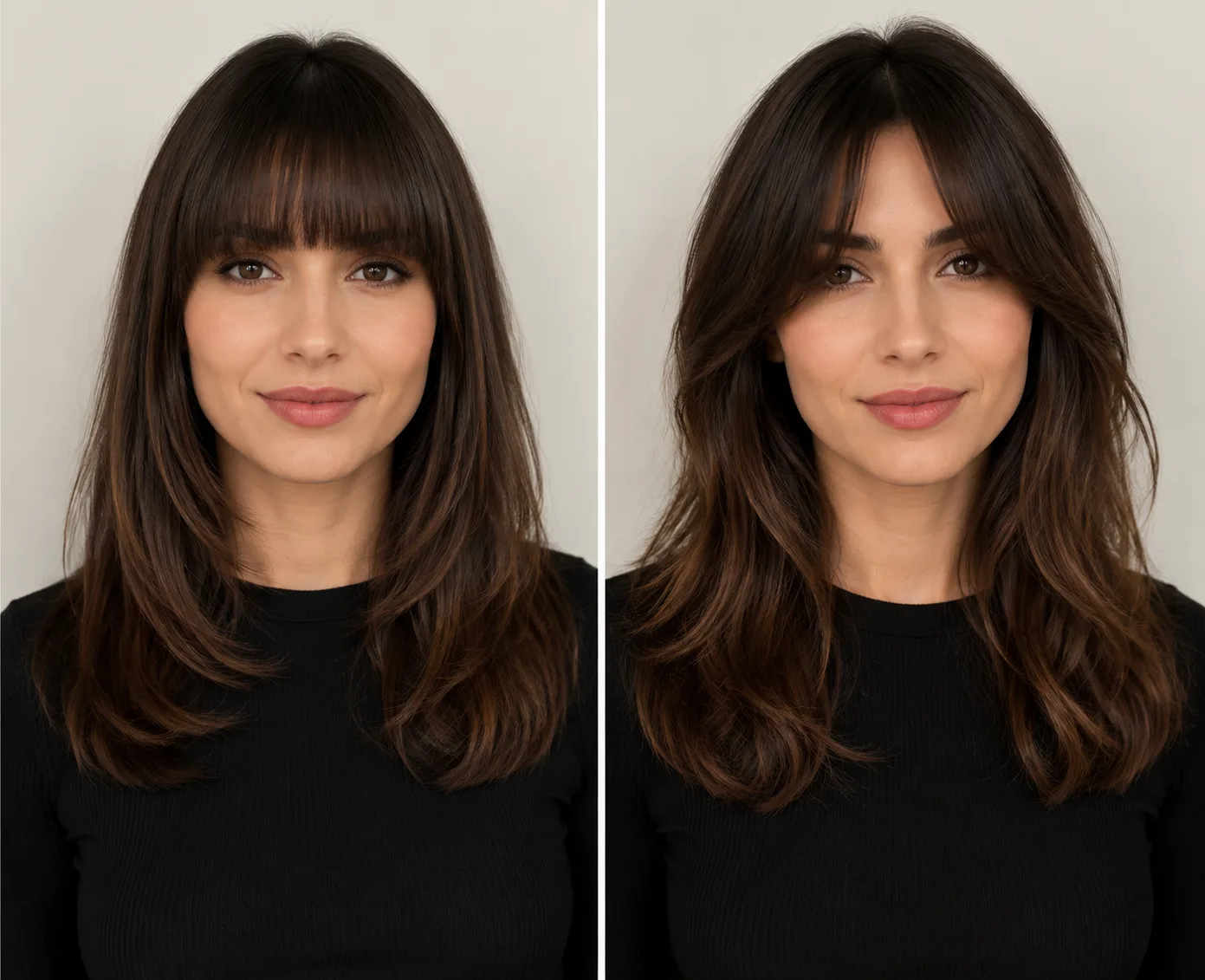
Blunt bangs make a clear horizontal statement across the forehead. Curtain bangs open around the face and blend into the rest of the haircut. Neither is automatically better; the useful question is which one fits your hair texture, routine, and the way you want your face to be framed. A bangs filter lets you preview both directions before the scissors are involved.
Last updated: July 10, 2026 - about 7 min read
A saved salon photo is helpful, but it does not show what a fringe will do on your own hairline, part, brow line, cheeks, or glasses. Previewing both styles on the same photo gives you a clearer first decision. Then your stylist can judge the details a preview cannot: cowlicks, density, shrinkage, and how the fringe will behave between wash days.
Quick answer
Choose blunt bangs when you want a graphic, direct frame around the eyes and are comfortable with more regular styling. Choose curtain bangs when you want a softer, center-part-friendly shape that can blend into layers and grow out more gently.
Before you decide, compare both on the same clear photo. Keep the rest of the haircut, color, face, and lighting unchanged. That isolates the one thing you are trying to judge: the fringe.
The visible difference
| Style | Main visual effect | Best first question |
|---|---|---|
| Blunt bangs | A stronger line across the forehead and eyes | Do I want the fringe to be the focal point? |
| Curtain bangs | A soft opening that frames cheekbones and blends into layers | Do I want a fringe that can disappear into my part? |
Blunt bangs usually read as deliberate and structured. They can make an ordinary cut feel more editorial, but they also show every uneven section and can need more daily attention.
Curtain bangs usually read as softer and more flexible. They can work with a center or off-center part and often feel less abrupt as they grow. The tradeoff is that they need enough length and movement to keep the shape open rather than splitting into random pieces.
A preview can show the framing difference. A stylist should still check texture, cowlicks, and maintenance.
Start with your hairline, not a trend
Your hairline affects both options. A strong cowlick, very fine front sections, or a deep side part can change how a fringe falls once you leave the salon.
Use a preview to ask better questions:
- Does a blunt line make your forehead feel shorter or more balanced?
- Do curtain pieces open around your eyes in a way you like?
- Does one style fight your usual part?
- Does your hair look fuller with a fringe, or does it become too sparse at the front?
- Are you happy with the style when you imagine it on a low-effort day?
The best haircuts for face shape guide can help with the larger cut. Bangs are the smaller, higher-maintenance decision layered on top.
Blunt bangs: what to expect
Blunt bangs suit people who want a visible change. They can emphasize the eyes, create a sharper silhouette, and make a simple bob, long cut, or updo feel more intentional.
They are often worth previewing if you like:
- A clean line above or near the brows.
- Strong eye emphasis.
- A more polished or graphic look.
- Styling your fringe separately from the rest of your hair.
They may be less convenient if your forehead gets oily quickly, your front hair has a stubborn cowlick, or you do not want to use a dryer or styling tool most mornings. A blunt fringe can still work in those cases, but it needs a realistic consultation.
Curtain bangs: what to expect
Curtain bangs are not just "longer bangs." Their shape depends on an opening at the part, longer outer pieces, and enough movement to frame the face. They are usually a safer first fringe for someone who wants softness rather than a hard line.
They are often worth previewing if you like:
- A middle or soft off-center part.
- Face-framing pieces that blend into layers.
- A fringe that can be pinned back or tucked away.
- A gentler grow-out path.
They can still require styling. If the front pieces are too short, too heavy, or cut without regard to your natural part, they may sit flat or split unevenly.
Preview both the right way
Use one clear, front-facing photo. Avoid hair covering the forehead, heavy filters, hats, or a strong wind. Then run two controlled tests with a bangs filter:
- Blunt, brow-length fringe with the same haircut and color.
- Soft curtain bangs that open at the part and blend into face-framing layers.
Do not test new color, makeup, length, or background at the same time. When everything changes at once, you cannot tell whether the fringe is the part you actually like.
Compare the two fringe directions first, then bring two or three references to your appointment.
What the preview cannot tell you
An image can show direction, not a salon guarantee. It cannot tell you exactly how your hair will shrink, how it reacts to humidity, or how quickly a fringe gets oily. It also cannot decide whether your hair is dense enough to take a heavy section without making the rest of the cut feel thin.
Bring the preview to your stylist and ask:
- Which option works with my natural part?
- How much daily styling will this need on my texture?
- Where should the shortest point sit for my face and glasses?
- Can we start longer and trim gradually?
- What will the grow-out look like in six to eight weeks?
That conversation is more useful than asking for an exact copy of a filtered image.
Final decision
Pick blunt bangs when you want a stronger visible change and are happy to maintain a defined line. Pick curtain bangs when you want softer framing, more part flexibility, and a gentler exit route if you change your mind.
If neither looks right in a preview, that is a useful answer too. You may prefer longer face-framing layers or a different overall cut. Use AIChangeHair's hairstyle try-on to compare the larger options before you book.
FAQ
Are blunt bangs harder to maintain than curtain bangs?
Usually, yes. A blunt line often needs more regular trimming and daily styling. Curtain bangs can be more flexible, but they still need the right part and shape.
Can a bangs filter tell me which one suits me?
It can show the visual direction on your face. It cannot predict cowlicks, hair density, or daily styling behavior, so use it as a first decision rather than a final haircut instruction.
Should I start shorter or longer?
For a first fringe, ask your stylist whether a longer version is safer. It is easier to trim more than to wait for a fringe to grow back.