
Long Hair to Short Hair: Preview the Change Before You Cut
Going from long hair to short hair is easier to judge with a preview. Compare lob, bob, pixie, and buzz-cut options before your salon appointment.
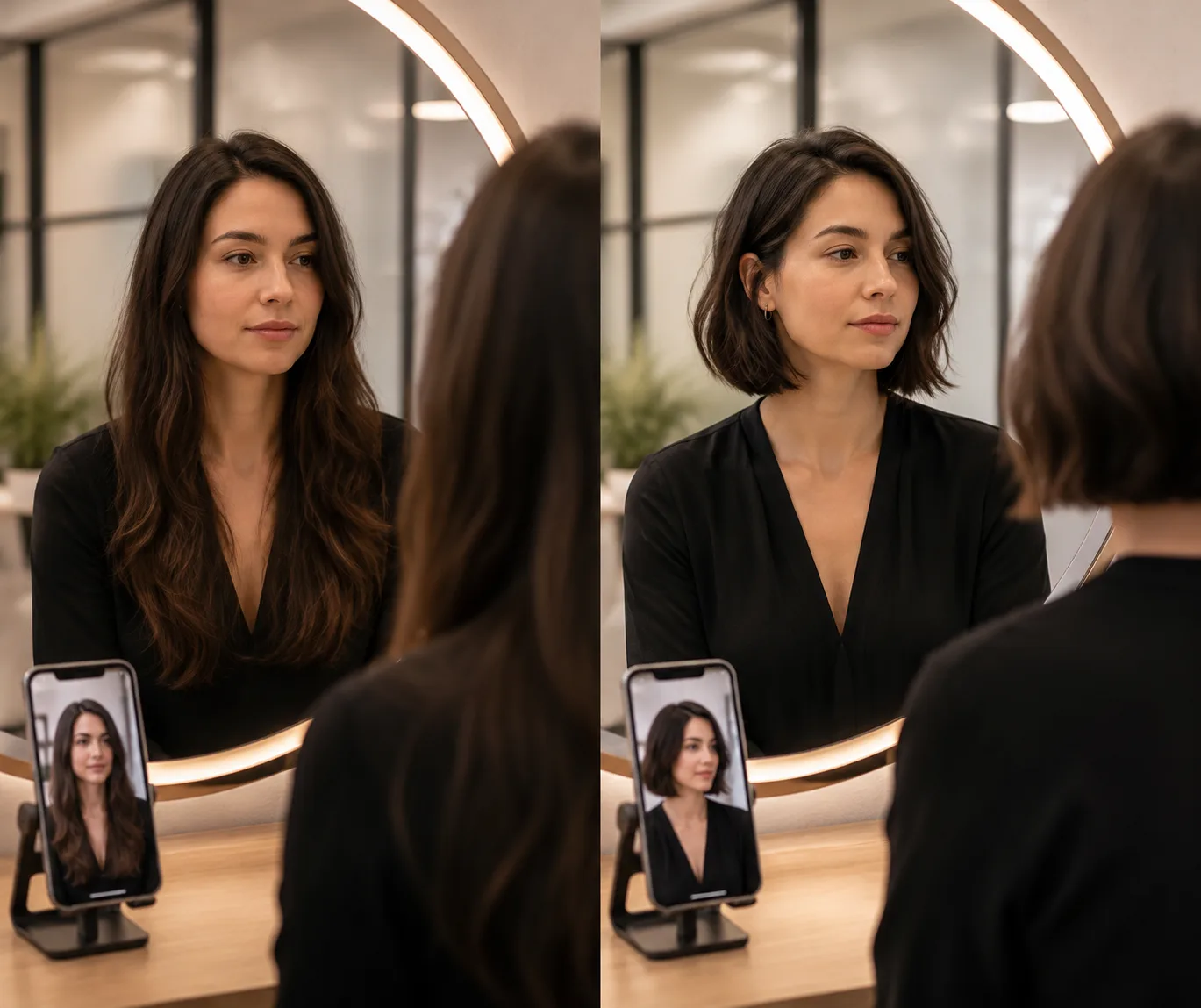
Going from long hair to short hair is a big visual change, so do not decide from a celebrity photo alone. Upload one clear selfie to an AI hairstyle changer, preview a lob, bob, pixie, and very short option on your own face, then bring the strongest direction to your stylist.
Last updated: July 4, 2026 - about 7 min read
Long hair to short hair is not one decision. It is a range of decisions: how much length to remove, where the weight should sit, whether to show the neck, how much daily styling you can handle, and how the cut will grow out.
The goal is not to find a perfect AI prediction. The goal is to reduce the blind spot before you cut. A preview lets you compare the shape on your own face, not on someone with a different bone structure, hair density, and styling routine.
Quick answer
If you want to go from long hair to short hair, preview these four steps first:
- Shoulder-length cut.
- Lob or long bob.
- Chin-length bob.
- Pixie or buzz-cut range.
Compare them side by side. If the shortest option feels too bold, step back one level. If the bob feels too safe, test a sharper crop. This is more honest than asking "should I cut my hair short?" as one giant question.
For a broader short-hair self-check, read how would I look with short hair. This guide focuses on the transition from long hair to short hair.
Start with a realistic short-hair ladder
Do not jump from waist-length hair straight to one pixie preview and call it research. Build a ladder:
| Preview | What it tells you | Risk level |
|---|---|---|
| Shoulder-length cut | Whether you like less length around the body | Low |
| Lob | How you feel with hair sitting near the collarbone | Low to medium |
| Chin-length bob | Whether jaw and neck exposure suits you | Medium |
| French bob or blunt bob | Whether you like a stronger shape | Medium |
| Pixie cut | Whether you like the face fully open | High |
| Buzz cut | Whether you like the most minimal silhouette | Highest |
The ladder matters because a "short haircut" can be soft, sharp, neat, messy, feminine, androgynous, polished, or low-maintenance. The preview should help you name the version you actually want.
How to preview long hair to short hair
Use a photo that shows your face, jawline, neck, and hairline. If your long hair covers most of your face, pull the front pieces back or take a new photo. The AI needs to see the shape that short hair will expose.
Steps:
- Take a front-facing photo in natural light.
- Keep your expression relaxed.
- Avoid heavy filters that blur the hairline.
- Upload the photo to the AI hairstyle changer.
- Generate a lob, bob, pixie, and one very short option.
- Save the results and compare them together.
Try this prompt:
Keep the same face, skin tone, expression, lighting, and background. Change only the hair from long hair to a [target short haircut]. Keep the result natural, realistic, and suitable for my face shape.
Swap the bracket for "collarbone lob," "chin-length bob," "soft pixie cut," or "short buzz cut."
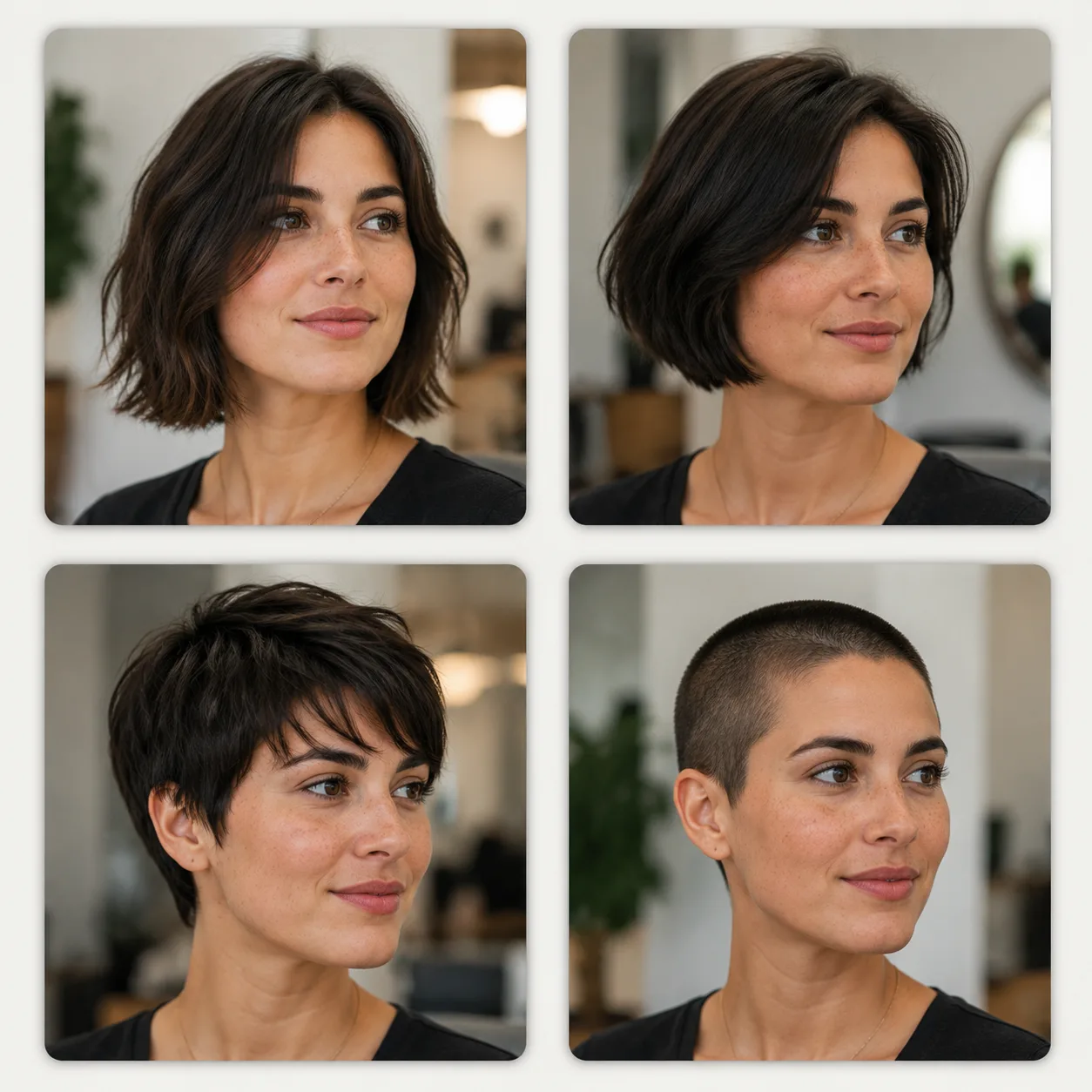
Side-by-side previews make the decision less emotional. You can see which length changes your face in the way you want.
What changes when long hair becomes short
A long-to-short cut changes more than length.
- Face focus: less hair means more attention on eyes, cheekbones, jaw, ears, and neck.
- Outfit balance: collars, jackets, earrings, and makeup read differently.
- Hair density: fine hair may look fuller in a blunt bob; thick hair may need layers.
- Styling time: some short cuts are wash-and-go, but others need daily shaping.
- Maintenance: short silhouettes need more frequent trims to keep their shape.
- Grow-out: a bob grows out smoothly; a pixie can have a more awkward middle stage.
That is why the question is not only "does short hair suit me?" It is also "which short haircut fits my life?"
Which short cut should you preview first?
Use your hesitation as the guide.
| If you are thinking... | Preview first |
|---|---|
| "I want change, but not panic." | Shoulder-length cut or lob |
| "I want my hair to look thicker." | Blunt bob or textured bob |
| "I want my jawline to show." | Chin-length bob |
| "I want a bold reset." | Pixie cut |
| "I want the lowest styling routine." | Buzz cut, then ask about upkeep |
If you already know you want a bob, compare bob haircuts with a lob and chin-length version. If you want a dramatic result, test pixie haircuts and the buzz cut filter before you commit.
How to judge the preview
Look at each preview for at least 20 seconds. The first reaction is often shock because your brain is used to seeing long hair. After that, judge the actual shape.
Ask:
- Does the cut make my face feel balanced?
- Do I like how much neck and jawline it shows?
- Does it still look like me?
- Would I wear my usual clothes with this haircut?
- Can my natural texture support this shape?
- Would I maintain this cut every 6 to 10 weeks if needed?
Reject a preview if the face changed, the hairline moved unnaturally, the ears or neck look distorted, or the short hair looks like a pasted wig. A bad render is not a verdict on the haircut. It may just mean you need a cleaner photo or simpler prompt.
Bring the preview to a stylist
Use the preview as a direction, not a demand. A stylist can translate it into a real cut based on your density, wave pattern, cowlicks, hairline, and daily routine.
Bring two images:
- The version you like most.
- The version that feels too short or too heavy.
That gives the stylist a boundary. You can say, "I like this bob shape, but I do not want it shorter than this." That is much clearer than saying "something short."
Questions to ask:
- Will this shape work with my natural texture?
- Should the cut be blunt, layered, or softly textured?
- How often will it need trimming?
- How should I style it on a normal morning?
- What will the grow-out look like?
If you are nervous, cut in stages
You do not have to move from long hair to short hair in one appointment. A staged plan can be smarter:
- Long hair to collarbone length.
- Collarbone length to lob.
- Lob to bob.
- Bob to pixie only if the shorter previews still feel right.
This is especially useful if your hair has been long for years. The first cut lets you learn how you feel with less length before you remove all the safety net.
Frequently asked questions
How can I see myself from long hair to short hair?
Upload a clear selfie to an AI hairstyle changer and preview several short lengths on your own face. Compare a shoulder-length cut, lob, bob, pixie, and buzz-cut option before deciding.
Should I cut my long hair short all at once?
You can, but you do not have to. If you are nervous, cut in stages from long hair to a lob, then a bob, then shorter if the preview and first cut feel right.
What is the safest short haircut after long hair?
A lob or shoulder-length cut is usually the safest first step because it changes the silhouette without fully exposing the neck and jawline. A bob is a stronger but still common next step.
Can an AI preview replace a stylist?
No. A preview helps you choose a direction. A stylist still needs to adapt the cut to your hair texture, density, growth pattern, and maintenance level.
Preview before you cut
If you are serious about going from long hair to short hair, make the decision visible first. Upload one clean selfie to the AI hairstyle changer, compare several short lengths, and save the two previews that best explain what you want.