
Wolf Cut Guide: Who It Suits, How to Style It & How to Preview It
What a wolf cut is, the face shapes and hair types it flatters, wolf cut vs shag, and how to preview a wolf cut on your own photo before you cut.

A wolf cut is a layered, shaggy haircut that blends a 1980s shag with a mullet: short, choppy layers up top and longer, wispy pieces at the back for big volume and a lived-in, undone look. Before you book it, an AI hairstyle changer lets you preview a wolf cut on your own face in seconds, so you can judge the shape on you instead of on a model.
Most people type one thing before they book the chair: "Does a wolf cut suit me?" The honest answer comes down to your face shape, your hair texture, and how much daily styling you'll put up with. Here's the straight version — what the cut is, who it tends to flatter, how it differs from a shag and a mullet, and how to test it on yourself first.
Last updated: June 24, 2026 · ~5 min read
What exactly is a wolf cut?
Two things define a wolf cut: heavy, disconnected layers through the crown with shorter face-framing pieces, plus longer, thinned-out lengths at the back and nape. The top reads almost like a shag; the back keeps a faint mullet shape. You get high volume up top, movement everywhere, and texture that looks deliberately messy.
It usually lands between the chin and the collarbone, though longer "wolf cut + mullet" hybrids exist. It lives on contrast — short and stacked above, long and feathery below.
Here's how it stacks up against the cuts people most often confuse it with:
| Cut | Shape | Typical length | Upkeep | Vibe |
|---|---|---|---|---|
| Wolf cut | Shag top + mullet back, heavily layered | Chin to collarbone | Medium — trim every 6–8 weeks | Edgy, undone, voluminous |
| Shag | All-over choppy layers, no mullet tail | Any length | Low–medium | Rock-and-roll, soft and rounded |
| Mullet | Short front and sides, long back | Short top, long back | Medium | Bold, retro, statement |
| Standard layers | Graduated lengths, blended | Any length | Low | Polished, classic, low-key |
The one-line difference: a shag is layers without the back length, a mullet is length without the all-over layering, and a wolf cut is both at once.
Does a wolf cut suit your face shape & hair type?
A wolf cut is forgiving, but it isn't universal. The volume sits at the crown and the layers fall around the cheekbones, so the shape plays off your face. Two things matter most: face shape (where the cut adds or removes width) and hair texture (how much natural body you're starting with).
| You have | Wolf cut verdict | Tweak to ask for |
|---|---|---|
| Round face | Good | Keep crown volume high and layers long to lengthen the face; avoid heavy cheek-level fringe |
| Oval face | Great | Suits almost any version — pick length by preference, not correction |
| Square face | Good | Soft, wispy face-framing to round off a strong jaw |
| Heart face | Good | Add weight and texture at the jaw to balance a wider forehead |
| Straight hair | Workable | Ask for extra texturizing/point-cutting so layers don't look blunt and flat |
| Wavy hair | Ideal | Natural movement does half the work; minimal styling needed |
| Curly hair | Great | Cut on dry curls; lean into a curly wolf cut rather than fighting it |
| Thin/fine hair | Good for looks, mind the ends | Keep layers shorter and blunter; over-thinning makes ends look stringy |
If you take one thing away: wavy and curly hair wear a wolf cut with almost no effort, while pin-straight and very fine hair need a stylist who texturizes carefully — otherwise the "shag" reads as uneven rather than intentional.
A chart only tells you the tendency, though. The cut's volume and your own hairline play off each other in ways no "you'd probably suit it" can predict — which is why seeing it beats guessing.
How to preview a wolf cut on yourself
Rather than commit to the scissors and hope for the best, see the cut on your own photo first. It takes under a minute and costs nothing.
- Upload a clear, front-facing selfie. Even light, hair pushed back off the face, no heavy filter. The AI needs to read your hairline and face shape to place the layers convincingly.
- Pick the wolf cut. Open the wolf cut filter and select it (or test a mullet side by side to see which back-length you actually prefer).
- Compare before and after. The tool returns a photo-real preview on your face. Save it, line it up against your current look, and bring the version you like to your stylist.
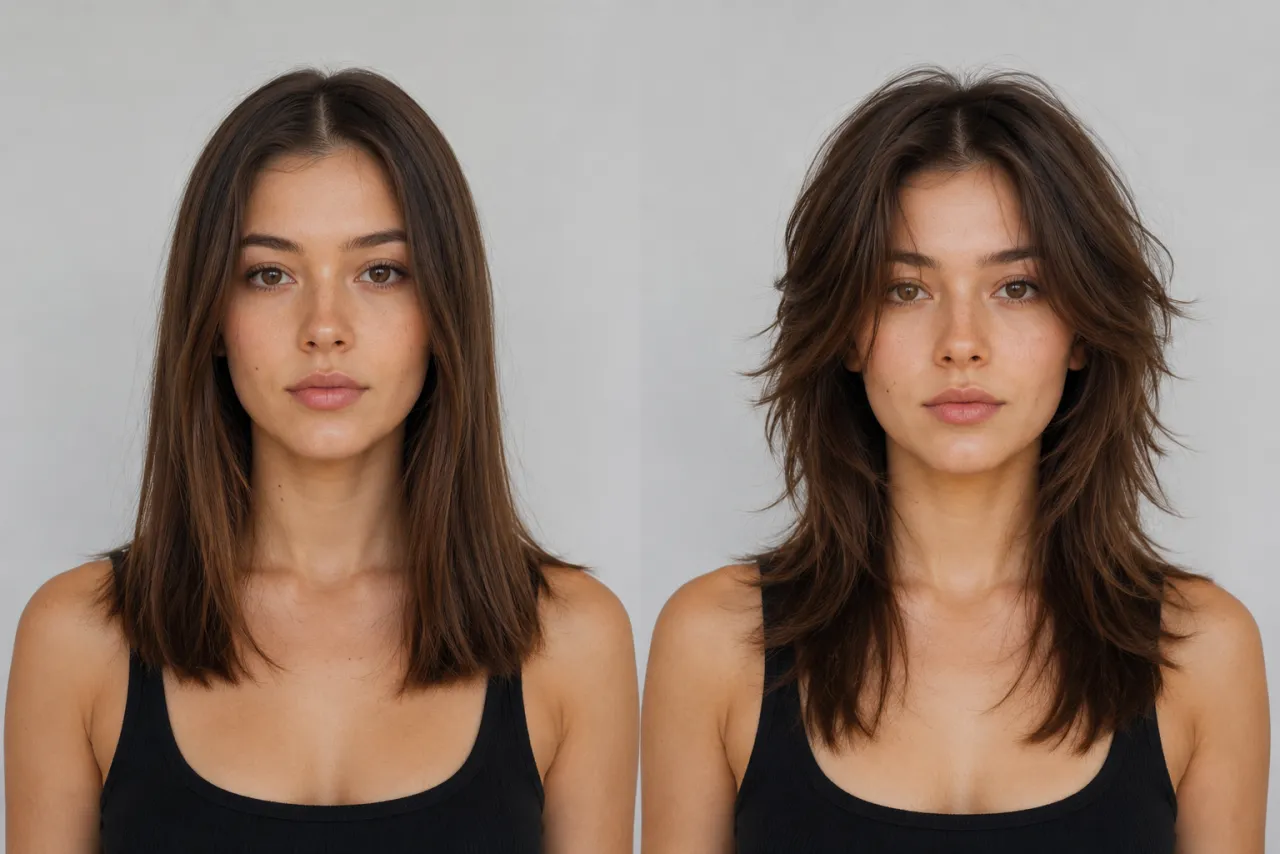
Same photo, two looks: long straight hair on the left, a previewed wolf cut on the right — generated in seconds.
This is where a general chatbot tends to fall down. Ask ChatGPT or Gemini to "show me a wolf cut on my face" and it often refuses the edit or hands back a stranger's photo. A tool built for this edits your photo, so the preview still looks like you and the layers sit on your real features.
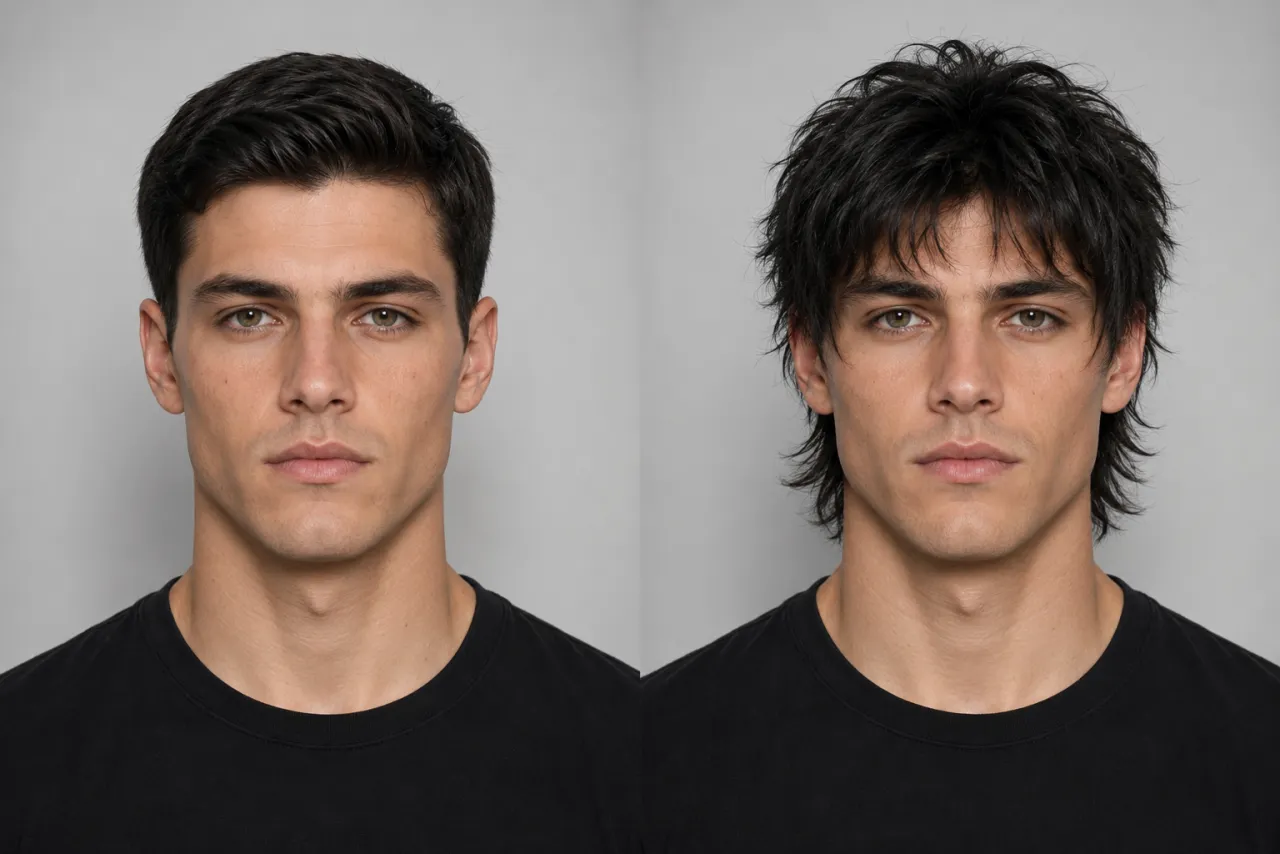
A wolf cut preview keeps the same face and lighting, so you can judge the shape before any cut.
Styling & growing out a wolf cut
The wolf cut's best feature — built-in texture — is also the thing you have to manage. It's meant to look messy, but "good messy" still takes a bit of product and a plan for growing it out.
Day to day, the cut rewards a light touch:
- Air-dry or rough-dry. Scrunch in a texturizing spray or a pinch of sea-salt mist while damp, then let it dry undone. Over-smoothing fights the whole point.
- Add crown volume. A round brush or a few seconds of root-lift on the top layers gives the signature shaggy height. This is where the "wolf" reads, not the back.
- Refresh, don't reset. Between washes, a dry texturizing spray revives the layers. Curly and wavy hair often look better on day two or three.
- Trim the shape, not the length. A texturizing trim every 6–8 weeks keeps the layers from looking grown-out and heavy.
Grow-out tip: the wolf cut is one of the easier shaggy cuts to grow out, because the layers are meant to be uneven. As it lengthens it relaxes naturally into a shag, then into long layers — so there's rarely an awkward stage where you're stuck hiding it.
Torn between this and other layered looks? Preview a couple from the same selfie before you decide — two shapes on your own face tells you more than judging either one on its own.
Frequently asked questions
Is the wolf cut still in style in 2026?
Yes. The wolf cut has settled in as a lasting layered style rather than a flash trend, with softer, more wearable "modern wolf cut" and "wolf cut + curtain bangs" versions now common. It reads as edgy but mainstream, not dated.
Does a wolf cut suit thin hair?
It can. The layers create the look of volume, which flatters fine hair, but the ends need care — ask for shorter, blunter layers and minimal thinning so the lengths don't turn stringy. Preview it first to see how the volume sits on your hair.
Wolf cut vs shag — what is the difference?
A shag is all-over choppy layers with no extra length at the back. A wolf cut adds a faint mullet shape — longer, wispier lengths at the nape — on top of the shag layering, so it carries more volume up top and more contrast front to back.
Is a wolf cut high maintenance?
It's medium maintenance. Daily styling is quick — texture spray and air-dry — but it needs a texturizing trim roughly every 6–8 weeks to keep the layered shape crisp. It's lower-fuss than a precise blunt cut and easier to grow out than most shaggy styles.
Related guides
Keep exploring before you commit to the cut:
- Try the free AI hairstyle changer → — upload a selfie and preview a wolf cut on the home page.
- Hairstyle Try-On: see any haircut on your face
- Men's Hairstyle Try-On: preview cuts and beards
- What hairstyle suits my face?
- Wolf Cut Filter and the Mullet Filter — try both shapes on your own photo
Ready to see your wolf cut?
No more guessing in the mirror. Upload a selfie and preview a wolf cut free → — then take the look you like to your stylist.