
Balayage vs Ombre vs Highlights: The Real Difference
Balayage vs ombre vs highlights, explained: how each technique differs in placement, upkeep, and cost — plus preview balayage and ombre on your own photo.
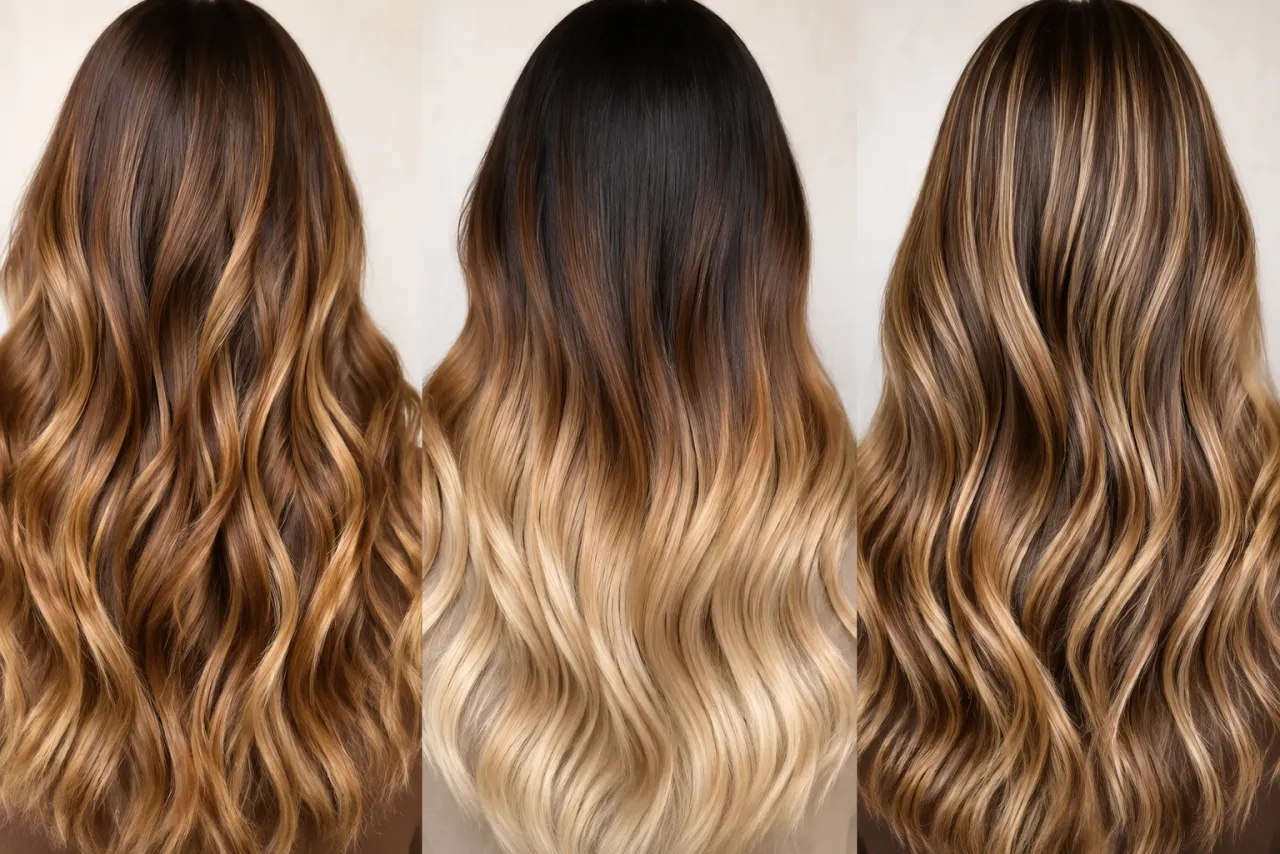
Balayage is color hand-painted onto random sections for a soft, sun-kissed blend; ombre is a horizontal fade from dark roots to light ends; highlights are thin foiled strands of lighter color throughout. They differ in placement, upkeep, and grow-out — and you can preview balayage or ombre on your own photo with an AI hair color changer before you book. All three lighten and add dimension, but they land very differently on real hair.
People mix these up constantly, and for good reason: salons throw the words around loosely, and online the photos all look the same. Below, you'll find the actual line between the three, a single table that compares them side by side, and a way to see balayage and ombre on your own face — so picking one isn't a shot in the dark.
Last updated: June 24, 2026 · ~7 min read
Balayage, ombre, and highlights — defined
The fastest way to keep them straight is by where the color goes, not just how light it ends up.
Balayage (French for "to sweep") is freehand. The colorist paints lightener onto the surface of chosen sections, going lighter toward the mid-lengths and ends while leaving the roots mostly your natural color. Since it's hand-placed instead of saturated down to the scalp, it reads soft and lived-in, with no hard line where the color kicks in.
Ombre is a graduated fade from dark to light along the length of the hair — dark at the roots, lighter toward the tips, usually with a clear horizontal transition around the mid-shaft. It's a bolder, more obvious two-tone effect than balayage, and the contrast is the whole point.
Highlights are thin, even strands lifted lighter, traditionally wrapped in foil so they process lighter and more uniformly than balayage. Placed root-to-tip across the head, they give all-over brightness and contrast instead of a gradient. (Lowlights are the opposite — darker strands added for depth.)
One-line memory trick: balayage = painted and blended, ombre = faded top-to-bottom, highlights = striped throughout.
| Technique | Placement | Upkeep | Typical cost (US) | Grow-out | Best for |
|---|---|---|---|---|---|
| Balayage | Hand-painted, surface, mid-to-ends | Low — every 3–4 months | $150–$300+ | Softest; no visible line | Low-maintenance, natural dimension |
| Ombre | Horizontal fade, dark roots to light ends | Low–medium — every 3–4 months | $100–$200+ | Soft, since roots stay dark | A bold, obvious two-tone look |
| Highlights | Thin foiled strands, root-to-tip throughout | Higher — every 6–8 weeks for roots | $100–$250+ | Visible regrowth line at roots | All-over brightness and contrast |
Costs swing widely by region, hair length, and how much lift your starting color needs, so treat the ranges as ballpark, not gospel. The grow-out column is the one most people skip past — yet it's the difference between a touch-up every six weeks and one every few months.
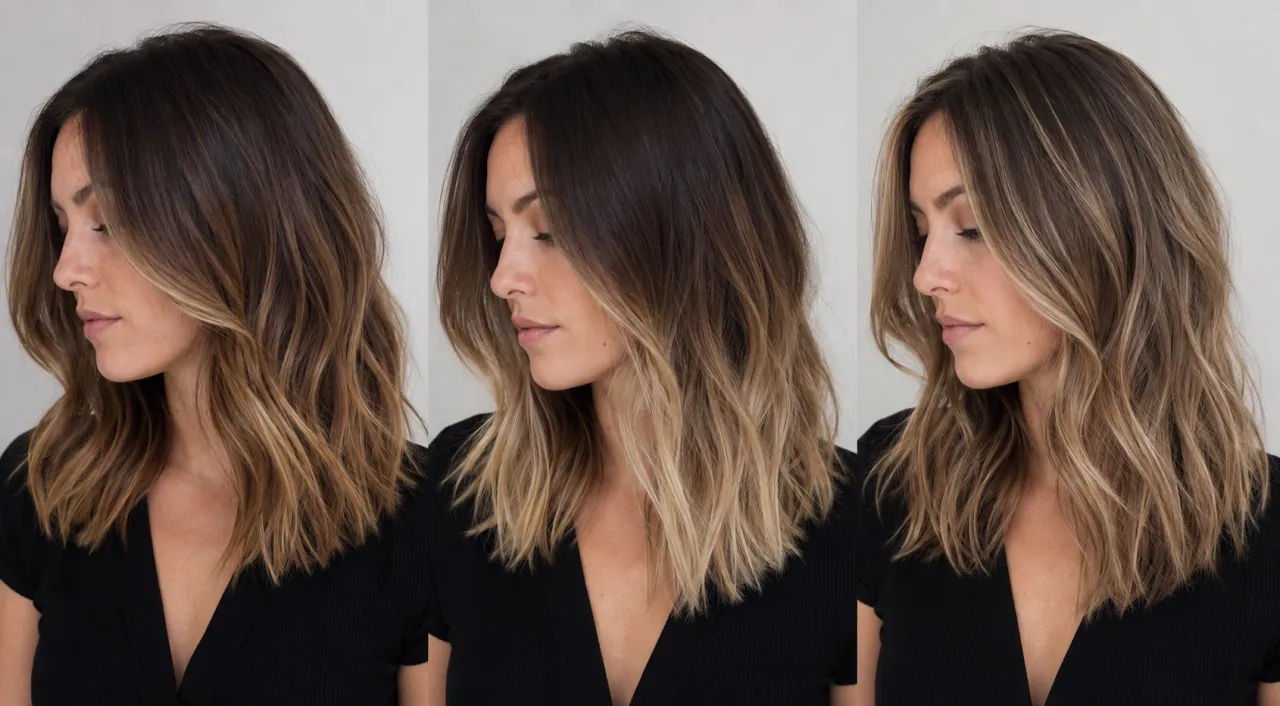
The same person, three techniques: balayage blends from the mid-lengths, ombre fades top-to-bottom, and highlights run as strands throughout.
How to choose between balayage, ombre, and highlights
The right pick comes down to three things: how much upkeep you'll put up with, your hair length, and the look you actually want. Work through them in order.
- Start with commitment. If you want to stretch salon visits and avoid an obvious root line, balayage or ombre win — both keep your natural roots, so growth blends in for months. If you want bright, uniform color all over and don't mind a touch-up every 6–8 weeks, highlights deliver more lift.
- Factor in your hair length. Ombre and balayage need enough length to show a gradient — they shine on mid-length to long hair. On short hair the fade has nowhere to travel, so highlights (or a subtle face-framing balayage) usually read better.
- Match it to the look. After soft, "just back from vacation" dimension? Balayage. After a deliberate, high-contrast two-tone? Ombre. After overall brightness and movement, like the whole head caught more light? Highlights.
Reality check on maintenance: balayage and ombre are the lower-upkeep options because the roots stay dark on purpose. Highlights brighten the whole head, which looks fuller — but the regrowth shows sooner, so budget for more frequent visits.
If your natural base is dark, lean toward balayage or ombre: both are designed to work with dark roots, so the grow-out is forgiving and the contrast looks intentional rather than overgrown.
Preview balayage or ombre on your photo
Before you drop $150–$300 and sit in the chair for a few hours, see the look on your own hair. An AI hair color changer paints the technique onto your photo while keeping your real face, skin tone, and lighting — so you're judging you, not a model on a swatch card.
- Upload a clear, front-facing photo. Even lighting, hair off the face, no heavy filter. The better the AI can see your hairline and natural color, the more believable the blend.
- Open the technique you want to test. Preview a sun-kissed paint job on the balayage hair color page, or a dark-to-light fade on the ombre hair color page.
- Compare and save. Line up balayage next to ombre on the same selfie, decide which flatters your skin tone, and bring the winning preview to your colorist as a reference.
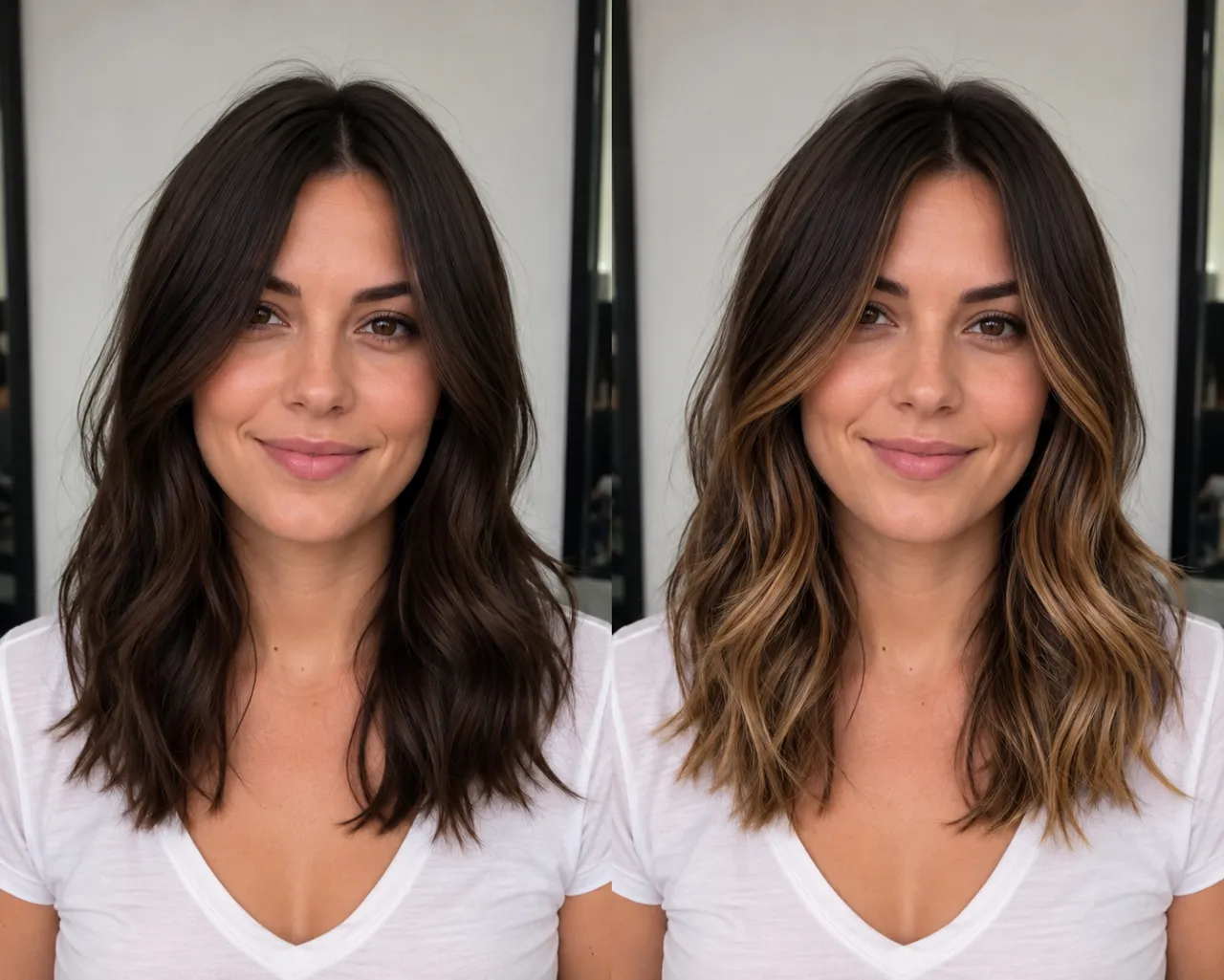
Natural dark brown on the left, a previewed caramel balayage on the right — same face, skin tone, and lighting.
The preview is free and undoable, so you can try both techniques — plus a few shades within each — in a couple of minutes. A lot cheaper than finding out you hate ombre once it's already on your head.
Frequently asked questions
Is balayage or ombre better for dark hair?
Both suit dark hair well because each keeps your roots dark on purpose. Balayage gives a softer, more natural blend with no hard line, while ombre delivers a bolder, more obvious fade from dark roots to lighter ends. If you want subtle, low-key dimension, choose balayage; if you want a noticeable two-tone statement, choose ombre. Preview each on your own photo with an AI hair color changer to see which contrast flatters your skin tone before you book.
Which lasts longer and grows out better — balayage, ombre, or highlights?
Balayage and ombre grow out the most gracefully because the natural roots stay dark, so there's no obvious regrowth line — you can comfortably stretch to every 3–4 months. Highlights are placed root-to-tip, so new growth shows a clear line and usually needs a root touch-up every 6–8 weeks. For the lowest upkeep and the softest grow-out, balayage is the winner.
Are highlights cheaper than balayage?
Often, but it depends on placement. A basic partial-foil highlight can start lower than a full balayage, since balayage is a labor-intensive freehand technique that takes more time. That said, a full head of highlights can match or exceed balayage in price, and highlights need more frequent touch-ups — so over a year, the lower-maintenance balayage can cost about the same or less.
Can I do balayage at home?
You can with an at-home balayage kit, but it's the hardest of the three to get right because the whole look depends on freehand paint placement and blending. Uneven sections or over-processed ends are common DIY pitfalls on dark hair. At minimum, preview the result first: upload your selfie to an AI hair color changer and try a balayage to see whether the look suits you before you commit any actual lightener.
Related guides
Keep planning before you book a color appointment:
- Try the free AI hair color changer → — upload a selfie and preview balayage, ombre, highlights, or any shade on your own hair.
- How to change your hair color in a photo
- Best hair color for your skin tone
- Hairstyle Try-On: see any haircut on your face
Still deciding?
Don't guess from a salon photo of someone else. Upload your photo and preview balayage vs ombre free → — then take your favorite straight to your colorist.