
Gray Hair Filter: Try Silver and Gray Hair Before Dyeing
Use a gray hair filter to preview silver, soft gray, ash-gray, and gray blending ideas before dyeing. Learn what to check for skin tone, contrast, and lighting.
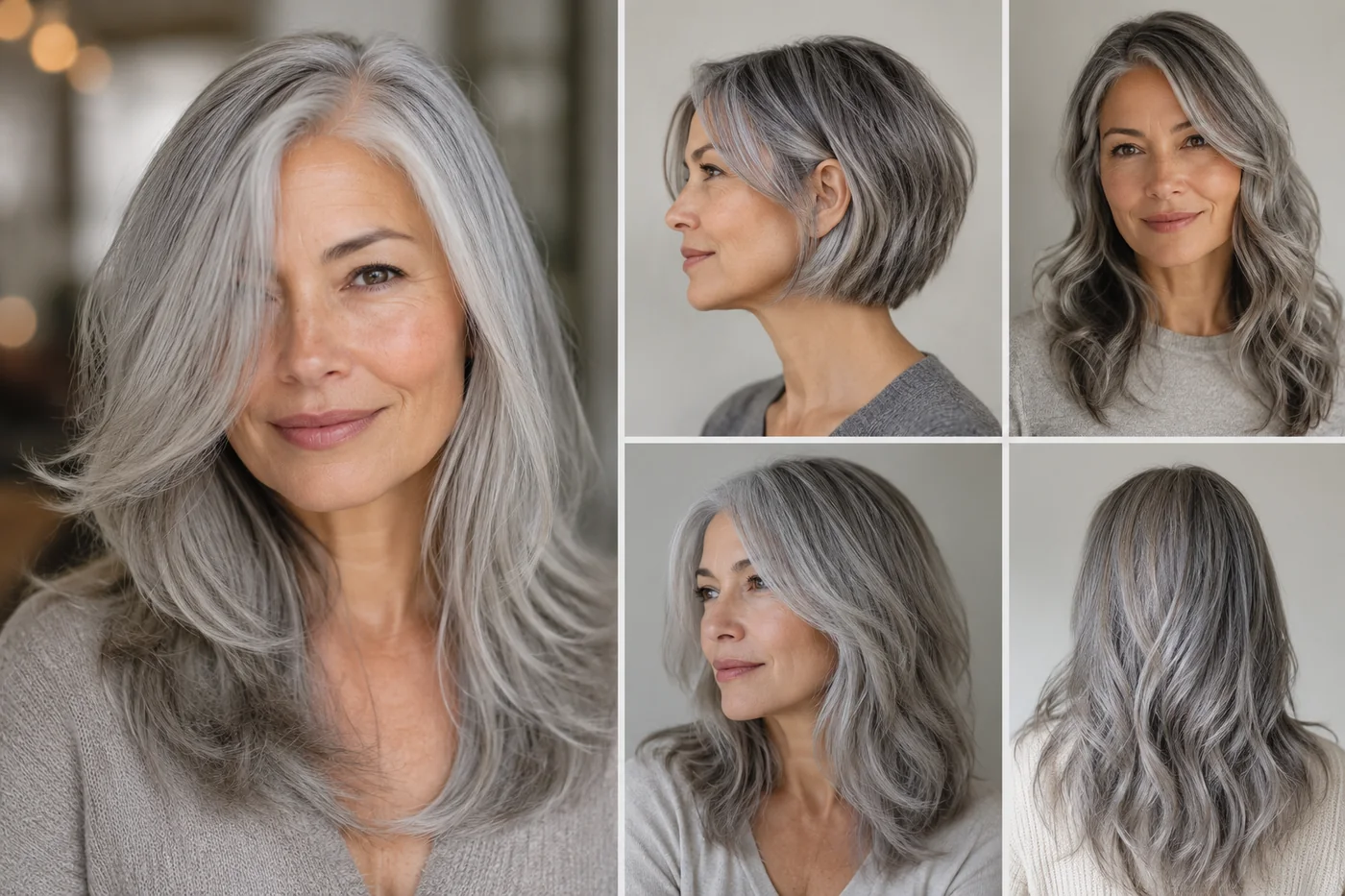
A gray hair filter can help you preview silver, soft gray, ash-gray, or gray-blending ideas before you dye your hair or change your salon plan. Gray hair can look elegant, sharp, soft, futuristic, natural, or washed out depending on shade, lighting, haircut, and skin tone. Previewing first helps you separate a good idea from a good idea for someone else.
With an AI hair color changer, you can test gray and silver directions on your own portrait. The most useful preview is not the most dramatic one. It is the one that shows whether the color supports your face.
Concept visual: gray and silver shades vary in brightness, coolness, and contrast.
Quick Answer: Test Gray, Silver, and Ash Separately
Do not judge gray hair from one filter result. Test at least three directions: soft gray, bright silver, and muted ash-gray. Soft gray is often easier to wear. Bright silver looks striking but needs clean lighting and strong maintenance. Ash-gray can look modern, but it may make the face look tired if the tone is too cool.
A silver hair filter can look very different from a gray hair filter, even when both feel similar in search results. Silver usually reads brighter and more fashion-led, while gray can feel softer or more natural.
If you already have naturally gray hair, use the preview to compare blending and shaping ideas. If you are dyeing from a darker base, use it to decide whether the goal is worth the lift and maintenance.
Gray vs Silver vs Ash-Gray
| Direction | What it looks like | Best preview check |
|---|---|---|
| Soft gray | Natural, lower contrast, gentle around the face. | Does it soften your features without looking dull? |
| Bright silver | Reflective, fashion-forward, high impact. | Does it brighten your face or overpower it? |
| Ash-gray | Cool, muted, slightly smoky. | Does it make your skin look clear or gray? |
| Gray blending | Mixed natural gray with lowlights or depth. | Does the result look intentional rather than patchy? |
Check Skin Tone and Contrast
Gray and silver shades change contrast quickly. If your features are already soft, very bright silver may feel too sharp. If your brows, lashes, and eyes are high contrast, silver can look polished and deliberate. If your skin has warm undertones, a blue-gray filter may look harsh. In that case, try a softer gray or a gray-brown blend.
The hair color for your skin tone guide can help you compare undertones before choosing a direction. When in doubt, look for the shade that makes your eye color and skin look clearer in the preview.
Use Realistic Lighting
Gray hair is sensitive to lighting. A silver result that looks beautiful in a bright concept image may look flat in a dim bathroom photo. Upload a portrait taken in clean natural light. Then test a second portrait in normal indoor light. If the color only works in one lighting condition, that is useful information before you spend money at the salon.
Avoid judging from filtered selfies. Warm filters can turn gray beige. Cool filters can make silver look icy and unrealistic. Heavy smoothing can also hide the texture that makes gray hair look natural.
Haircut Shape Matters More With Gray
Gray and silver shades draw attention to shape. A strong cut can make the color look intentional. A grown-out shape can make the same shade look unfinished. Before you decide that gray does not suit you, test the color with a few style directions: soft waves, a clean bob, layers, or a smoother blowout.
If you are thinking about a larger change, compare color and cut separately. First test the gray shade on your current style. Then try a style preview. That helps you avoid blaming the color for a haircut issue, or choosing a haircut only because the color looked exciting in one image.
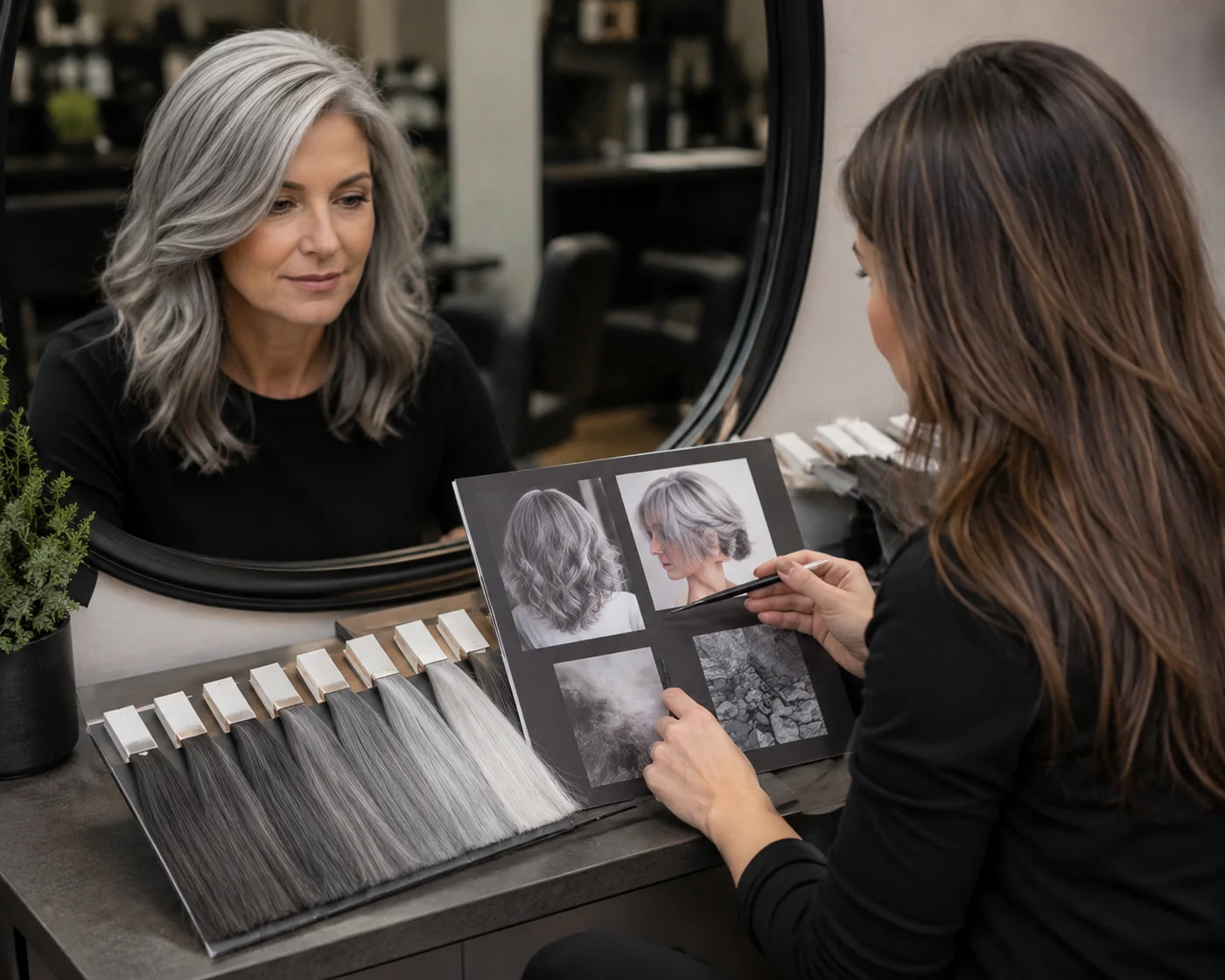
Concept visual: use a gray hair preview as a salon conversation starter, not as a dye formula.
Plan for Maintenance Before You Choose Silver
Bright silver usually needs more maintenance than soft gray or gray blending. Depending on your starting hair color, it may require lightening, toning, purple shampoo, glosses, and regular salon visits. A filter can show the destination, but it cannot show the full route.
If the preview makes you excited, save it and ask a stylist what it would take. If the answer involves multiple sessions or major lightening, you may want to test a softer option first. For lower-risk experiments, you can also compare shades in a simple change hair color in a photo workflow.
Respect the Difference Between Style and Age
Gray hair is not one message. It can be natural, intentional, fashion-led, low-maintenance, bold, soft, or elegant. Avoid judging the preview through a narrow idea of age. Instead, ask whether the shade fits your haircut, wardrobe, features, and maintenance tolerance.
If you prefer warmth, compare gray with beige blonde, mushroom brown, or soft brunette. The guide to best hair colors for warm undertones can help if silver feels too cool.
Check Makeup and Wardrobe Contrast
A gray hair preview may change how your usual makeup and clothing look. Black eyeliner, red lipstick, beige sweaters, white shirts, and bright jewelry can all read differently next to silver hair. If the preview feels close, look at it beside a few outfit photos or makeup looks you actually wear.
The goal is not to rebuild your style around one hair color. It is to notice whether the new color makes your existing choices easier or harder. A gray shade that works with your normal wardrobe is usually a better bet than one that only works in a carefully styled reference image.
If the preview feels too cool, try lowering the contrast before rejecting gray entirely. A softer gray blend, a shadow root, or a few warmer lowlights can make the idea more wearable. Use the filter to explore the direction, then let a stylist translate that direction into a realistic salon plan.
Bottom Line
A gray hair filter is most useful when you treat gray as a family of shades. Compare soft gray, bright silver, ash-gray, and blending options. Check skin tone, contrast, and lighting. Then use the preview to decide whether to go bold, soften the shade, or bring a more practical reference to your stylist.