
Hair Color for Blue Eyes: A Salon Consultation Checklist
Prepare a hair color for blue eyes consultation with controlled previews, honest hair history, realistic upkeep questions, and two useful shade directions.
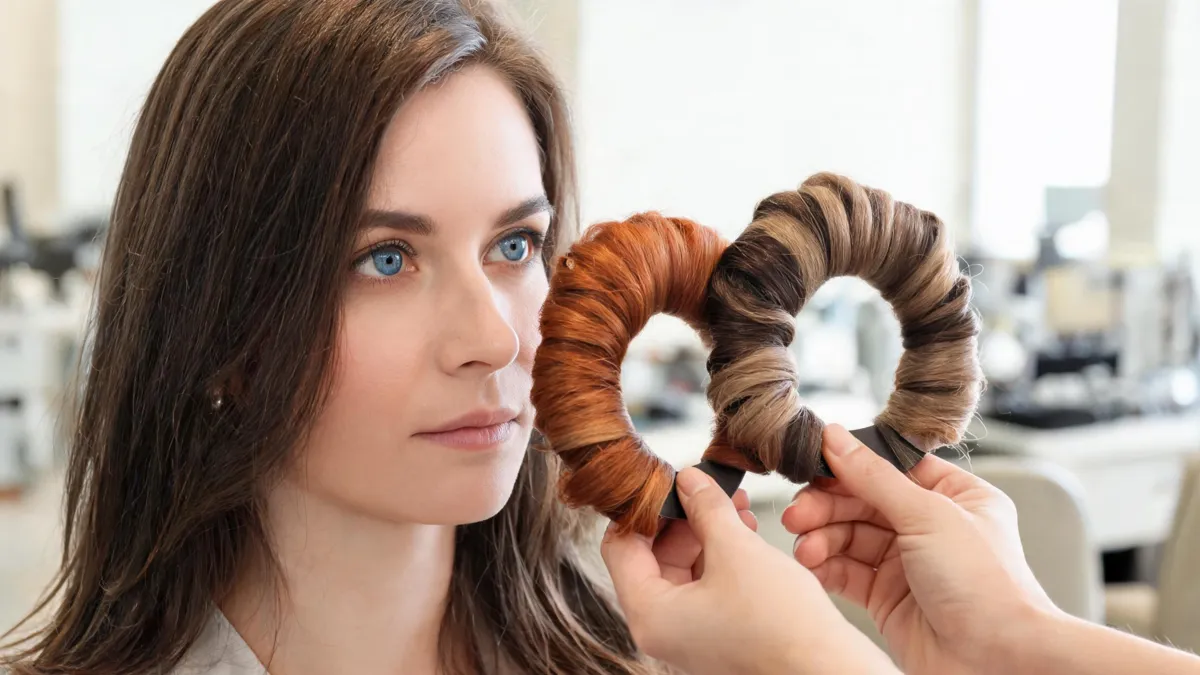
For blue eyes, the most useful salon plan is not a ranking of “best” shades. Bring two contrast directions—one warm such as copper or chestnut, and one deeper or softer neutral—then ask what your base, color history, condition, and upkeep make realistic. An AI hair color changer can help you compare those directions on one photo; it cannot predict a formula or salon result.
Last updated: September 14, 2026 · ~7 min read
The existing best hair color for blue eyes guide is for exploring shade families. This companion is for the next decision: arrive at a consultation with clear preferences, complete hair history, and questions that help a colorist give an honest answer.
Bring two directions, not a wall of inspiration
Blue eyes can look brighter next to warm orange-adjacent tones such as copper, auburn, and chestnut. Deep brown may create a sharper light-dark frame; beige or dark blonde can make the overall effect softer. Those are visual directions, not rules. Eye color is one detail in a larger picture that includes skin undertone, brows, natural depth, hair texture, and how much maintenance you want.
Choose only two directions to discuss. Keep the depth and photo constant so you can see what you are actually choosing.
| Direction to bring | What to show the colorist | Practical question |
|---|---|---|
| Warm contrast | A restrained copper, auburn, or chestnut preview on your current photo | Can my starting color reach this warmth without an unrealistic lift or frequent correction? |
| Darker frame | A neutral or soft deep-brunette preview with the same cut and lighting | Will the depth feel too strong against my brows and skin, and how visible will regrowth be? |
| Softer light palette | Beige, honey, or dark-blonde direction | What level of lightening and tonal maintenance would it take from my base? |
| Low-commitment dimension | A face frame, gloss, lowlight, or partial warmth | Can we test the contrast without committing to an all-over change? |
A preview is most useful when it gives the colorist a sentence to work with: “I like the warmth around my face, but not a bright all-over copper,” is far clearer than “make my eyes pop.”
Make the two previews fair
- Use one neutral-light source photo. Stand near indirect daylight, turn off beauty filters, and keep your current part, hairline, and visible lengths in frame. Warm indoor bulbs and a different pose can make a color direction appear more flattering than it is.
- Change color, not your whole appearance. Keep your cut, face, background, and exposure fixed. Generate a warm direction and a neutral or deeper alternative separately. The copper hair color preview and brown hair color preview are useful starting points if you want to keep the comparison narrow.
- Save the original beside the two candidates. Write one short note under each: what you like, what feels too strong, and what level of upkeep you are willing to accept. Screenshots without notes tend to turn into a vague request at the chair.
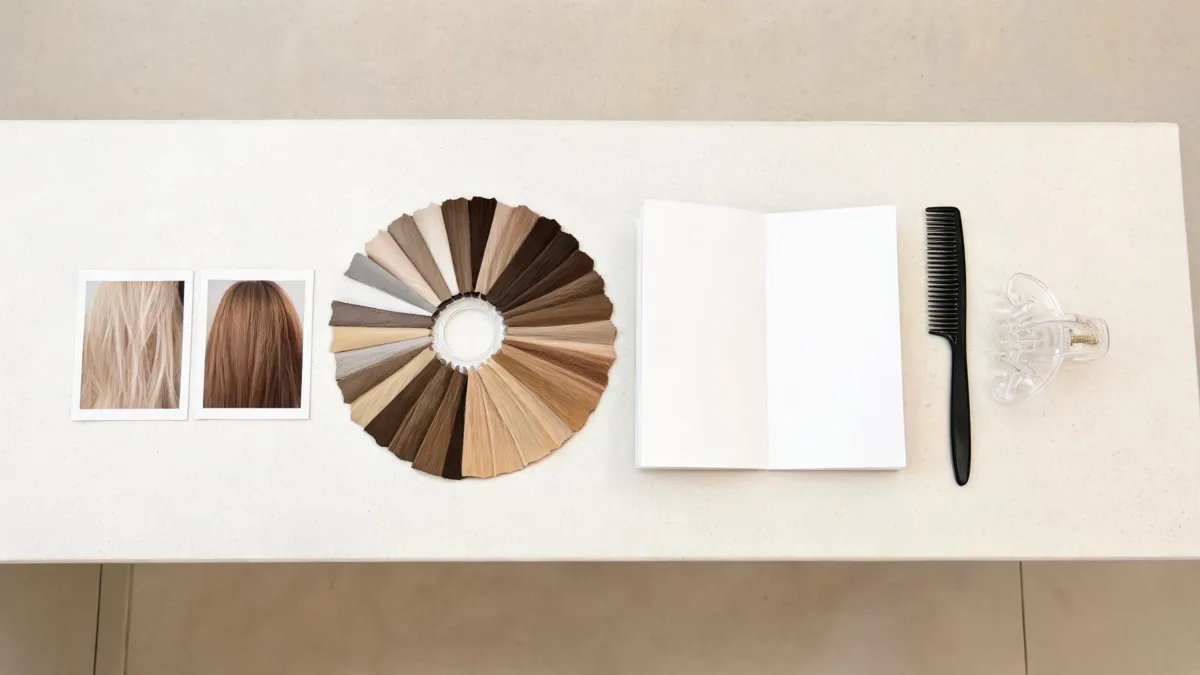
Two restrained comparison directions are more useful in a consultation than a long, mixed gallery of unrelated colors.
Tell the whole hair-history story
The visual choice is only half of a consultation. A colorist needs the facts that a preview cannot see: your natural level, previous color, lightening, glosses, henna or box color, texture changes, scalp concerns, and routine. Schwarzkopf Professional’s consultation guidance similarly emphasizes previous treatments, hair quality, scalp condition, and hair history; it also describes a strand test as a way to guide a planned formula.
Be specific rather than apologetic. “I used a dark box dye last winter,” “I have highlighted ends,” and “I swim weekly” are more helpful than “my hair is probably fine.” Honest history lets a professional decide whether the target is realistic now, needs more than one visit, or should be reduced to a lower-risk change.
| Put in your consultation note | Why it belongs there |
|---|---|
| Natural root and usual part | Helps discuss depth, regrowth, and placement |
| Every color or lightening service you remember | Previous pigment affects what may be realistic |
| Box dye, henna, smoothing, or other treatments | These can change the plan or call for extra assessment |
| Current hair condition and styling routine | A polished preview may not match everyday texture or time |
| Event date and maintenance limit | Helps separate a dramatic first-day result from a manageable plan |
| Two previews plus the unedited original | Makes your preference legible without claiming a formula |
Ask the safety and feasibility questions early
Hair-color services have salon-specific policies. Ask what your salon requires before the appointment and follow the product and professional guidance you are given. Wella Professionals’ pre-appointment guidance advises discussing realistic timelines and upkeep and says an allergy alert test should be performed 48 hours before a color service. Requirements can vary by product, service, location, and personal history, so the salon’s current instructions control.
These questions keep the conversation practical:
- Based on my history, what is achievable in one visit and what needs a staged plan?
- Which of these two directions works better with my natural base and brow contrast?
- Would a face frame, gloss, or partial placement show the idea with less commitment?
- Do you require a patch test or recommend a strand test for this service? When should I arrange it?
- What will the root line, fade, and appointment schedule realistically look like?
- What should I stop using or disclose before the appointment?
The answer might be less dramatic than your favorite preview. That is a good outcome when it protects the condition of your hair and makes the plan workable after the salon day.
Decide by upkeep before you decide by contrast
The shade that looks most striking beside blue eyes may also need the most lifting, toning, or refresh work. Do not turn that into a pass/fail judgment of the look. Use it to choose between a full change, a partial effect, or a direction to revisit later.
For example, if you like warmth but cannot commit to frequent maintenance, ask whether subtle chestnut dimension or a face-framing copper direction communicates the part you like. If deep brunette makes your eyes look clear but seems severe, compare a neutral medium brown under the same lighting. The hair color for skin tone guide can help you add undertone to that second round without replacing the consultation.
An AI preview is a communication tool, not a chemical test. It cannot assess porosity, underlying pigment, scalp sensitivity, processing time, fading, or the exact formula. The colorist who sees and evaluates your hair should make those decisions.
Frequently asked questions
What hair color makes blue eyes stand out?
Warm copper, auburn, and chestnut can create warm-cool contrast, while deep brunette can create light-dark contrast. Neither is universally best; skin undertone, natural base, brow color, hair history, and upkeep determine whether a direction is practical for you.
What should I bring to a hair color consultation?
Bring one recent photo of your current hair, two controlled shade previews or real references, a concise record of previous color and chemical services, and an honest styling and maintenance limit. Ask the salon what patch or strand testing they require before booking a color service.
Can an AI hair-color preview predict my salon result?
No. A preview can make your preference easier to explain, but it cannot assess hair condition, porosity, prior pigment, scalp sensitivity, chemical compatibility, formula, timing, or fade pattern. A qualified colorist must make those decisions.
Related guides
- Preview hair colors on your photo →
- Compare hair-color directions for blue eyes
- Test a copper hair-color direction
- Choose hair color with skin tone in view
Bring a direction, then let the consultation do its job
Save your original photo and two controlled color previews, list your hair history, and arrive ready to discuss upkeep. You can compare color directions on your own photo before the appointment, then let a qualified professional make the real process plan.