
Best Hair Colors for Blue Eyes: Preview Shades Before Dyeing
Compare brunette, copper, red, blonde, and dark hair colors for blue eyes, then narrow the choice by undertone, natural base, and upkeep.
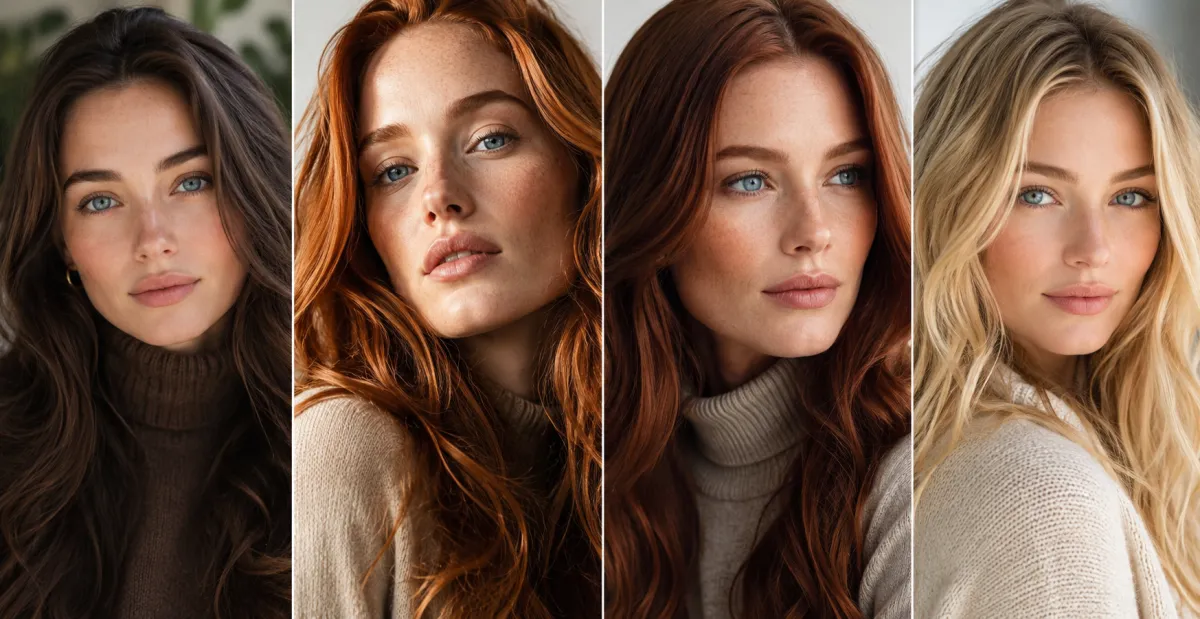
The best hair color for blue eyes depends on the contrast you want. Copper, auburn, and warm brunette can intensify blue through warm-cool contrast; deep brunette can make light eyes look sharper; soft blonde keeps the overall palette light. Narrow the choice by skin undertone, natural base, maintenance, and a same-photo preview with an AI hair color changer.
Last updated: August 11, 2026 · ~9 min read
Eye color is one input, not a complete formula. The same copper shade can look harmonious on one person and overwhelming on another because skin tone, brow color, starting hair, lighting, and personal style change the balance.
Best hair colors for blue eyes at a glance
| Desired effect | Shade families to preview | What to watch |
|---|---|---|
| Strong warm-cool contrast | Copper, auburn, warm chestnut, cinnamon | Too much orange for your undertone or wardrobe |
| Crisp light-dark contrast | Espresso, deep chocolate, dark neutral brown | Harshness around very light brows or complexion |
| Soft, low-contrast palette | Beige blonde, honey blonde, dark blonde | Eye color may look subtle rather than dramatic |
| Cool, polished effect | Ash brown, mushroom brown, cool dark blonde | Flatness if the shade is too gray for the skin |
| Bright fashion statement | Selected red, rose, or vivid tones | Fade, upkeep, workplace needs, and base lifting |
Use the table to choose three directions, not a final salon formula.
Why warm hair colors can make blue eyes stand out
Blue sits opposite warm orange-adjacent tones on a basic color wheel. That is why copper and auburn are common recommendations: the contrast can make blue irises appear clearer.
Warm options include:
- soft copper for a lighter, more natural contrast;
- auburn for red-brown depth;
- warm chestnut for a quieter everyday version;
- cinnamon or caramel ribbons around the face;
- golden or strawberry blonde for a light palette.
The strongest theoretical contrast is not automatically the most flattering real-world color. Preview the shade beside your skin and brows, then consider what your natural base can reach safely with a professional.
Try a copper hair preview or auburn hair preview to compare warmth before selecting a formula.
Brunette shades for blue eyes
Deep chocolate and espresso
Dark hair can frame blue eyes with a clear light-dark contrast. It is especially dramatic in a close portrait. The trade-off is that very deep color may feel harsh if the rest of your features are low contrast.
Neutral medium brown
This is a flexible starting point when you want the eyes to stay noticeable without committing to obvious red or black. Neutral brown also leaves room for warm or cool highlights later.
Warm chestnut
Chestnut adds subtle red-gold movement inside a brunette base. It can create some of copper's contrast while reading as brown in ordinary light.
Ash and mushroom brown
Cool brown can produce a refined, muted palette. Check it in neutral daylight; gray-heavy digital previews can make skin look washed out even when the real formula would be more dimensional.
The brown hair filter guide explains how brunette depth changes across lighting.
Blonde shades for blue eyes
Blonde and blue eyes create a lower-contrast, light overall palette. The result can feel soft and cohesive rather than dramatic.
Honey and golden blonde
Warm blonde creates gentle temperature contrast with blue eyes. It may be easier to wear than copper if you want brightness without a clearly red result.
Beige blonde
Beige balances warm and cool. It can keep blue eyes visible while avoiding an overly yellow or gray finish.
Ash blonde
Ash blonde supports a cool, tonal palette. Check whether it complements your skin or removes too much warmth from the face.
Dark blonde or bronde
This middle ground preserves depth near the brows and roots while adding lighter pieces around the face. It is often a practical preview for someone who does not want a dramatic all-over change.
See the blonde hair filter for a broader shade comparison.
Red, copper, and auburn options
Red-family shades create the clearest warm-cool relationship with blue eyes, but the range is wide.
- Strawberry blonde: light and warm, with less depth than auburn.
- Natural copper: bright warmth that can make blue look vivid.
- Auburn: red plus brunette depth, useful for a more grounded result.
- Deep cherry brown: a darker fashion direction that may read differently indoors.
- Face-framing copper: a lower-commitment way to place warmth near the eyes.
Digital previews often exaggerate saturation. Ask for natural hair texture and believable tonal variation rather than a flat block of color. The copper vs red guide separates adjacent warm families.
Start with skin undertone, then adjust the contrast
Undertone advice should be a test, not a rule.
Warm or golden undertones
Honey, caramel, chestnut, copper, and golden blonde can echo existing warmth. If the combination becomes too warm, add a neutral root or cooler lowlights in the preview.
Cool or rosy undertones
Cool brown, beige blonde, ash blonde, and selected blue-red tones may feel balanced. Warm copper can still work if you want deliberate contrast—preview it rather than eliminating it by rule.
Neutral or mixed undertones
You may tolerate both directions. Compare a warm and neutral version at the same depth to learn whether temperature or darkness changes the face more.
Our hair color for skin tone guide provides a neutral-light test. The warm-undertone and cool-undertone guides expand the palettes.
Your natural base changes the real commitment
The most attractive preview may be the least practical salon path.
| Starting point | Questions to ask before choosing |
|---|---|
| Light natural base | Will the target need added depth, warmth, or frequent tonal refresh? |
| Medium brown | Can dimension come from highlights, lowlights, or a gloss instead of all-over color? |
| Dark natural base | Does the target require lifting, and how will warmth appear during the process? |
| Previously colored hair | What pigment and damage history limits the next step? |
| Gray or mixed natural hair | Do you want blending, coverage, or deliberate silver contrast? |
Only a qualified professional who can assess your real hair can plan lightener, developer, timing, and damage risk. An AI preview cannot inspect strand condition or predict chemical results.
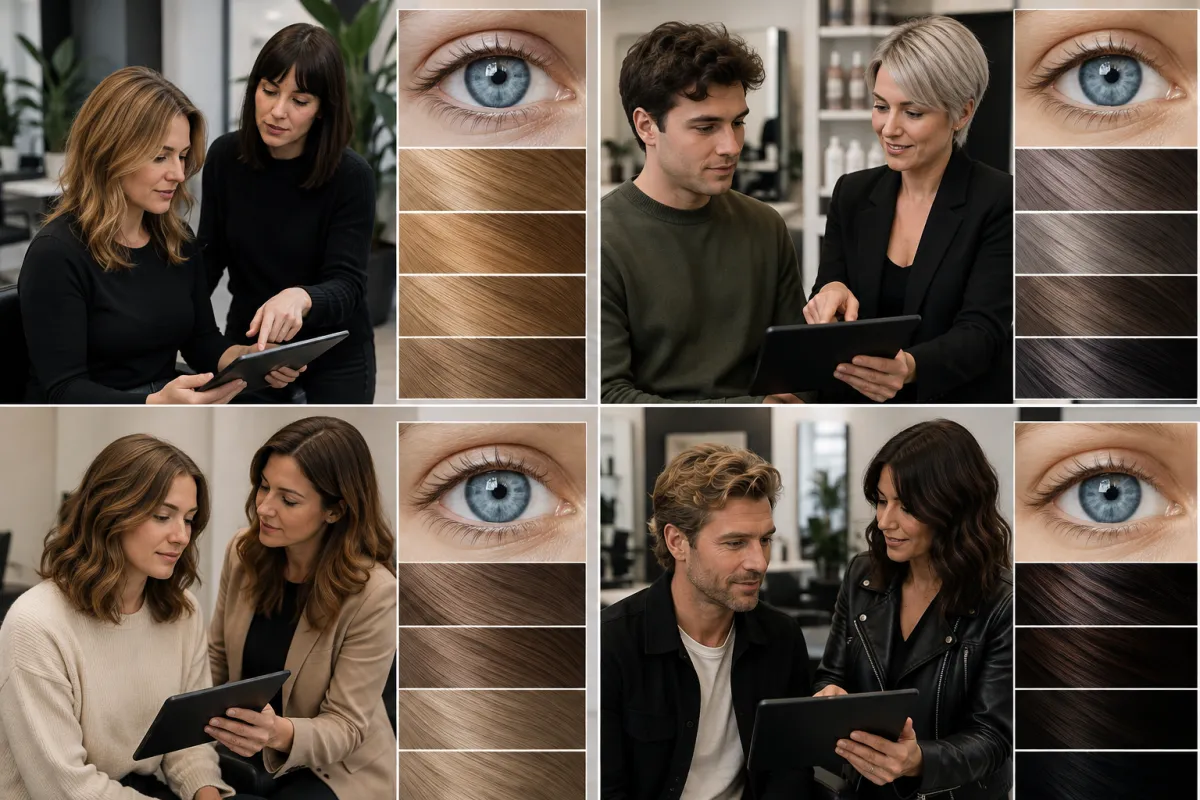
Conceptual shade-selection visual: compare temperature, depth, natural base, and upkeep—not eye color alone.
How to preview hair colors for blue eyes accurately
Use neutral daylight
Warm indoor bulbs can make blue eyes look greener or gray and push hair color toward orange. Stand near indirect daylight with the camera's beauty filter disabled.
Keep hairstyle and exposure fixed
Compare color on the same portrait. Do not use one straight-haired, bright image and one curled, shadowy image. Styling and exposure can overpower the actual color decision.
Preview three depths
For a shade family such as brunette, test medium, deep, and face-framing versions. You may like warm brown but not an all-over dark result.
Compare brows and roots
Ask whether the preview assumes matching brows or an unrealistic root. A believable version should let you see how the target connects to your features and starting base.
Review on two screens
Phone displays often boost saturation. Check the same files on another calibrated or ordinary screen and in different ambient light. Do not select a permanent color from one vivid display.
Use AIChangeHair if you want to compare color together with a haircut; keep the cut fixed during the color round so you know what you are judging.
Choose by upkeep, not only by the first-day photo
Ask what the color looks like after several weeks, not only immediately after the appointment.
- How visible will the root line be?
- Does the shade tend to lose warmth or gain brassiness?
- Will vivid red or copper need frequent refresh?
- Can a gloss or face frame create enough change?
- What home products and appointment schedule are realistic?
A lower-contrast shade that you can maintain may look better over six months than a dramatic color you dislike after two weeks.
What an AI hair-color preview cannot predict
It cannot tell you:
- how your hair will lift;
- which undertones will appear during lightening;
- whether previous color can be removed safely;
- how porous sections will accept pigment;
- the exact salon formula;
- breakage, irritation, or allergy risk;
- how quickly the shade will fade.
Use the preview to communicate direction. Use a strand test, patch-test guidance, and professional assessment for the chemical plan.
Frequently asked questions
What hair color makes blue eyes pop the most?
Copper, auburn, and warm chestnut often create strong temperature contrast, while deep brunette creates light-dark contrast. The best version also needs to work with skin tone, brows, natural base, and maintenance.
Is dark or blonde hair better for blue eyes?
Neither is universally better. Dark hair can create a dramatic frame; blonde creates a softer, lower-contrast palette. Preview both at realistic depths on the same photo.
Does ash brown work with blue eyes?
It can create a cool, refined palette. Compare it with a neutral brown in daylight so you can see whether the ash tone complements the skin or looks too gray.
Can an AI preview tell me the exact dye formula?
No. It can show a visual direction. A colorist must assess your starting color, history, condition, and target before selecting a formula and process.
Related guides
- Preview hair colors on your photo →
- Try a complete hairstyle change
- Choose hair color for your skin tone
- Compare colors for green eyes
- Compare colors for brown eyes
- See current plans
Preview a direction, then plan the real color
For maximum contrast, start with copper, auburn, warm brunette, or deep chocolate. For a softer effect, test beige, honey, ash, or dark blonde. Compare the shade family on one neutral portrait with the AI hair color changer, then let your natural base, maintenance budget, and professional assessment decide the real process.