
French Bob vs Italian Bob: Which Cut Fits You?
Compare French and Italian bobs by length, weight, fringe, texture, styling, and upkeep before choosing your next haircut.
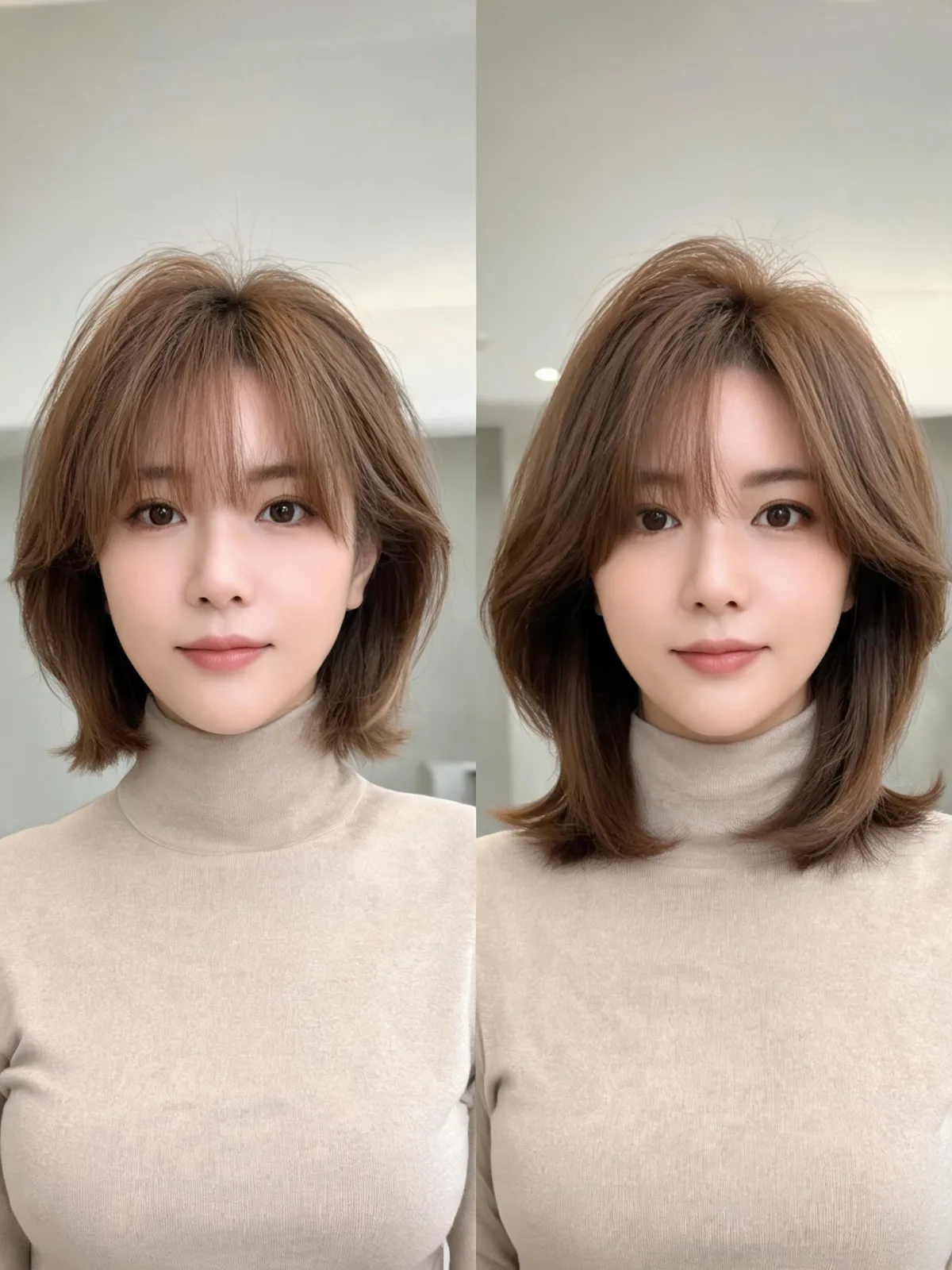
A French bob is typically shorter, lighter, and more textured around the jaw, often with a brow-length fringe. An Italian bob usually sits at the chin or slightly below with a fuller, heavier perimeter and more styling range. Choose between them by your real texture, density, tie-back needs, and styling routine—not a rigid face-shape rule. Compare both with an AI hairstyle changer before you cut.
Last updated: August 28, 2026 · about 9 min read
The useful difference is structural: where the perimeter lands, where the weight sits, and how much daily styling the shape asks from you.
What is the difference between a French bob and an Italian bob?
The names describe haircut families, not licensed specifications. Two stylists may interpret them differently. Bring pictures and agree on the actual length, perimeter, fringe, layering, and finish rather than saying only “French” or “Italian.”
Professional hair-education brand Sam Villa's current comparison describes the French bob as shorter and more textured, generally near the jaw and often paired with fringe. It describes the Italian bob as fuller, more one-length, and heavier at the chin or slightly below. Salon and editorial descriptions vary at the edges, which is exactly why a consultation matters.
| Feature | French bob | Italian bob |
|---|---|---|
| Typical visible length | Near the jaw, sometimes above the chin | Chin to slightly below |
| Perimeter | Blunt but often softened with texture | Fuller, chunkier, and more weight-forward |
| Fringe | Common, especially brow-length | Optional |
| Overall finish | Airy, compact, slightly undone | Plush, polished, or voluminous |
| Tie-back | Usually limited | More possible when the front and sides are long enough |
| Styling focus | Texture, bend, or natural movement | Smooth finish, wave, flip, or blowout volume |
Ask your stylist for measurements and shape, not nationality: “jaw-length with a soft textured edge and brow fringe” is more actionable than “make it French.”
Who should choose a French bob?
A French bob is worth considering when you want a visibly short silhouette and do not mind exposing more of the neck and jaw. It can feel graphic when blunt and soft when the perimeter has movement.
It may suit your routine if you:
- Prefer a compact haircut worn down most days.
- Like a shorter jaw-framing edge.
- Want natural wave or texture to play a visible role.
- Are comfortable maintaining a fringe if you choose one.
- Do not rely on a full ponytail.
Fine hair can look fuller with a deliberate perimeter, but “fine hair equals French bob” is too simplistic. Density, growth pattern, layering, product, and the exact length all change the result. Curly and coily hair can also carry a French-bob shape, but dry shrinkage must be planned before the first cut.
Who should choose an Italian bob?
An Italian bob is the stronger candidate when you want more weight through the ends, a slightly longer boundary, and the option to style the cut smooth, flipped, wavy, or full.
It may suit your routine if you:
- Want a substantial chin-to-neck perimeter.
- Prefer fringe to be optional.
- Like volume, bounce, or a polished blowout.
- Need a little more length for tucking or partial tie-back.
- Have density or texture that benefits from the weight of a longer line.
Davines' Italian bob guide also treats length as a central distinction, while current stylist commentary emphasizes adapting the cut to natural texture. The name is a starting reference; the final haircut still belongs to your head of hair.
French bob vs Italian bob by hair texture
Texture changes the visible length and the amount of work behind each finish.
| Hair behavior | French bob planning question | Italian bob planning question |
|---|---|---|
| Fine and straight | Will a blunt edge add density without feeling too severe? | Will the extra length and volume collapse without styling? |
| Thick and straight | Does the internal weight need removal while preserving the outline? | Can the heavier perimeter sit cleanly without becoming bulky? |
| Wavy | Where will the wave bend around the jaw when dry? | Will the longer weight soften the wave or create the fuller finish you want? |
| Curly | How much shrinkage changes the jaw-length target? | How will the fuller perimeter balance dry volume? |
| Coily | Should the shape be assessed dry as well as stretched? | How much length is needed for the intended outline and styling options? |
Do not use a generated image to estimate shrinkage, density, porosity, or how a cowlick affects a fringe. Those are consultation questions. An AI hairstyle preview is useful for comparing visible direction, not diagnosing hair.
Watch a visual bob-selection guide
The video below focuses on the French-versus-Italian distinction and can help you see how length, fringe, and perimeter change the silhouette. Treat it as visual orientation; your own hair may behave differently.
The video is aimed at an older audience, but the structural comparison—length, perimeter, and visual lift—can still help any adult reader prepare better questions for a stylist.
How much maintenance does each bob need?
Both cuts need maintenance when the perimeter is meant to remain deliberate. Sam Villa's guide suggests roughly six-to-eight-week trims for the shape, with fringe refreshes potentially needed sooner. Treat that as a discussion range rather than a personal schedule; growth rate, precision, texture, and tolerance for grow-out differ.
| Maintenance issue | French bob | Italian bob |
|---|---|---|
| Shape growth | A very short jaw line changes visibly as it grows | Longer outline can transition toward a lob |
| Fringe | May need separate trims | Optional, so can be avoided |
| Morning styling | Texture may be quick if it matches your natural pattern | Full, glossy finish may need blow-drying or heat styling |
| Humidity | Can expand texture around jaw and fringe | Can soften or enlarge the fuller perimeter |
| Tie-back backup | Limited on short versions | More likely, depending on final length |
The lower-maintenance cut is the one that works with your natural dry pattern. A French bob that air-dries well may be easier than a blowout-dependent Italian bob. On another person, the reverse may be true.
How to preview both bobs on the same photo
A controlled comparison is more useful than two unrelated inspiration photos.
- Use a neutral source selfie. Keep your head upright, show the jaw and shoulders, and use even front light.
- Preview the French bob first. Specify the exact endpoint, fringe choice, natural texture, and that your face and hair color must stay unchanged.
- Preview the Italian bob second. Keep the same photo, color, part, and texture; change only the length, weight, and finish.
- Compare practical details. Look at jaw exposure, neck visibility, fringe, tuck-behind-ear room, and whether the fullness matches your routine.
- Take both references to a stylist. Ask what must change for your density, curl pattern, growth pattern, and styling time.
Try this first prompt:
Keep my exact face, skin tone, hair color, expression, clothing, lighting, and background. Preview a short French bob ending at the jaw, with a softly textured blunt perimeter and a light brow-length fringe. Keep my natural hair texture. Do not alter facial proportions.
Then change only the haircut description:
Preview an Italian bob ending just below the chin, with a fuller one-length perimeter, optional long face-framing pieces, and natural volume. Keep every other part of the image unchanged.
The focused bob haircut filter can help you start, while the lob vs bob guide is useful if you are still deciding how much length to remove.
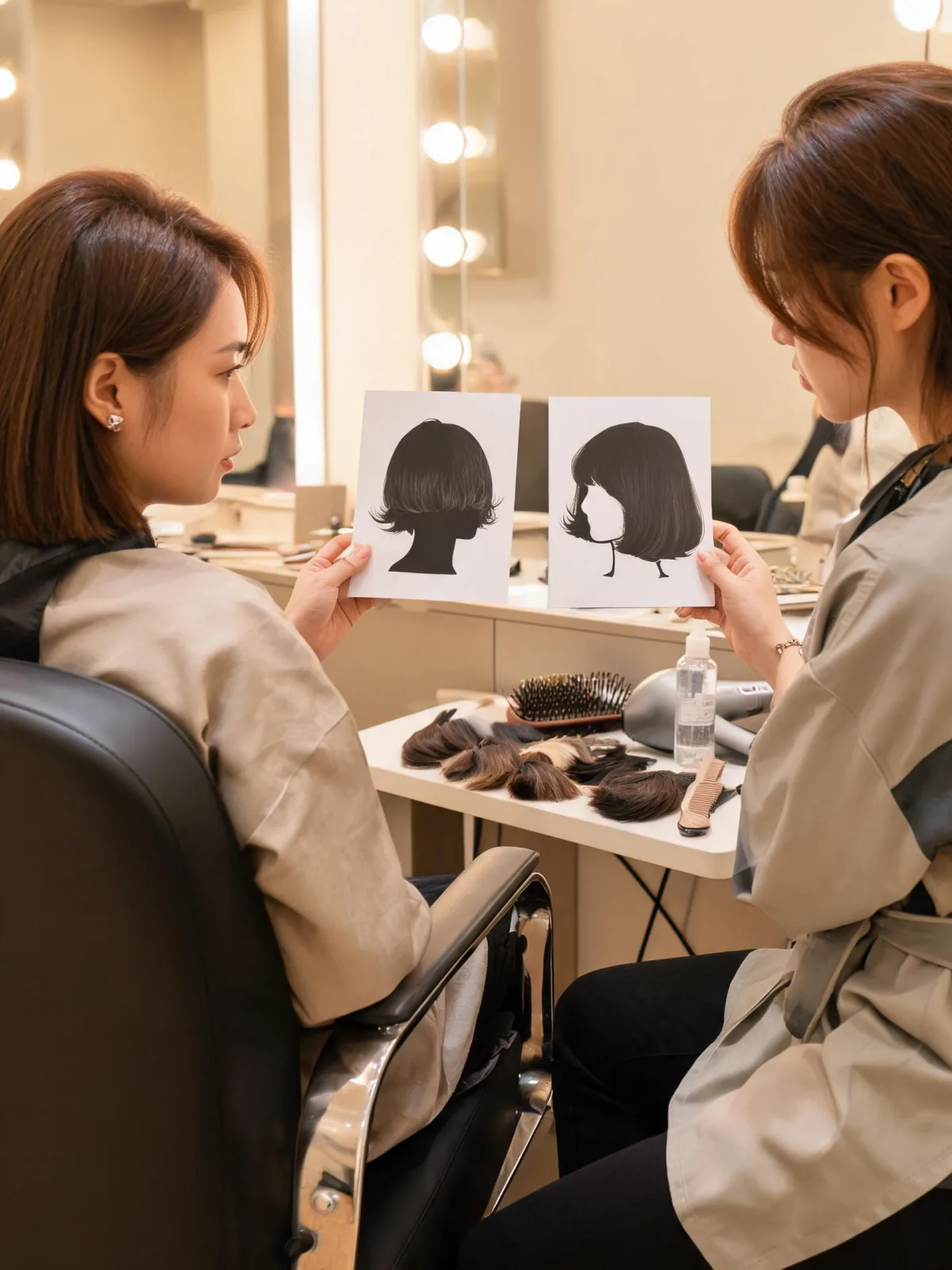
Bring a visual preference and a practical brief: desired endpoint, natural texture, fringe tolerance, styling time, and tie-back needs.
What to tell your stylist
Use your appointment to turn an aesthetic label into a cut plan.
- Show the front, side, and back of the preferred shape.
- Point to the exact perimeter: above the chin, at the chin, or below it.
- Say whether you want a fringe and how often you will trim it.
- Describe how you normally dry and style your hair.
- Show your fully dry natural texture.
- Explain whether you need to tuck or tie the hair back.
- Ask how the cut will grow over the next two or three months.
If a preview looks perfect only with a glossy blowout you never do, it is not the best reference. Use the stylist checklist to translate the image into useful salon questions.
FAQ
Is a French bob shorter than an Italian bob?
Usually. A French bob commonly sits near the jaw and may land above the chin, while an Italian bob generally sits at the chin or slightly below. Confirm the exact endpoint with your stylist.
Does a French bob need bangs?
No. A brow-length fringe is common, but it is not mandatory. Your hairline, growth pattern, styling tolerance, and preferred look should decide.
Which bob is better for thick hair?
Either can work. An Italian bob's longer, heavier perimeter may use density for fullness, while a French bob may need careful internal shaping. A stylist should assess your hair in person.
Which bob is easier to maintain?
The cut that matches your natural texture and routine is easier. A short French bob may need frequent shape or fringe trims; an Italian bob may demand more blow-dry work if you want a polished, voluminous finish.
Can an AI hairstyle changer predict the exact result?
No. It can compare visible silhouettes on your face, but it cannot measure density, shrinkage, cowlicks, damage, or stylist technique. Use it as a consultation reference.
Related guides
- Preview both cuts with AIChangeHair →
- Try the bob haircut filter
- Compare a lob vs bob
- Prepare an AI hair preview for your stylist
Choose the shape you can explain and maintain, then let a stylist adapt it to your real hair.