
Lob vs Bob: Preview Both Haircuts Before You Cut
Compare a lob vs bob by length, shape, styling, grow-out, and salon upkeep. Preview both haircuts on your photo before choosing.
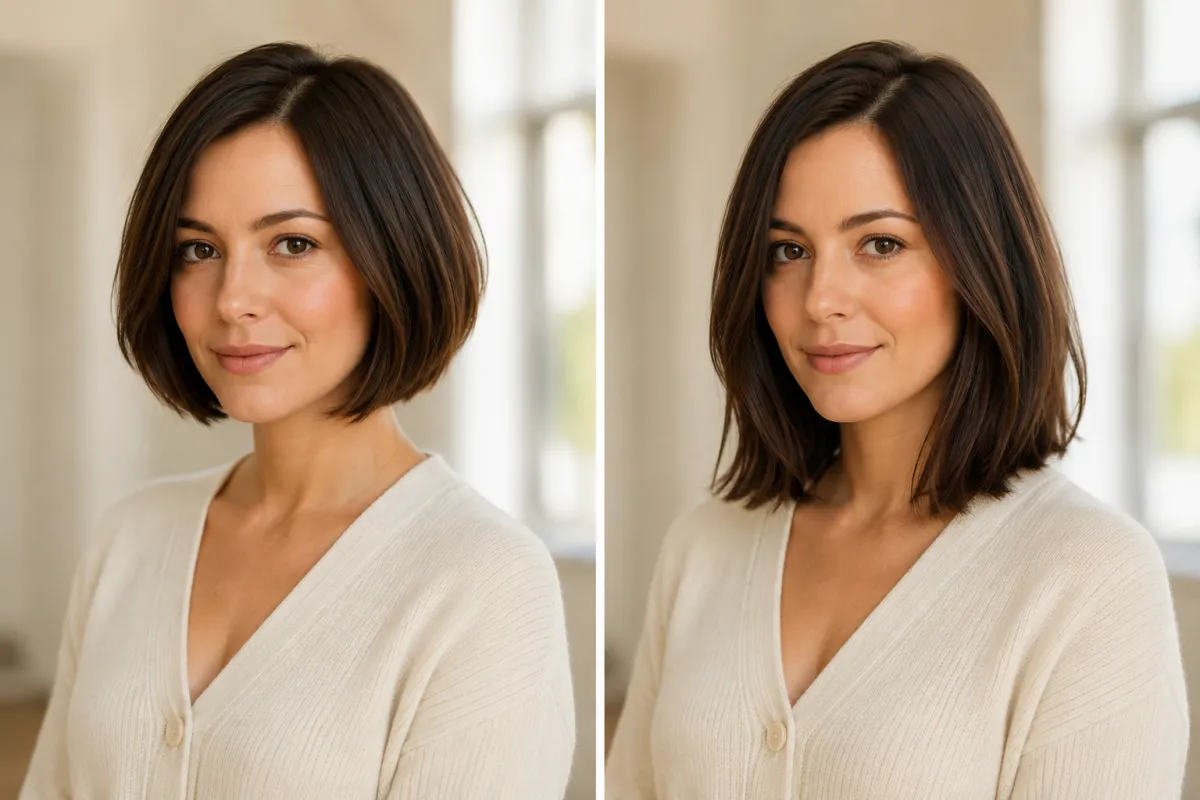
A lob usually ends between the base of the neck and collarbone, while a bob normally ends between the jaw and upper neck. The right choice depends less on a face-shape rule than on your natural texture, preferred styling routine, and how much neck and jaw you want visible. Compare both on one photo with an AI hairstyle changer before you cut.
Last updated: August 10, 2026 · ~8 min read
The boundary is not universal, and curls make the same measured length appear shorter. Use the names as starting points, then agree on the actual perimeter with your stylist.
Lob vs bob: what is the difference?
A bob is the shorter family. It can sit at the jaw, chin, or upper neck and may be blunt, graduated, French, angled, or softly layered. A lob, short for long bob, keeps the bob's deliberate outline but leaves more length around the neck or shoulders.
| Feature | Lob | Bob |
|---|---|---|
| Typical visible length | Base of neck to collarbone | Jaw to upper neck |
| First impression | Softer transition from long hair | Clearer, more graphic change |
| Styling range | Easier ponytail or partial tie-back | Often worn down; shorter versions may not tie back |
| Texture behavior | More weight can stretch waves or curls | Less weight can reveal more volume or spring |
| Grow-out | Usually blends into shoulder length smoothly | Passes through lob length as it grows |
| Salon question | “Where should it clear my shoulders?” | “Where should the perimeter hit my jaw or neck?” |
Layers, density, curl pattern, an undercut, and the angle from back to front can make two cuts at the same length behave differently.
Lob vs bob: which haircut creates the bigger change?
The bob usually creates the stronger change because it exposes more of the jaw, neck, earrings, and collar. Its lower edge becomes a visible design line. A blunt chin-length bob can feel architectural; a softly layered bob can feel lighter and less severe.
A lob preserves more familiar length and leaves more room around the shoulders. It is a useful first step when you want shorter hair without giving up every tie-back option.
If you are nervous about a major cut, compare the longest acceptable bob with the shortest acceptable lob. The decision often becomes obvious when the two boundaries sit next to each other.
The bob haircut filter gives you a focused place to compare bob outlines. The broader bob haircuts guide is useful when you still need to distinguish blunt, A-line, French, and long-bob directions.
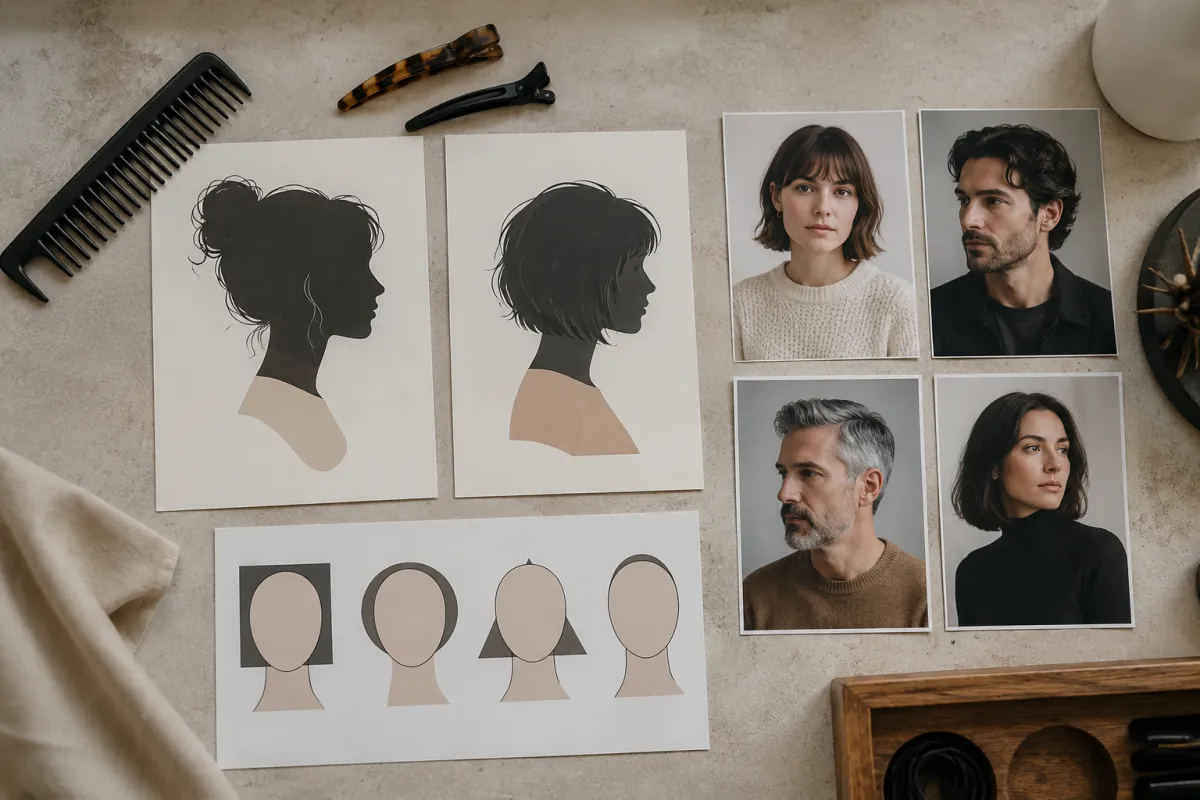
Conceptual decision visual, not a promised haircut result: compare the practical trade-offs as well as the silhouette.
How texture changes a lob vs bob decision
Length labels describe where hair ends, not how it behaves. Texture decides whether the perimeter stays sleek, expands, flips, or springs upward.
Straight hair
Straight hair makes the outline easy to see. A bob can look crisp and graphic, while a lob reads softer and more relaxed. Fine straight hair may appear fuller with a well-planned blunt edge, but very heavy one-length hair can lie flat. Ask whether subtle internal shaping would help without thinning the visible perimeter.
Wavy hair
Waves can make both cuts look shorter on dry hair than on wet hair. A lob leaves enough length for movement and usually offers more styling flexibility. A bob can bring out wave and volume, but the exact ending point matters: a wave bending at the jaw can create more width than the same cut an inch lower.
Curly and coily hair
Shrinkage makes measured length particularly unreliable. Show your stylist how your hair sits fully dry, and discuss whether the cut will be shaped dry, wet, or with both checks. A curly bob can be beautiful and sculptural; a curly lob retains more weight and may stretch the pattern. Neither is automatically easier.
Thick or dense hair
More density can make a short bob feel wider unless the internal shape is planned. A lob has extra length and weight, which may make it easier to control, but that same weight can feel bulky. Ask how much internal removal is appropriate for your texture rather than requesting generic “thinning.”
How to preview lob vs bob on your photo
Use one source image and change only the haircut length. A controlled hairstyle try on is more useful than comparing two unrelated inspiration photos.
- Take a straight, evenly lit photo. Keep your head upright, shoulders visible, and hair away from the jaw and neck as much as possible.
- Preview a collarbone lob first. Keep your current color, part, face, expression, clothing, and background unchanged.
- Preview a chin-length or jaw-length bob second. Change only the perimeter. Use the same texture and part.
- Add one shape variation. If the shorter version feels too hard, test soft texture or a slight angle rather than immediately adding bangs and a new color.
- Compare at the same scale. Place the original, lob, and bob side by side. Look at jaw exposure, neck length, shoulder balance, and overall silhouette.
A practical prompt is:
Keep my face, skin tone, hair color, expression, clothing, lighting, and background unchanged. Preview a realistic collarbone-length lob with my natural texture, a clean perimeter, and the same part. Do not alter my facial proportions.
For the bob version, replace “collarbone-length lob” with the exact line you want: “chin-length bob,” “jaw-length bob,” or “bob ending at the upper neck.”
What an AI preview can and cannot tell you
A preview can answer visual questions: Do you like seeing more neck? Does a blunt edge feel too strong? Does the longer version disappear into your shoulders?
It cannot predict precisely how your real hair will fall. The image does not measure density, porosity, cowlicks, shrinkage, damage, humidity response, or your styling time. It may show an idealized finish that requires heat tools or professional blow-drying.
Use the result to communicate direction, not to demand an exact copy. Bring the original and two previews to your stylist, then ask what must change for your real texture and routine.
Lob vs bob: choose around your daily routine
The best lob vs bob choice is one you can live with after the salon finish disappears.
Choose a lob first if you strongly value:
- Pulling most of your hair into a low ponytail.
- A gradual transition from long hair.
- More weight on waves or curls.
- Longer gaps between obvious shape changes as it grows.
- The option to cut shorter later.
Choose a bob first if you strongly value:
- A visible change in silhouette.
- A clear edge around the jaw or neck.
- Lighter length around the shoulders.
- A short style you plan to wear down most days.
- A deliberate shape that can frame earrings and necklines.
Someone may happily style a short bob every morning; someone else may resent losing a quick ponytail. Ask what happens on a rushed Tuesday, not only what looks best in a reference image.
Maintenance and grow-out
A bob's perimeter can lose its intended shape sooner as it grows. Precise or angled bobs often need more maintenance than a soft lob, which usually grows into shoulder length with less disruption.
Your schedule depends on the cut and your hair. Ask your stylist:
- When will this perimeter stop sitting as designed?
- How will the cut change when air-dried?
- Can I still tuck it behind my ears or tie part of it back?
- What is the next easy grow-out shape?
If you are moving from very long hair, the long-hair-to-short-hair preview guide shows how to test the change in stages.
Turn the preview into a useful salon brief
Do not bring only the most flattering AI image. Bring three pieces of information:
- The boundary you like. Mark where the lob or bob ends in relation to your chin, jaw, neck, or collarbone.
- The behavior you want. Explain whether you want bluntness, softness, volume, movement, or easy air-drying.
- The constraint you will not trade. This might be tying it back, avoiding daily heat, keeping curl volume, or not exposing more neck.
Your stylist can then translate the visual idea into a cut that respects your density and texture. “I like this collarbone line but need a low ponytail” is more useful than “Give me a lob.”
Frequently asked questions
Is a lob longer than a bob?
Yes. A lob is a long bob and usually ends around the base of the neck, shoulders, or collarbone. A bob more often ends from the jaw to the upper neck. Stylists use the terms differently, so agree on the exact perimeter rather than relying on the name alone.
Is a lob easier to maintain than a bob?
Often, but not always. A lob usually grows into shoulder length smoothly and may still tie back. A precise bob can need more frequent reshaping. Texture, density, layers, and your preferred finish matter more than the label.
Should I get a lob before a bob?
A lob is a sensible first step if you are unsure about losing length or need to tie your hair back. You do not have to cut in stages if you already know you want the shorter silhouette and your stylist confirms it suits your texture and routine.
Can I compare lob vs bob on my face before cutting?
Yes. Use one clear selfie and preview both lengths while keeping the part, texture, color, face, and background fixed. Treat the images as consultation references, not exact predictions of how your real hair will behave.
Related guides
- Try the AI hairstyle changer →
- Compare bob haircut styles
- Use the bob haircut filter
- Preview short hairstyles
- Plan a long-to-short haircut
- Take a better selfie for a hairstyle app
Preview the boundary, then ask about behavior
The lob-vs-bob choice becomes easier when you stop debating two names and compare two exact lengths. Preview both haircuts on your photo, choose the boundary you prefer, and let your stylist adapt the shape to your real texture and routine.