
Pixie Cut Maintenance: A Before-You-Cut Routine Checklist
Use this pixie cut maintenance checklist to plan styling time, trim cadence, sleep and hat recovery, and salon questions before you commit to a pixie.

Pixie cut maintenance is not one universal routine: a short shape may save drying time while asking for regular trims, quick morning reshaping, and a plan for how it grows out. Before you cut, use this checklist to compare a softer pixie, a tapered option, and a fringe-forward version in the pixie cut filter, then ask a stylist what each one means for your own texture and schedule.
Last updated: September 17, 2026 · about 7 min read
What does pixie cut maintenance actually include?
The older pixie cut filter guide helps you choose the outline: soft, tapered, or fringe-forward. This companion answers the next question: can you live comfortably with the routine after the appointment? The answer is personal. Two people can wear similarly short cuts and have very different upkeep because their hair grows differently, their texture responds differently after sleep, and they want different finishes.
Use the table as a planning conversation, not as a promise about any one haircut:
| Routine question | A softer, longer pixie | A close tapered pixie | A fringe-forward pixie |
|---|---|---|---|
| What changes first as it grows? | The outline around ears and crown | Nape and sides can lose their clean shape | Front length can change the intended framing |
| What might take time in the morning? | Directing the part and crown | Resetting flattened sides or crown | Separating and placing the front |
| What should you ask about? | Grow-out path into a bob or crop | How quickly the taper feels different | Whether the fringe works with your part and cowlicks |
| What is the cautious first step? | Leave a little more length | Start less close at the sides | Begin with a longer, lighter front |
“Short” does not automatically mean “wake up and go.” Decide what finish you want on ordinary days, not just what looks polished in a reference photo.
Before-you-cut pixie maintenance checklist
1. Time one normal morning
For a few days, notice what you actually do with your hair before work, school, or an errand. Do you like to wash and restyle it, refresh it with water, diffuse it, use a tool, or do almost nothing? A pixie can fit any of those routines, but the shape should match the time you are honestly willing to spend.
Write down a simple limit: “I can spend five minutes most mornings,” “I do not mind a styling step after washing,” or “I need it to work after a hat.” That is useful information for a stylist.
2. Decide what “grown out” means to you
Every short cut changes as it grows. The important question is which change will bother you first: bulk at the crown, length at the nape, fullness around the ears, or a fringe that falls into your eyes. Ask the stylist how the chosen shape will transition before you agree to the shortest version.
If you are unsure, compare a short-hair preview with a longer pixie first. It is easier to remove more length later than to undo a cut that feels too exposed.
3. Plan the trim conversation, not a fixed rule
There is no reliable one-number trim schedule for every pixie. A close taper and sharp perimeter may need a different rhythm from a textured, longer shape. At the appointment, ask which part will change first, when the style will stop reading as intended, and whether the salon offers a quick shape-up. Put the answer in your calendar only after you understand the trade-off.
4. Test sleep, hats, and movement in your imagination
You do not need to predict every bad hair day, but you can identify the situations that matter: gym days, helmets, scarves, a humid commute, or sleeping with a particular part. A short style can reveal a flattened crown or displaced fringe more quickly than longer hair. Mention these practical details before the cut so the stylist can avoid a shape that fights your life.
5. Choose products by need, not by a shopping list
Do not buy a drawer of products before you have the haircut. Ask what one or two product types would help your goal—hold, texture, smoothing, or moisture—and how much to use. The American Academy of Dermatology recommends choosing products for your hair type, handling wet hair gently, and limiting excessive heat; those are sensible guardrails whether your pixie is straight, wavy, curly, or coily. Read its healthy hair-care tips if you are changing your styling routine.
6. Bring a visual direction, not an exact demand
Use a clear selfie in the AI hairstyle changer to compare a softer pixie, a taper, and a little more front length. Save the original and one or two favorites. Then explain what you want to preserve: crown height, softness at the temples, a visible fringe, or room to tuck hair behind an ear.
An edited image cannot see your cowlicks, density, or real texture. A professional who can examine your hair can tell you whether the visual direction needs more length, less taper, or a different part.
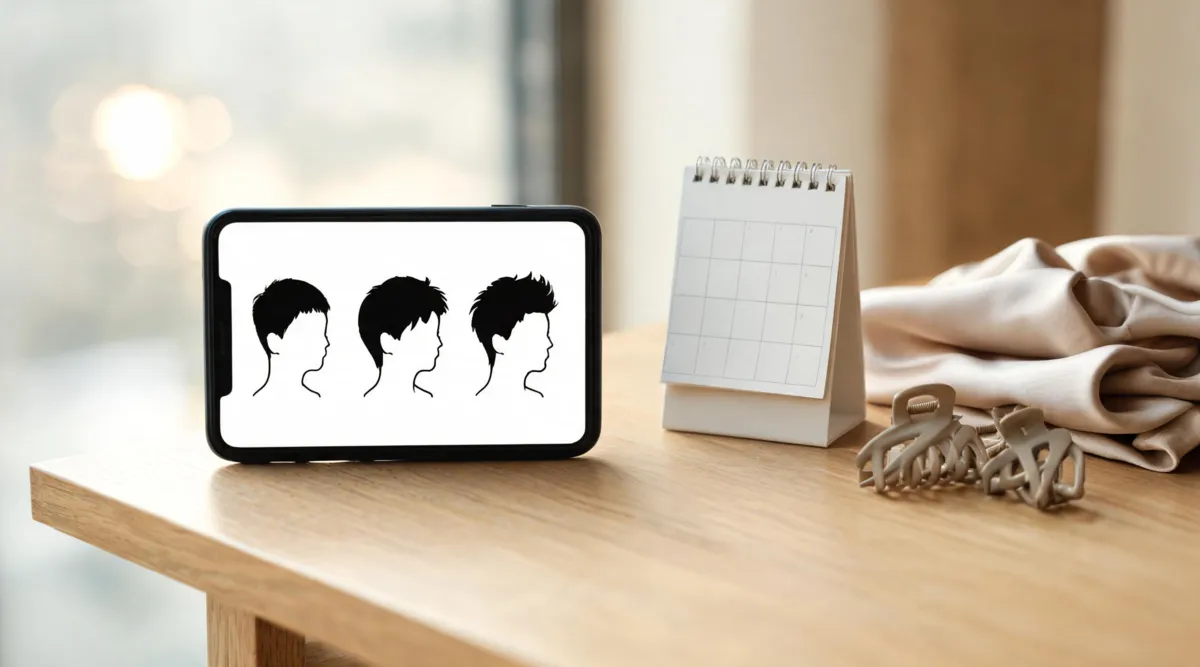
The best pre-cut plan covers the routine you will keep after the novelty of the first day fades.
Questions to ask at the appointment
Bring this short list. It keeps the conversation rooted in your routine instead of a single flattering image:
- Which area of this shape will need attention first as it grows?
- What will this look like after I sleep on it or wear a hat?
- How should I style it on a normal day, and what can I skip?
- What does my natural texture or front growth pattern change about this plan?
- Can we start a little longer and adjust at a later appointment?
- If I grow it out, what intermediate shape should I expect?
The answers may move you toward a softer pixie, a longer fringe, or a less-close taper. That is a successful consultation, not a compromise. The goal is a haircut whose real maintenance makes sense for you.
A realistic way to use a pixie preview
Previewing a pixie is still valuable, but use it for the visual decision it can answer. Keep your face, color, lighting, and background unchanged. Compare just three shapes on the same photo:
- A longer, soft pixie to see whether a gradual change feels right.
- A tapered version to inspect the sides, nape, and crown balance.
- A fringe-forward version if forehead framing is the key decision.
The pixie haircuts page gives you another set of visual directions, while the filter helps you place one on your own face. Neither replaces the in-person assessment of hair density or growth pattern. Treat both as preparation for a better salon conversation.
When a pixie may need a different plan
Pause before a major cut if you are relying on it to solve a hair or scalp problem, or if you are unsure about a sudden change in shedding or breakage. A haircut can change the appearance of hair, but it is not a diagnosis or treatment. If you have ongoing concerns, a board-certified dermatologist is a more appropriate source of medical advice.
Also pause if every preview you like requires a face, hairline, or texture that does not look like yours. Pick the version that still resembles you in ordinary light. A gradual change is a valid choice; you do not have to earn a pixie by making the shortest possible cut.
Frequently asked questions
Are pixie cuts low maintenance?
A pixie may take less washing and drying time than longer hair, but a precise shape can need regular trims and some daily direction. The routine depends on the cut, texture, growth pattern, and the finish you want.
How often should I plan to trim a pixie cut?
Ask your stylist for a cadence based on the shape you choose. A close taper, short nape, or exact fringe may lose its outline sooner than a softer, longer pixie, so it is better to plan the question before cutting than to rely on a universal number.
Can I preview a pixie cut before deciding?
Yes. Use a clear photo to compare a longer soft pixie, a tapered shape, and a fringe-forward option. Treat the preview as a way to communicate your preferred silhouette, not as a promise of an exact haircut result.
What should I ask a stylist before getting a pixie?
Ask how the cut will grow out, which areas will need attention first, what your hair texture and cowlicks change, what daily styling it needs, and whether a longer first pixie would be a safer transition.
Related guides
- Try the free AI hairstyle changer →
- Preview a pixie cut
- Pixie haircuts
- Pixie cut filter: preview a pixie before you cut
- How would I look with short hair?
Use the preview to choose a direction, use the checklist to test the routine, and let the appointment turn both into a cut that works beyond day one.