
Warm Undertone Hair Color Consultation Checklist
Use this warm-undertone hair-color consultation checklist to turn two clear preview images into better questions about tone, maintenance, and feasibility.
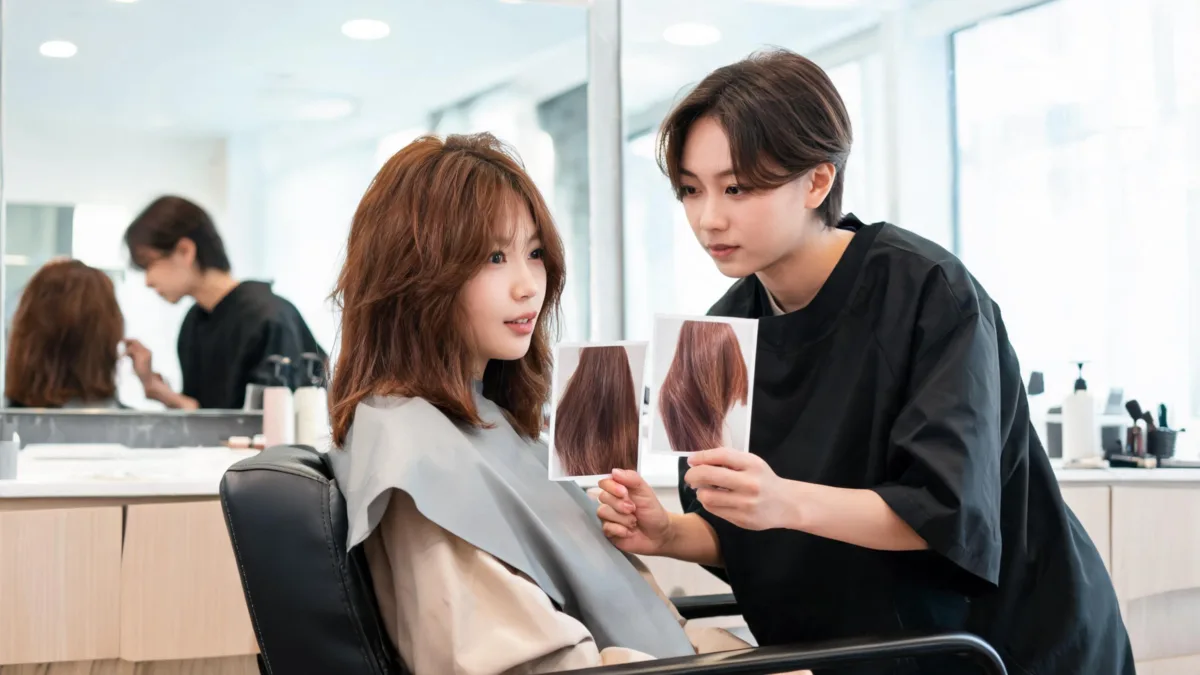
For a warm-undertone hair color consultation, bring an original daylight photo plus two nearby previews and be ready to explain the tradeoff you prefer: softer root contrast, more brightness, less orange, or lower upkeep. The goal is not to make a stylist copy an AI image. It is to turn a visual direction into practical questions about your current hair, the process, maintenance, and safety.
Last updated: September 3, 2026 · about 6 min read
Start with the decision, not a list of “best” shades
Warm undertones can be one useful way to narrow a color direction, but they do not make one shade mandatory. The older guide, best hair colors for warm undertones, helps you compare honey, caramel, warm brown, copper, and auburn families. This checklist solves a different problem: what to bring and ask once you have narrowed the options.
Begin with one clear question. Do you want your natural color to look softer around the face? Are you deciding between a subtle caramel lift and a richer auburn? Or are you trying to avoid a result that reads too orange in daylight? A question gives the consultation a useful boundary.
| Bring | Why it helps | Do not assume it proves |
|---|---|---|
| One unfiltered daylight photo | Shows your current base, visible root area, and face framing | Your exact salon result under every light |
| Two nearby AI previews | Makes a tone or depth preference easier to explain | A formula, timing, or color-service feasibility |
| A brief hair-history note | Helps a stylist ask the right technical questions | That prior color will lift or fade predictably |
| Your upkeep limit | Separates an aspirational shade from a workable routine | That low upkeep means no color change over time |
A strong consultation image changes one visible variable at a time. If the preview also changes the cut, makeup, skin, room, and lighting, it cannot clearly communicate a hair-color preference.
Prepare two controlled color previews
Use the AI hair color changer on one front-facing photo in even light. Avoid colored LEDs, beauty filters, hats, and heavy shadows. Keep the same crop and expression for every comparison.
- Choose a base direction. For example, compare a soft caramel brown with your current color if you want a natural lift. If you prefer depth, compare warm chocolate with a nearby neutral brown. The brown hair color changer is useful when the decision is mainly warmth versus depth.
- Add one meaningful alternative. Test a second version that changes only one thing: slightly more golden, slightly deeper, or a gentle copper-brown. Avoid comparing a dramatic blonde, vivid red, and black in the same decision set.
- Label the reaction, not the image. Write one sentence under each: “I like the softer contrast,” “this feels too orange at the temples,” or “I want this depth without it reading black.” Those observations are better consultation material than a generic “I want this.”
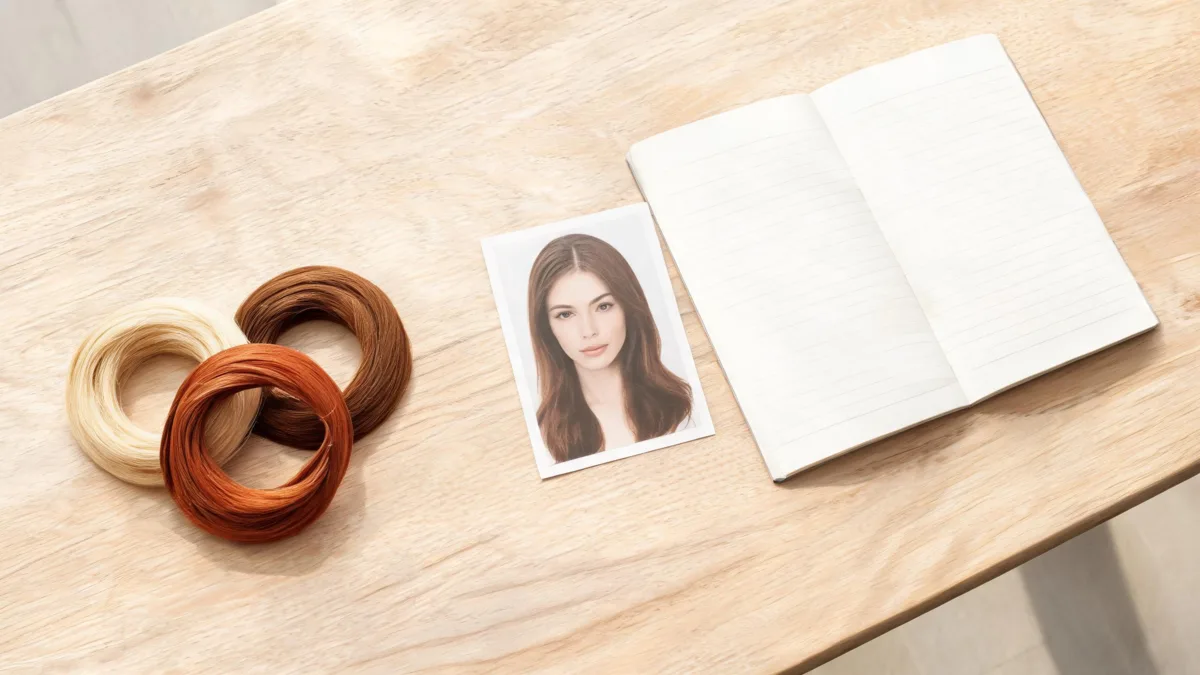
Use close alternatives to show the tradeoff you are deciding between, rather than a large board of unrelated colors.
Ask questions a preview cannot answer
An image can help you communicate taste. It cannot inspect your strands, know your earlier color services, estimate how a lightener will lift, or promise how a shade will fade. Make room for the stylist’s assessment instead of asking for a screen match.
| Consultation question | What it clarifies |
|---|---|
| “What part of this image is realistic from my current hair?” | The difference between a visual direction and a workable service |
| “Could we keep the warmth subtle around my face?” | Tone placement and contrast, rather than a vague shade name |
| “What would make this turn too orange or too dark on me?” | The risk you want help avoiding |
| “What upkeep would this version need?” | Refresh timing, home care, and whether the choice fits your routine |
| “Can we agree on a smaller first step?” | A conservative path when the desired change is uncertain |
If the real concern is root contrast rather than an all-over change, compare a root-specific option with the root touch-up hair color preview guide. It can help you describe where you want softness while leaving the formula and service plan to the professional.
Put safety and hair history ahead of the preview
Tell the stylist about previous dye, bleaching, toning, color removers, chemical treatments, reactions, and any scalp irritation. A visual preview cannot make those details disappear. If you are coloring at home, the U.S. Food and Drug Administration says to follow the product directions and do a patch test each time before dyeing; see the FDA’s hair-dye safety guidance. Do not use a preview as evidence that a product will be safe or that a certain lift is possible.
This is also a good moment to set an honest maintenance limit. Rich warm shades and high-contrast lightening can be beautiful, but the right choice is the one you will feel comfortable maintaining. Ask what the first appointment can reasonably achieve and what a lower-commitment version would look like.
Leave with a plan you can repeat
Before you book or begin a service, make sure you can state the plan in plain language: the visible color direction, what will stay close to your natural base, the first-session expectation, the upkeep you accept, and what to do if the result is not the direction you intended. Save the original photo and the two selected comparisons with those notes.
Editorial disclosure: AIChangeHair is a visual-preview tool, not a color-diagnosis or salon-formula service. It does not assess hair condition, predict a chemical result, or guarantee a real-world color match. A licensed professional and product instructions should guide any chemical service.
Frequently asked questions
What should I bring to a warm-undertone hair color consultation?
Bring your original daylight photo, one or two nearby preview images, and an honest hair-history note covering earlier color, lightening, treatments, and your maintenance limit. Explain the visible direction you like instead of asking a stylist to copy a generated image exactly.
Should warm undertones always choose warm hair color?
No. Undertone is one useful starting point, not a rule. A warm, neutral, or cooler direction can be adjusted for contrast, natural base, personal style, feasibility, and maintenance. Compare nearby choices on the same photo before deciding.
Can an AI preview tell a stylist what formula to use?
No. A preview can communicate a color direction, depth, and contrast preference. It cannot determine a formula, lift, processing time, patch-test result, hair condition, or how earlier color will behave.
How many hair color images should I show a stylist?
Two or three focused images are usually more useful than a large mixed board. Include the original photo and show nearby directions so the stylist can see the tradeoff you are trying to make.
Related guides
- Try the free AI hairstyle changer →
- AI hair color changer
- Brown hair color changer
- Best hair colors for warm undertones
- Hair color filter: test a shade before you dye
Bring a direction, not a demand
Use the AI hair color changer to clarify two nearby options, then let a qualified stylist translate that direction into a plan for your actual hair and routine.