
Wolf Cut vs Butterfly Cut: How to Brief Your Stylist
After choosing a wolf or butterfly cut, use this salon brief to specify layer length, perimeter, face frame, crown weight, finish, and daily limits.
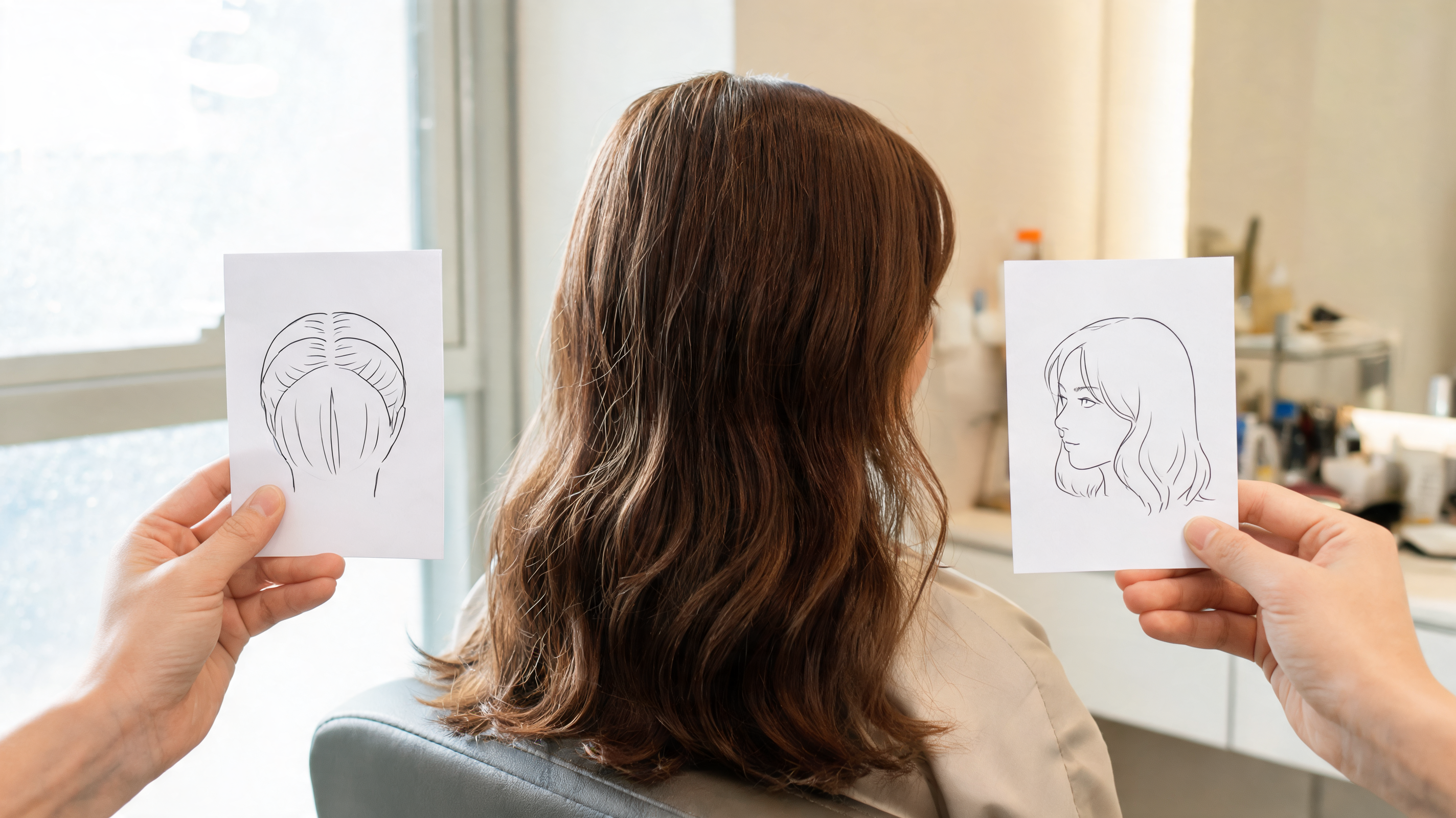
Once you have chosen between a wolf cut and a butterfly cut, brief your stylist with the layer map—not the trend name. State the shortest layer, longest perimeter, crown weight, face-frame endpoint, finish, tie-back needs, and the amount of styling you will actually do. Bring your original photo and one controlled preview from the AI hairstyle changer; use them to show a direction, while your stylist adapts it to your density, texture, and growth patterns.
Last updated: September 29, 2026 · about 8 min read
This is a companion to Wolf Cut vs Butterfly Cut: Preview Both Before You Choose. That guide is for the choice itself: separated, crown-forward texture for a wolf cut or a longer, blended silhouette for a butterfly cut. This article begins after that decision. It does not re-rank the cuts. It turns the direction you chose into a salon conversation that can survive the ambiguity of a haircut label.
Bring a brief, not a gallery of trend names
“Wolf cut” and “butterfly cut” are useful visual shortcuts, but neither one is a measurement system. The name does not say where the shortest layer starts on your head, how much weight stays at the perimeter, or whether the style is meant to work after air-drying. Those are the decisions a stylist needs before cutting.
Bring three things: your unedited starting photo, one preview that captures the direction you chose, and one sentence about your non-negotiable limit. A second reference is only useful when it shows a side or back detail that the preview cannot show. A dozen saved videos and contradictory screenshots can make the job harder, not clearer.
| Bring | What it contributes | What it cannot settle |
|---|---|---|
| Original photo | Your present length, part, color, and normal texture | How the proposed cut will behave after cutting |
| One selected preview | The outline, face frame, and amount of visible movement you prefer | Exact density, shrinkage, cowlicks, or cutting technique |
| One supporting reference, if needed | A specific side, back, or finish detail | A requirement to copy someone else’s hair |
| A short routine note | What you will realistically air-dry, brush, diffuse, or heat-style | Whether an image’s salon finish is repeatable at home |
The most helpful statement is not “I want a wolf cut” or “I want a butterfly cut.” It is “I like this much crown movement, I need to keep this perimeter length, and I will style it this much.”
Set the six decisions before the first cut
Use this checklist with the reference in hand. Point to areas on your own hair when possible. That gives the stylist a starting brief they can test against your texture and density.
| Brief element | If you chose wolf-cut direction | If you chose butterfly-cut direction | Say it plainly |
|---|---|---|---|
| Shortest layer | Often the key commitment; decide how high the crown or face frame can begin | Often shorter around the face while a long lower section remains | “The shortest piece I can live with is around here when dry.” |
| Longest perimeter | Decide whether you want a visible nape or a lighter, more tapered lower edge | Protect the long outline that makes the cut read as butterfly-shaped | “I do not want the longest visible length to go above this point.” |
| Crown weight | Choose separated lift versus a softer, less dramatic top | Choose lift that connects into the lower lengths rather than a shelf | “I want [more / less] weight removed at the crown than this.” |
| Face frame | Name where the shortest framing piece should land and whether fringe is involved | Name where the pieces should sweep away and reconnect | “I want the face frame to end around [cheekbone / jaw / below chin].” |
| Finish | Decide how piecey, irregular, or intentionally undone you want it | Decide how smooth, bouncy, bent, or softly blended you want it | “This is the finish I like, but I do not need a salon blowout every day.” |
| Routine limit | Be honest about diffusing, texture product, or refresh work | Be honest about blow-drying, rollers, or face-frame resetting | “Most days I will spend about [realistic amount] styling it.” |
The American Academy of Dermatology’s hair-care guidance likewise emphasizes working with hair type and limiting excessive heat. It is general hair-care advice, not a haircut prescription. Your stylist can make the cut-specific assessment after seeing your hair in person.
Use the preview to make a precise visual request
A preview is helpful only if it isolates the haircut direction. Use your own recent image, keep your hair color, face, pose, and lighting steady, and make one version for the choice you already made. If the output gives you useful language, save it. If it also changes your face or stage-manages a new photo, rerun it rather than bringing it in as evidence.
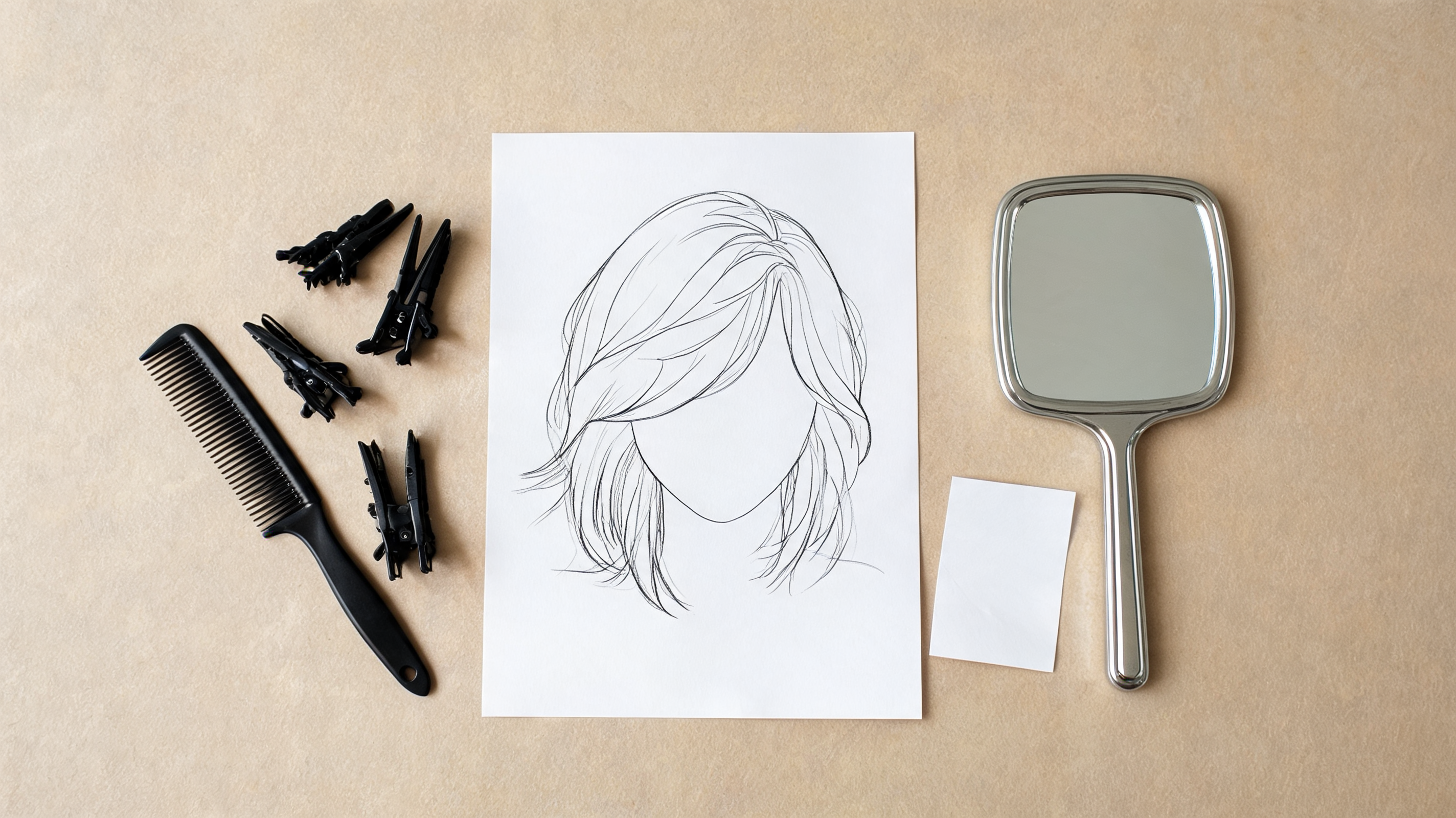
Use a preview to point to visible priorities. It is not a technical cutting map and does not replace a stylist’s assessment.
| Preview observation | Turn it into a request | Add a practical limit |
|---|---|---|
| You like the stronger top movement | “I like the lift and separation at the crown.” | “Keep enough perimeter so the ends do not feel wispy.” |
| You like the longer, soft cascade | “I like the face frame blending back into long lengths.” | “I need it to look intentional without a full blowout.” |
| The front feels too short | “I want the face frame to begin lower.” | “Please keep the shortest piece below this point.” |
| The back feels too light | “I want more visible weight through the lower perimeter.” | “I do not want a thin tail or a heavily removed nape.” |
| The styled finish is too polished | “I like the layer placement, not the exact finish.” | “Show me what the shape does with my usual air-dry routine.” |
The wolf cut filter is useful when you need to isolate the more separated, textured direction. If you are still comparing what you mean by the labels, return to the original wolf cut vs butterfly cut comparison before the appointment. Do not turn this post into a second comparison by asking the stylist to decide the trend for you.
State the limits that protect the outcome
The most useful salon brief includes what you do not want. Limits give the stylist room to adjust the plan without accidentally trading away your real priority.
For a wolf-cut direction, a useful limit may be: no heavy fringe, no crown layers shorter than a particular area, no extreme mullet tail, or no thinning that makes the perimeter transparent. For a butterfly-cut direction, it may be: preserve a long lower layer, do not create an obvious step between face frame and length, do not require a daily blowout for the shape to read, or keep enough length to tie it back.
| Your priority | Add this kind of limit |
|---|---|
| Keeping overall length | “Please show me the first guide length before we go shorter.” |
| Avoiding a thin perimeter | “I want movement, but I want the ends to retain visible weight.” |
| Avoiding daily heat styling | “I need the basic shape to make sense with my normal air-dry or low-heat routine.” |
| Keeping a tie-back option | “I need enough length at the front and sides to secure it on busy days.” |
| Working with waves or curls | “Please account for how my texture changes the apparent length when dry.” |
Ask for a check-in before the irreversible step
You do not need a technical vocabulary to ask for a pause. After the consultation, repeat the visible plan back: shortest layer, perimeter boundary, crown weight, face frame, and finish. Ask what will be checked again once the hair is dry. That step is particularly useful if your hair shrinks, expands, parts strongly, or has a texture unlike the reference image.
Questions worth asking include:
- “Which part of this reference will change most on my natural texture?”
- “Where will the shortest layer appear when my hair is dry?”
- “How will you keep this perimeter from becoming too light for my density?”
- “Can we check the face frame before we take more length?”
- “What will I need to do at home for this to keep reading as the direction I chose?”
Hair education sources commonly make the same practical distinction: shape, length, fringe, texture, and weight are the details that make a named haircut clear. For example, Sam Villa’s stylist education on bob variations explains how changes in length, texture, and where weight sits create different results even within a shared category. The example is about bobs, not wolf or butterfly cuts; the relevant lesson is that a name alone is not a sufficient brief.
Editorial disclosure: AIChangeHair generates visual hairstyle previews. It does not measure density, inspect hair health, predict curl shrinkage or grow-out, or guarantee a salon result. Use the image to communicate a preference, then rely on a qualified stylist for the real-hair assessment.
Frequently asked questions
What should I tell my stylist after choosing a wolf cut?
Name the shortest layer you can accept, how much crown separation you want, where the face-framing pieces should end, how much perimeter weight you want to keep, and the styling time you will really use. Add one clear limit, such as no heavy fringe or no thin tail.
What should I tell my stylist after choosing a butterfly cut?
Describe the longest perimeter you want to preserve, the endpoint for the face frame, how blended the layers should feel, how much crown lift you expect without a full blowout, and whether you need to tie it back. Give your stylist your real styling routine and texture.
Can an AI preview become a haircut instruction?
No. A preview can show the visible direction you prefer, but it cannot measure density, curl shrinkage, growth patterns, cowlicks, hair condition, or the technique needed to create the cut. Use it as a reference and let a stylist adapt it to your hair.
How many references should I bring to a haircut consultation?
Bring the original photo, one preferred preview, and at most one supporting reference for a side or back detail that the preview cannot show. More conflicting images can make the brief less clear.
Related guides
- Try the free AI hairstyle changer →
- Wolf cut vs butterfly cut: make the choice
- Preview a wolf cut on your photo
- Wolf cut editor checklist
- Use an AI haircut preview at the salon
- What an AI hair preview cannot tell you
Give your stylist a direction they can adapt
Choose the wolf or butterfly direction before the chair, then bring one original, one preview, and a short brief with your layer, length, weight, routine, and limit. That is enough information for a stylist to make a responsible version for your actual hair.