
Wolf Cut vs Butterfly Cut: Preview Both Before You Choose
Compare a wolf cut vs butterfly cut by layers, volume, styling, grow-out, and face-framing, then preview both before your appointment.
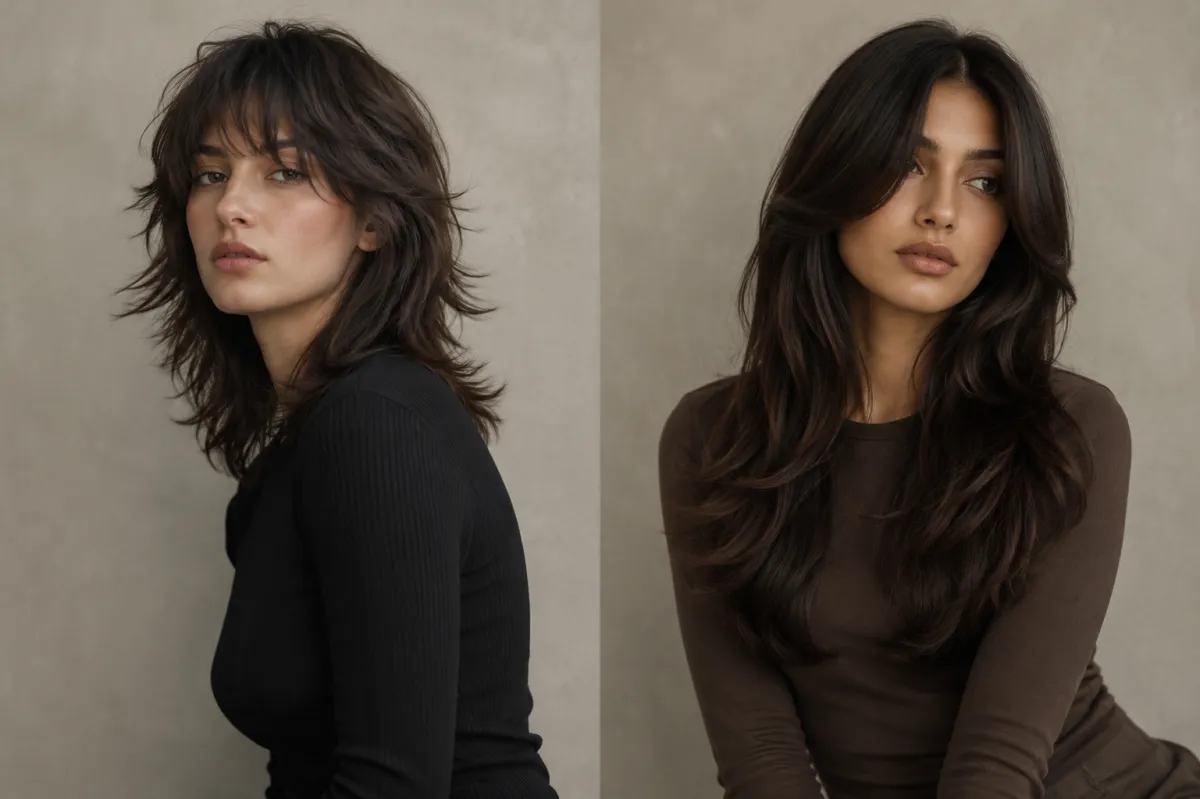
A wolf cut builds shorter, separated layers and stronger crown texture; a butterfly cut keeps more length and uses blended, face-framing layers for a softer, winged shape. The better choice depends on your starting length, natural texture, daily styling, and how dramatic you want the outline to look. Compare both on one photo with an AI hairstyle try-on tool before you cut.
Last updated: August 11, 2026 · ~9 min read
Haircut names are not measurement systems. Two stylists may use the same label for different layer lengths, and curls can make a measured cut look much shorter. Bring pictures and describe the shape you want rather than relying on “wolf” or “butterfly” alone.
Wolf cut vs butterfly cut at a glance
| Decision point | Wolf cut | Butterfly cut |
|---|---|---|
| Overall shape | Shaggy, separated, intentionally undone | Flowing, rounded, and blended |
| Crown | Noticeable short layers and lift | Softer lift that connects into longer lengths |
| Face frame | Often choppy and piecey | Sweeping, longer layers around the face |
| Length impression | Can look shorter because of separation | Preserves a longer-hair impression |
| Typical styling goal | Texture, movement, edge | Bounce, polish, and soft volume |
| Grow-out | More visible changes between short and long layers | Longer layers tend to blend through grow-out |
These are tendencies, not rules. A subtle wolf cut can be softer than an aggressively layered butterfly cut. The consultation should define the shortest layer, longest perimeter, face frame, and finish.
What makes a wolf cut look like a wolf cut?
A wolf cut usually combines shag-like texture with a stronger jump between crown layers and the remaining length. The top and sides have visible movement, while the perimeter may look lighter or more tapered.
The cut reads most clearly when:
- the crown has enough lift to separate from the lower lengths;
- face-framing pieces are visible instead of disappearing into one curtain;
- natural wave, curl, or styling creates movement between layers;
- the ends are not cut into one heavy, blunt line.
This does not mean every wolf cut must be extreme. A stylist can keep the perimeter fuller, lengthen the crown layers, or reduce the contrast for a lower-maintenance version. Our wolf cut guide explains those variations in more detail.
Use the wolf cut filter for a focused visual starting point, then tell the stylist which parts of the preview you like.
What makes a butterfly cut different?
A butterfly cut keeps a long-hair silhouette while using shorter face-framing and upper layers to create lift. When styled, those front pieces can sweep away from the face like wings, while the longer sections remain visibly connected.
It usually depends on:
- enough starting length to preserve a long lower section;
- blended transitions rather than obvious choppy steps;
- face-framing layers that can curve or flip away from the face;
- blow-drying, rollers, or natural volume to show the layered shape.
Without styling, a butterfly cut may look like a conventional long layered cut. That can be a benefit if you want the option of polished volume without a permanently shaggy outline.
Which cut works with your starting length?
Shoulder length or shorter
A wolf cut can show its identity at medium lengths because separation and crown texture do much of the work. A butterfly shape has less room for the long lower “wing,” so it may read as a layered lob unless the face frame and styling are pronounced.
Collarbone to chest length
Both cuts are flexible here. The wolf cut can keep a substantial perimeter while adding top texture. The butterfly cut has enough distance to create a visible short-to-long cascade.
Very long hair
A butterfly cut can add movement while preserving a long outline. A wolf cut requires a clear conversation about how much weight to remove; shorter top layers may feel like a bigger commitment when the rest of the hair is very long.
If keeping length is the priority, mark the shortest acceptable face-framing piece and the minimum perimeter before the appointment.
Texture changes the answer
Straight hair
Straight hair makes the layer map easy to see but may need styling or product to keep volume from falling flat. A butterfly cut often looks polished after a round-brush blowout. A wolf cut may need deliberate texture at the crown and ends.
Wavy hair
Natural waves can reveal both shapes with less effort. A wolf cut tends to emphasize separation and irregular movement. A butterfly cut can turn the waves into larger, connected sections.
Curly hair
Curl shrinkage changes where every layer appears. Ask for a curl-aware consultation and discuss the cut in its dry, natural state. Short crown layers can spring higher than expected; long butterfly layers may need careful distribution to avoid a shelf.
Fine or low-density hair
Too much weight removal can make the ends look thin. A softer wolf cut or butterfly cut with a fuller perimeter may be more useful than copying a heavily layered reference made on dense hair.
Thick or dense hair
Both cuts can remove bulk, but the removal should be intentional. The wolf cut can create strong internal movement; the butterfly cut can redistribute volume while retaining a long shape.
Styling time and tools
| Routine | Wolf cut | Butterfly cut |
|---|---|---|
| Air-dry potential | Strong on naturally wavy or curly texture | Depends on whether the blended layers show without styling |
| Quick refresh | Texture spray, curl refresh, or crown lift | Face-frame reset and light root volume |
| Polished finish | Diffuser or piece-by-piece texture | Round brush, rollers, or large waves |
| Main risk | Crown goes flat while ends stay wispy | Face frame flips unevenly or long layers collapse |
Choose the routine you will actually repeat. A reference created with extensions, a professional blowout, and studio lighting should not set the expectation for a five-minute morning.
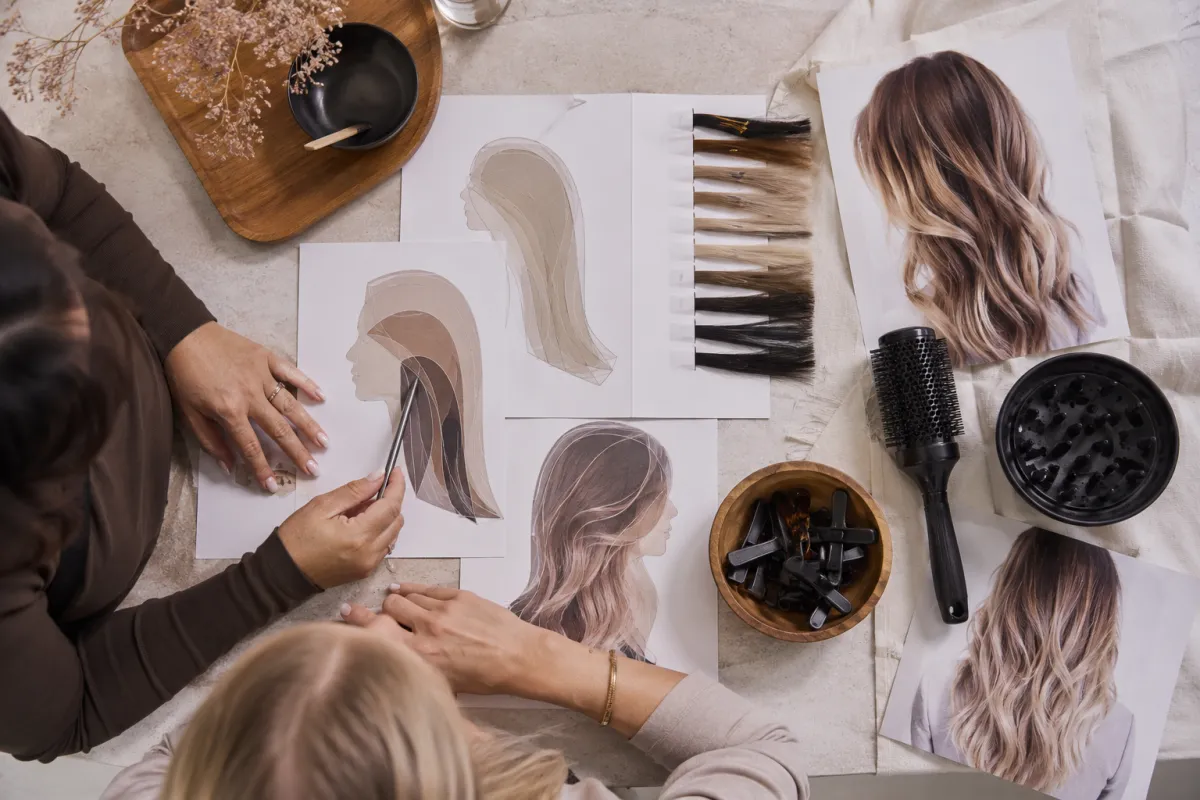
Conceptual consultation visual: agree on the layer map and routine, not only the haircut name.
What should each preview prove?
A fair wolf cut vs butterfly cut preview should make the layer map readable, not simply add generic volume. Review these details before saving either image:
| Preview check | Wolf cut evidence | Butterfly cut evidence |
|---|---|---|
| Crown | Wolf cut layers separate visibly at the top | Butterfly cut lift blends into the lower lengths |
| Face frame | Wolf cut pieces look shorter and more textured | Butterfly cut pieces sweep away in a longer curve |
| Perimeter | Wolf cut ends can look lighter without becoming a thin tail | Butterfly cut keeps a fuller long-hair outline |
| Texture | Wolf cut movement appears piecey rather than uniformly curled | Butterfly cut movement appears connected and flowing |
| Styling | Wolf cut shape survives without a full blowout | Butterfly cut shape shows the intended soft bounce |
| Grow-out | Wolf cut crown length is a commitment you can accept | Butterfly cut front layers can still reach your usual tie-back |
Reject a wolf cut preview if it only adds messy waves without changing the layers. Reject a butterfly cut preview if it changes the face or adds extensions to manufacture volume. The wolf cut and butterfly cut should be judged on the same source, color, crop, and styling finish.
Face-framing questions that are more useful than face-shape rules
Rigid rules such as “round faces need X” ignore personal features and styling goals. Ask concrete questions instead:
- Do you want the widest part of the style near the cheekbones, jaw, or shoulders?
- Should the shortest layer tuck behind the ear?
- Do you want forehead coverage or an open face?
- Should the jawline look sharper, softer, or unchanged?
- Will you wear the hair in a ponytail or clip most days?
Our guide to haircuts for face shape is most useful when treated as a visual vocabulary, not a rulebook.
How to preview a wolf cut and butterfly cut fairly
Use one neutral portrait
Choose a front or three-quarter adult portrait with the hairline, jaw, shoulders, and current length visible. Pull bulky clothing away from the hair outline. Use even daylight and avoid a beauty filter that has already reshaped the face.
The best selfie for a hairstyle app checklist covers angle, crop, and lighting.
Keep color and face constant
Do not change hair color while comparing cuts. Ask both previews to preserve facial identity, skin tone, clothing, pose, camera angle, and background. Otherwise, a color or portrait change can make one haircut feel more flattering for the wrong reason.
Compare the same three views
For each cut, save:
- a front view for the face frame;
- a three-quarter view for crown and side volume;
- a side/back reference for the perimeter and longest layers.
An AI preview may not create a technically accurate back-of-head cutting plan. Use it to communicate the intended silhouette, then ask the stylist what your hair can support.
The hairstyle try-on guide explains how to separate visual planning from salon feasibility.
Grow-out and maintenance
A wolf cut's shorter crown layers may become more noticeable as they lose their intended lift, while the lower length stays longer. You may need small reshaping appointments or a plan for clips and ponytails during the transition.
A butterfly cut often grows into long layers, but the face frame can move past the point where it flips easily. Trimming only the front may preserve the effect without changing the full perimeter.
Ask your stylist:
- What is the shortest layer, measured on my hair?
- Which section will look different first as it grows?
- Can all front pieces reach my usual ponytail?
- How often does the shape need a trim for my routine?
- What is the lowest-effort way to style it at home?
What to bring to the salon
Bring one reference you like, one you do not want, and one preview of each candidate on your own face. Add short notes:
- keep this much perimeter;
- shortest face frame no higher than here;
- avoid a thin, disconnected tail;
- preserve enough length for a ponytail;
- daily styling time: ten minutes;
- usual finish: air-dried waves.
Use our salon preview checklist to turn images into a useful conversation.
Frequently asked questions
Is a butterfly cut less layered than a wolf cut?
Not necessarily. Both may contain many layers. A butterfly cut usually blends them into a softer long-hair shape, while a wolf cut emphasizes separation and crown texture.
Which is easier to grow out?
Butterfly layers often blend into a conventional long-layered shape. Wolf-cut crown layers can require more intentional reshaping. Your shortest layer and natural texture matter more than the label.
Which cut is better for fine hair?
Either can work in a restrained version. Ask the stylist to protect the perimeter and avoid removing more density than your hair can support.
Can AI tell me which haircut will suit me?
AI can compare silhouettes on one photo. It cannot measure density, curl shrinkage, growth patterns, damage, or daily styling skill. Use the preview as a consultation aid.
Related guides
- Preview both haircuts on your photo →
- Try the wolf cut filter
- Wolf cut vs shag
- Choose a haircut for your face shape
- Use an AI haircut preview at the salon
- See current plans
Choose the layer map, not the trend name
Pick a wolf cut if you want visible texture, shorter crown movement, and a deliberately undone outline. Pick a butterfly cut if you want flowing face-framing layers while preserving a long, blended shape. Then preview both on the same photo and bring the preferred silhouette—plus your length and maintenance limits—to the stylist.