
Types of Bangs: 11 Styles Tried on the Same Face
Blunt, curtain, wispy, micro, Birkin and 6 more bangs on one face, plus which suit your face shape.
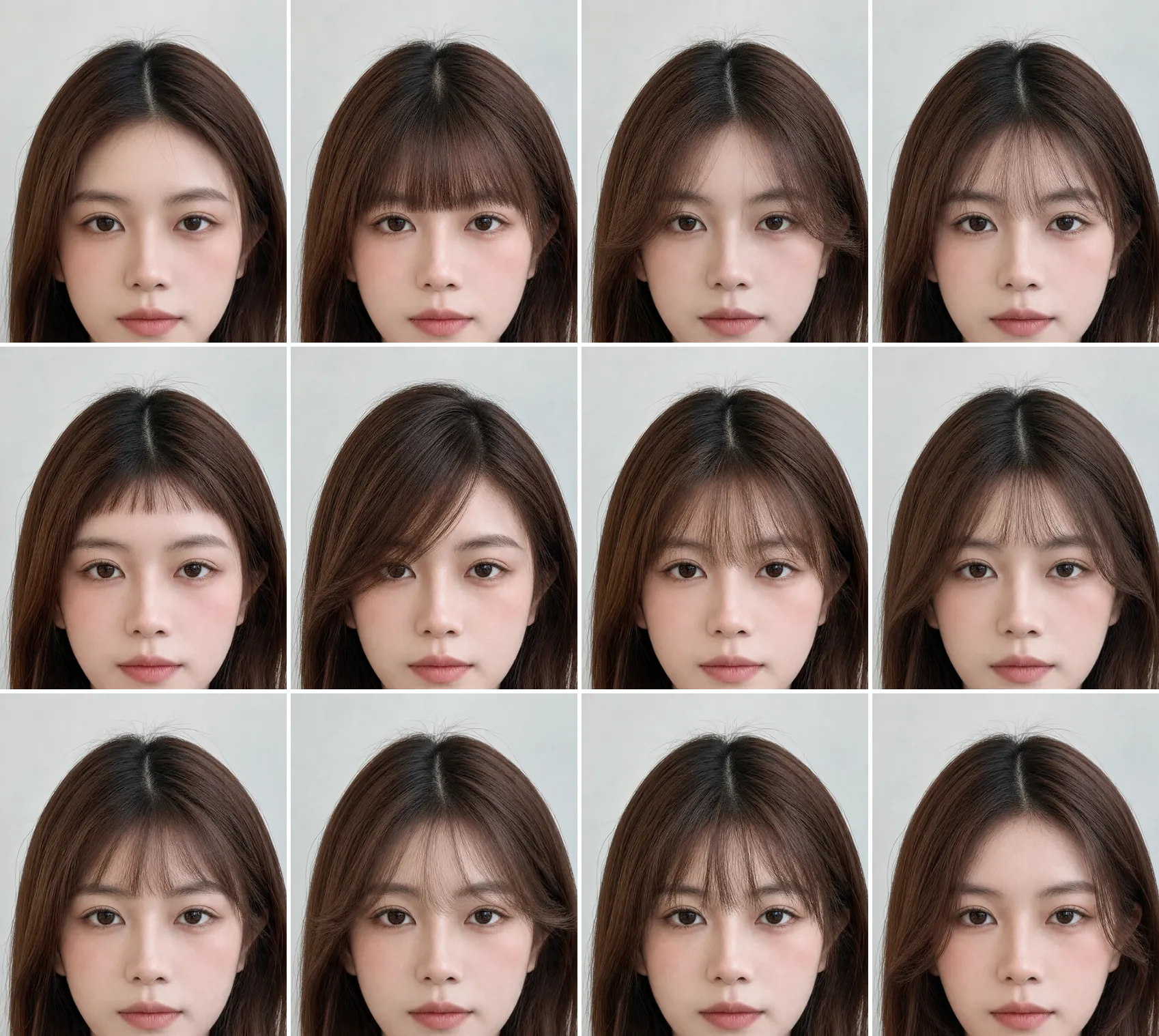
There are about a dozen common types of bangs: blunt, curtain, wispy, micro, side-swept, Birkin, bottleneck, French, feathered, arched, choppy and long face-framing. They differ in two ways: how low they sit (above, at or below your brows) and how thick they are. Here are 11 of them on the same face; arched bangs are explained without a picture.
Last updated: November 13, 2026 · ~8 min read
In the bangs guides we read, each style is shown on a different person, so you end up comparing faces instead of fringes. We used one woman, one photo and the bangs filter to change nothing but the fringe.
In this guide: 11 at a glance · each type explained · which bangs suit your face shape · how often to trim · try bangs on your photo
What do 11 types of bangs look like?
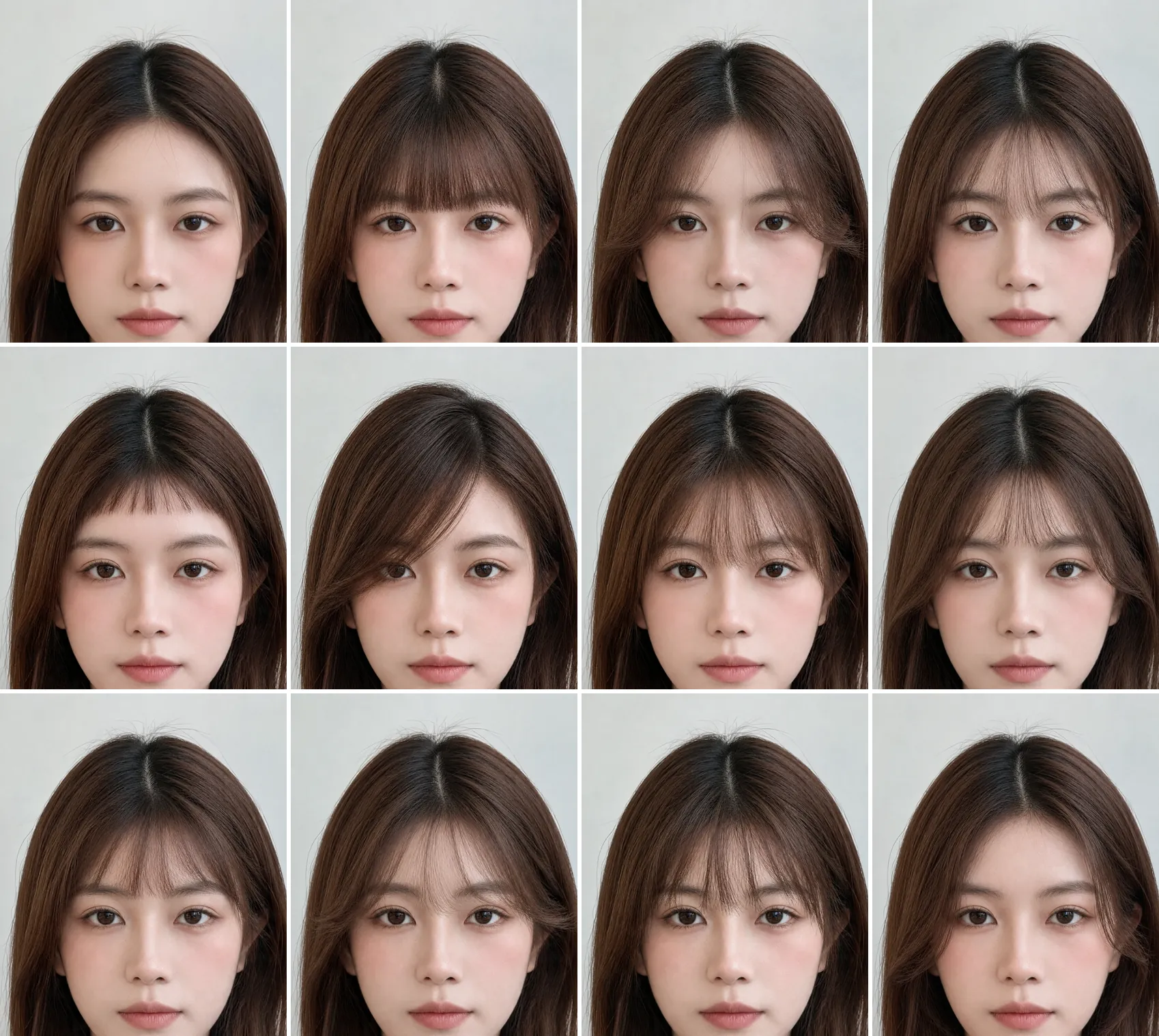
Top row: original photo (no bangs), blunt, curtain, wispy. Middle row: micro, side-swept, Birkin, bottleneck. Bottom row: French, feathered, choppy, long face-framing. One woman, one photo; only the fringe changes. The test photo is an AI-generated portrait, not a real customer.
Bangs are short pieces of hair cut to fall over the forehead. The quickest way to tell the types apart:
| Type | Where it sits | Thickness | Parting |
|---|---|---|---|
| Blunt | At the brows | Heavy | None, straight across |
| Curtain | Bridge of the nose to cheekbones | Medium | Center |
| Wispy | At the brows | Light, see-through | None |
| Micro (baby) | Well above the brows | Medium | None |
| Side-swept | Across the forehead to past one brow | Medium | Side |
| Birkin | Brushing the lashes | Full but soft | None |
| Bottleneck | Short center, longer sides | Medium | Soft center |
| French | Just above the brows | Light, choppy | None |
| Feathered | At the brows | Layered | None or soft center |
| Arched | Curved, following the brows | Medium | None |
| Choppy | At the brows | Piecey | None |
| Long face-framing | Cheekbones down | Light | Side or center |
What is each type of bangs, and how do you ask for it?
Blunt bangs
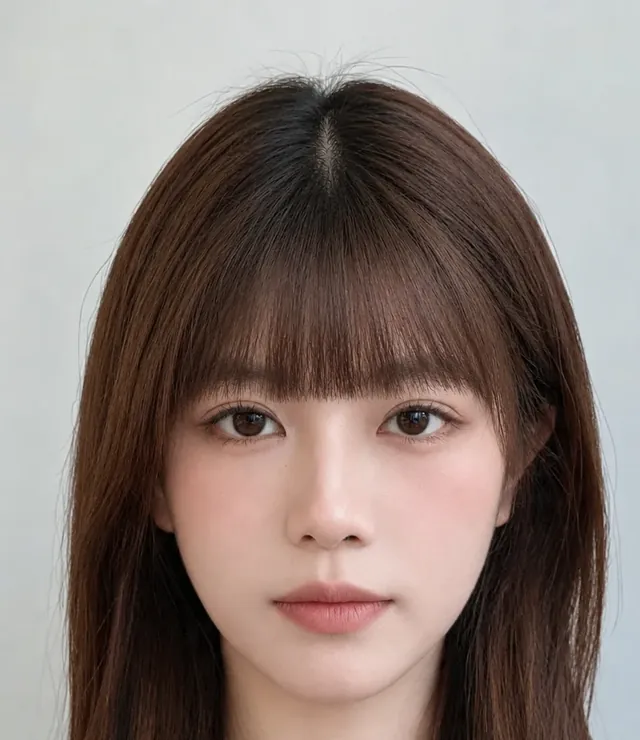
A thick fringe cut in one straight line, usually at the eyebrows. A bold option that creates a strong frame around the eyes. Ask for: "a full, blunt fringe at my brows." Works well on oval faces and long foreheads; on a round face, keep it longer and softly curved.
Curtain bangs
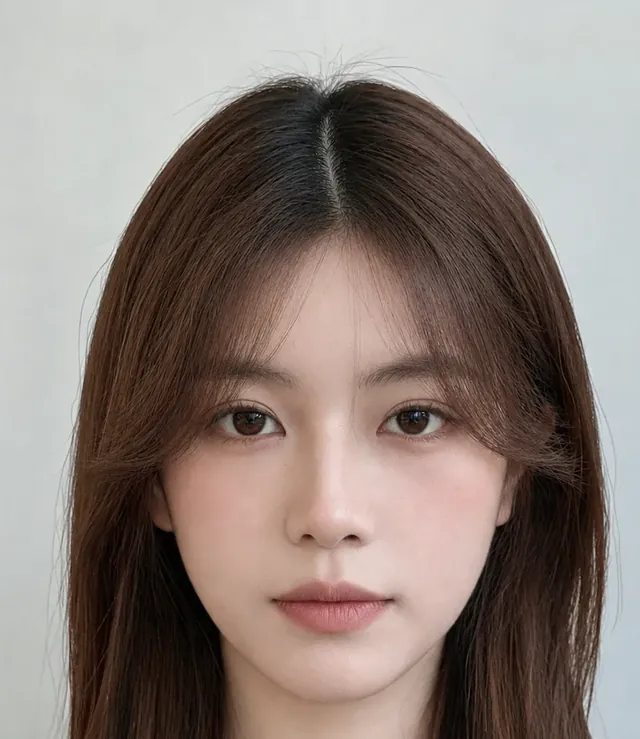
Parted in the middle, shortest at the center and sweeping out to the cheekbones. Easy to grow out, which makes them a good first fringe. Ask for: "curtain bangs, shortest at the bridge of my nose, blending into my layers." See more in our curtain bangs filter.
Wispy bangs

A thin, see-through fringe at the brows with gaps where the forehead shows. Softer than blunt bangs and good for fine hair. Ask for: "wispy bangs, thinned out so I can see some forehead." Airy "airbangs" are a lighter version of this.
Micro bangs (baby bangs)
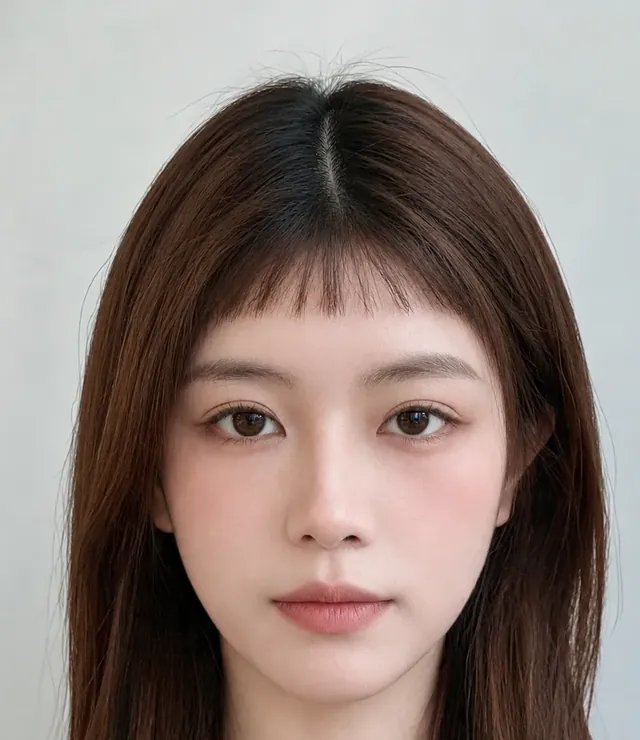
A very short fringe cut well above the brows. Dramatic and edgy, and they leave most of the forehead showing. Ask for: "micro bangs, halfway up my forehead." Need a trim every 3 to 4 weeks to keep their shape.
Side-swept bangs
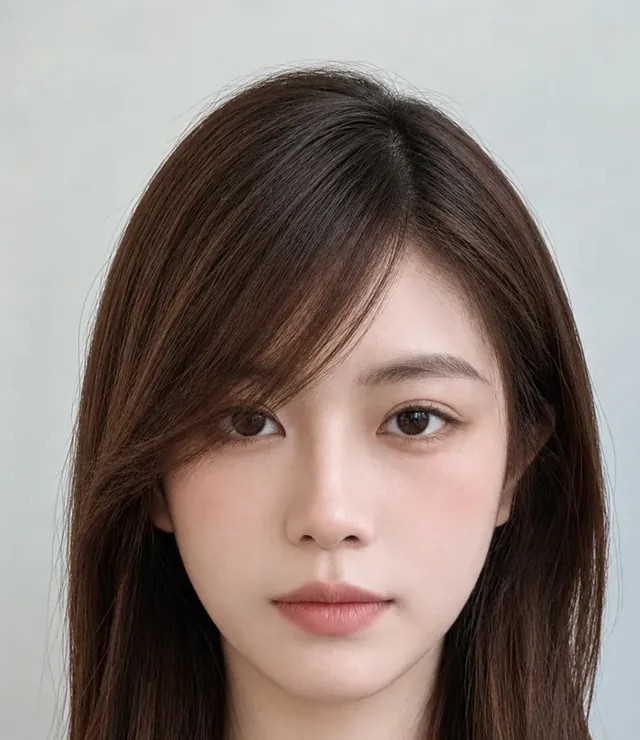
A longer fringe swept diagonally across the forehead from a side part. Low commitment, and it can be pinned back on bad days. Ask for: "long side-swept bangs that reach past my brow." A good pick for heart-shaped and diamond faces.
Birkin bangs
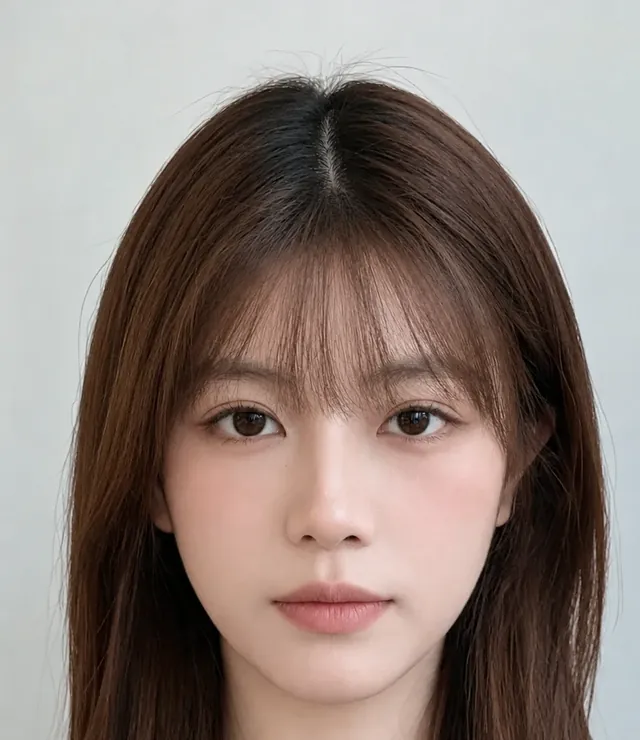
Full but soft, slightly piecey, brushing the lashes and a little longer at the edges. Ask for: "lash-length Birkin bangs, soft not blunt."
Bottleneck bangs
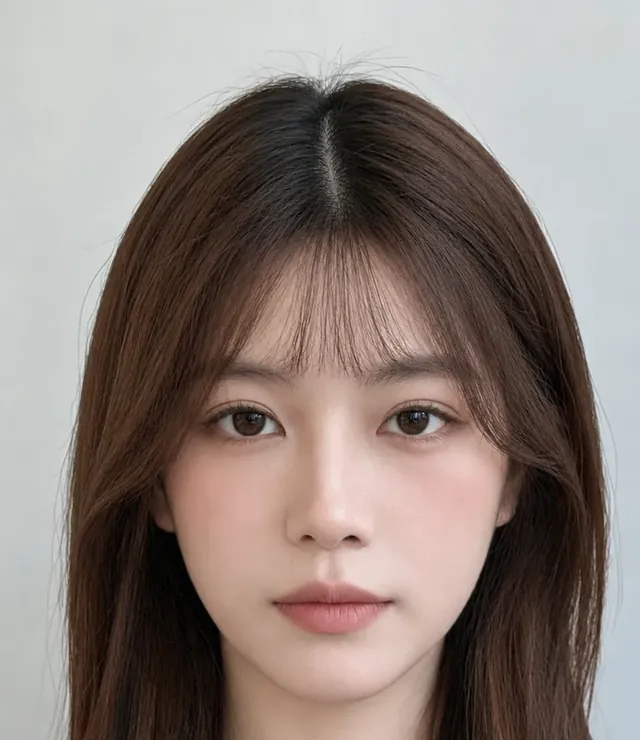
Short and narrow in the center, then curving longer down the sides like the neck of a bottle. A cross between curtain and blunt: unlike curtain bangs, the center is not parted open, and unlike blunt bangs, the sides drop lower than the middle. Ask for: "bottleneck bangs, short in the middle and longer around my cheekbones."
French bangs

Short, slightly choppy and sitting just above the brows, with soft uneven ends. Compared with bottleneck bangs, French bangs stay roughly the same length across instead of dropping at the sides. Looks good a little undone. Ask for: "short French bangs above my brows, textured ends."
Feathered bangs

Layered bangs with ends flicked outward toward the temples. Look at the outer edges: feathered bangs turn away from the face, where bottleneck and French bangs fall straight down. They add movement and work well with layered or wavy hair. Ask for: "feathered bangs at brow length, layered and flicked out."
Arched bangs
Cut to follow the natural curve of the forehead: fuller in the middle and tapering off toward the sides, as Haircode describes them. Our previews never showed a clear arch, so this type has no picture here; bring a reference photo to your stylist. Haircode suggests them for round or square faces. Ask for: "an arched fringe, fuller in the middle and tapering toward the sides."
Choppy bangs

Piecey, uneven lengths with visible separation. Casual and forgiving when you skip a blow-dry. Ask for: "textured, choppy bangs at my brows."
Long face-framing bangs
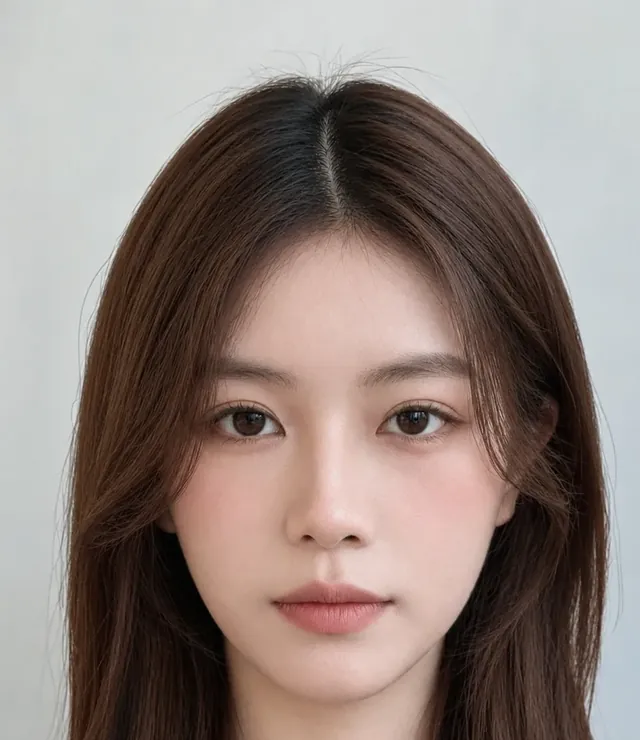
Bangs that start around the cheekbones and blend into the rest of the hair. Very low commitment: it frames the face without covering the forehead. Ask for: "long face-framing pieces from the cheekbones."
Curly bangs are not a separate cut so much as any of these cut on curly hair, usually a little longer to allow for shrinkage. See our curly bangs filter guide.
Which type of bangs suits your face shape?
This table follows L'Oréal Paris's face-shape guidance. Treat it as a starting point, not a rule, and check the result on your own photo.
| Face or forehead | Try | May look heavier |
|---|---|---|
| Oval | Almost any: blunt, curtain, wispy | Nothing in particular |
| Round | Long curtain bangs, arched bangs | Very short or very heavy straight-across bangs |
| Square | Eye-grazing bangs heavier at the sides, wispy or arched | Hard, straight lines |
| Heart | Side-swept, wispy curtain bangs | Thick blunt bangs that widen the forehead |
| Diamond | Side-swept, long layered curtain bangs | Very short bangs |
| Long or oblong face | Chin-length curtain bangs | Very short bangs |
| Long forehead | Full blunt or wide curtain bangs | Micro bangs |
| Small forehead | Steep side-swept bangs with a deep side part | Dense, heavy fringes |
If you are unsure, start with curtain bangs. They appear in more rows of this table than any other type, and they grow into face-framing layers if you change your mind.
Your hair texture matters as much as your face. Rush's stylists put it this way:
| Your hair | Bangs that fit easily | Note |
|---|---|---|
| Straight | Blunt, side-swept, curtain | Best for a crisp, straight line |
| Wavy | Curtain, wispy, choppy | Texture does the styling for you |
| Curly | Choppy, textured bangs | Needs some styling: diffuser or curl cream |
| Fine | Wispy, micro | Light bangs make fine hair look fuller |
How often do bangs need a trim?
Sources give slightly different ranges:
| Source | Trim every |
|---|---|
| L'Oréal Paris, most bangs | 2 to 4 weeks |
| Rush, depending on the style | 3 to 6 weeks |
| Rush, micro bangs | 3 to 4 weeks |
Scalp hair grows about 1 cm a month, according to Cleveland Clinic. By our calculation (10 mm ÷ 30 days × 14 days) that is about 4.7 mm in two weeks, enough to make a brow-length fringe sit noticeably lower. Short, straight-across bangs show that growth first, so trim them at the short end of the range. Longer styles are more forgiving: L'Oréal Paris calls chin-length curtain bangs "the low maintenance twist on curtain bangs".
How can you try bangs on your own photo?
- Take a front-facing selfie with your hair pushed back so your whole forehead shows.
- Open the bangs filter and ask for one type, for example "curtain bangs" or "micro bangs".
- Try two or three types side by side, then save the one you like to show your stylist.
Want to change more than the fringe? Use the AI hairstyle changer. Already decided? Read should I get bangs? or see how would I look with bangs.
A preview shows how a fringe changes your face. It can't show cowlicks or how your hair lies when it dries, so mention those to your stylist.
Frequently asked questions
What are the main types of bangs?
The main types are blunt, curtain, wispy, micro (baby), side-swept, Birkin, bottleneck, French, feathered, arched, choppy and long face-framing bangs. They differ in where they sit on the forehead (above, at or below the brows) and how thick or see-through they are.
Which bangs are best for a round face?
L'Oréal Paris suggests longer curtain bangs that sweep outward, or a softly arched fringe, and skipping very short or very heavy straight-across bangs if you want the face to look longer.
Which bangs are easiest to maintain?
Longer styles that sit around the cheekbones. L'Oréal Paris calls chin-length curtain bangs the low maintenance twist on curtain bangs. Short, straight-across bangs such as blunt or micro bangs show growth soonest, so plan on regular trims.
How often do you need to trim bangs?
Most bangs need a trim every 2 to 4 weeks, and very short micro bangs every 3 to 4 weeks. Longer curtain or side-swept bangs can often go longer because they blend into the rest of your hair as they grow.
What is the difference between curtain bangs and wispy bangs?
Curtain bangs are parted in the middle and sweep out to the sides, shortest at the center. Wispy bangs go straight across but are thin enough that your forehead shows through.
Can I see bangs on my own photo before cutting?
Yes. Upload a front-facing selfie with your forehead visible to the AIChangeHair bangs filter and ask for the type you want, for example curtain bangs or micro bangs.
Related guides
- Try the free bangs filter →
- Curtain bangs filter
- How would I look with bangs?
- Should I get bangs?
- Blunt bangs vs curtain bangs
Pick your bangs before the scissors come out
Upload one selfie, try curtain, wispy and blunt bangs side by side, and take the one you like to your stylist. Try the bangs filter free.